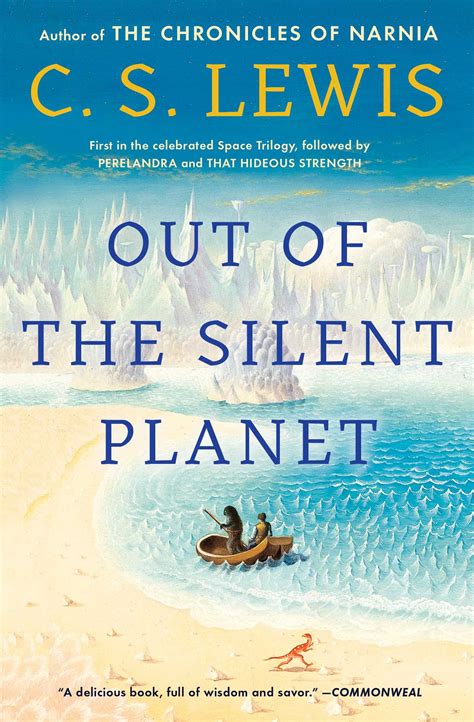
Out of the Silent Planet, written by C.S. Lewis, is a seminal work of science fiction that has captivated readers for generations with its unique blend of philosophical and theological themes. Published in 1938, this novel marks the first installment in Lewis's Space Trilogy, followed by Perelandra and That Hideous Strength. The story revolves around Dr. Elwin Ransom, a philologist who finds himself kidnapped and transported to the planet Malacandra, known to Earthlings as Mars. This journey sets the stage for an exploration of complex ideas, including morality, ethics, and the nature of good and evil, all woven into a narrative that is both a compelling adventure and a profound introspection on human existence.
Introduction to the Story and Its Context
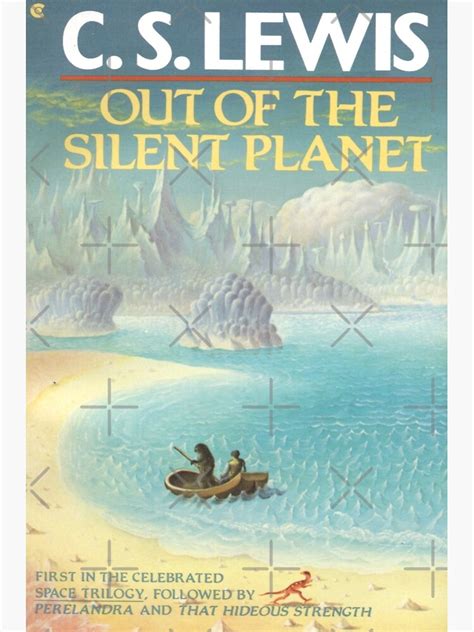
The narrative begins with Dr. Ransom’s abduction by Professor Edward Weston and his accomplice, Dick Devine. Their spacecraft lands on Malacandra, where Ransom discovers a world teeming with life, including creatures such as the Sorns, the Pfifltriggi, and the Hrossa. Each species possesses unique characteristics and societal structures, serving as mirrors to humanity, challenging Ransom’s (and the reader’s) perceptions of morality, social organization, and the relationship between creatures and their environment. Lewis’s depiction of these alien societies is not merely a product of his imagination but also a reflection of his theological and philosophical musings on the nature of sin, redemption, and divine providence.
Theological and Philosophical Themes
One of the most compelling aspects of Out of the Silent Planet is its exploration of theological themes. Lewis, a devout Christian, weaves his religious beliefs into the fabric of the story, presenting a cosmos governed by a divine intelligence. The novel introduces the concept of the “bent” Oyéresu (rulers) of other planets, who have turned against the divine will, and the silent planet Earth, whose Oyéresu has been compromised by evil. This setup allows Lewis to explore the idea of a universal moral law and the consequences of disobeying it. The character of Ransom, as a Christian, serves as a mediator between the human and the divine, illustrating the struggle between good and evil and the potential for redemption.
| Character | Description |
|---|---|
| Dr. Elwin Ransom | The protagonist, a philologist and a Christian, who finds himself in the midst of an interplanetary adventure. |
| Professor Edward Weston | Ransom's kidnapper, driven by ambition and a desire for knowledge, regardless of the moral cost. |
| Dick Devine | Weston's accomplice, whose motives are more financially driven. |
| The Hrossa | A species on Malacandra, known for their wisdom, poetry, and deep connection with their environment. |
| The Sorns | Tall, thin beings who serve as the guardians of knowledge on Malacandra. |
| The Pfifltriggi | Short, energetic creatures skilled in mining and craftsmanship. |

Analysis of Literary and Theological Significance
Out of the Silent Planet is not only a work of science fiction but also a deeply theological and philosophical exploration of human nature and the cosmos. Lewis’s use of the science fiction genre allows him to explore complex theological and philosophical ideas in a unique and engaging manner. The novel’s depiction of different planetary societies serves as a commentary on human society, challenging readers to consider their own moral and ethical frameworks. The character of Ransom, with his Christian worldview, provides a lens through which to view these alien cultures and to reflect on the human condition.
Impact and Legacy
The publication of Out of the Silent Planet marked a significant moment in the development of science fiction as a genre. It demonstrated that science fiction could be used as a vehicle for exploring profound theological, philosophical, and moral questions. The novel’s success paved the way for the rest of the Space Trilogy and influenced generations of science fiction authors. Lewis’s work in this area has been particularly notable for its ability to engage readers from a variety of backgrounds, including those interested in science fiction, theology, and philosophy.
Key Points
- Out of the Silent Planet is a science fiction novel that explores theological and philosophical themes, set against the backdrop of an interplanetary journey.
- The novel introduces the concept of a universal moral law and the struggle between good and evil, reflecting Lewis's Christian beliefs.
- The character of Dr. Ransom serves as a mediator between the human and the divine, illustrating the potential for redemption.
- The depiction of different planetary societies challenges readers to consider their own moral and ethical frameworks.
- The novel's publication marked a significant moment in the development of science fiction, demonstrating the genre's potential for exploring profound questions.
In conclusion, Out of the Silent Planet is a masterpiece of science fiction that offers readers a rich tapestry of adventure, theology, and philosophy. Through its exploration of complex ideas and its introduction of unique alien societies, the novel challenges readers to reflect on their own understanding of morality, ethics, and the human condition. As the first installment in the Space Trilogy, it sets the stage for further explorations of the cosmos and the nature of good and evil, cementing C.S. Lewis's place as one of the most influential authors of the 20th century.
What is the central theme of Out of the Silent Planet?
+The central theme of Out of the Silent Planet revolves around the exploration of theological and philosophical ideas, including the concept of a universal moral law, the nature of good and evil, and the potential for redemption, all set within a science fiction narrative.
How does C.S. Lewis use the character of Dr. Ransom in the novel?
+Dr. Ransom serves as a mediator between the human and the divine, illustrating the struggle between good and evil and the potential for redemption. His character is central to the exploration of theological and philosophical themes in the novel.
What impact did Out of the Silent Planet have on the science fiction genre?
+The novel demonstrated that science fiction could be used to explore profound theological, philosophical, and moral questions, influencing generations of science fiction authors and marking a significant moment in the development of the genre.