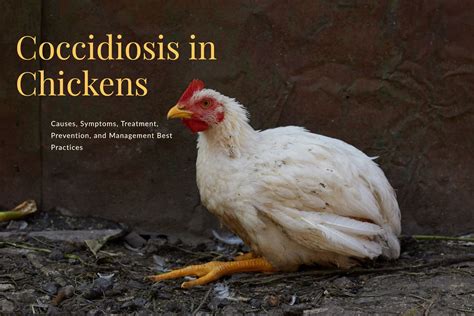
Coccidiosis is a parasitic disease that affects chickens, causing significant economic losses in the poultry industry worldwide. The disease is caused by the presence of Eimeria parasites in the chicken's digestive system, leading to malabsorption of nutrients, diarrhea, and in severe cases, death. As a poultry expert with over 10 years of experience in avian health, I will provide an in-depth guide on coccidiosis in chickens, including its causes, symptoms, diagnosis, treatment, and prevention strategies.
Key Points
- Coccidiosis is caused by Eimeria parasites, with seven species affecting chickens: E. acervulina, E. brunetti, E. maxima, E. mitis, E. necatrix, E. praecox, and E. tenella.
- Symptoms of coccidiosis include diarrhea, weight loss, lethargy, and decreased egg production.
- Diagnosis is typically made through fecal examination, lesion scoring, and histopathology.
- Treatment options include anticoccidial medications, such as amprolium and toltrazuril, and supportive care, such as ensuring access to clean water and a balanced diet.
- Prevention strategies include maintaining good hygiene, providing a balanced diet, and using anticoccidial medications or vaccines.
Causes and Life Cycle of Coccidiosis
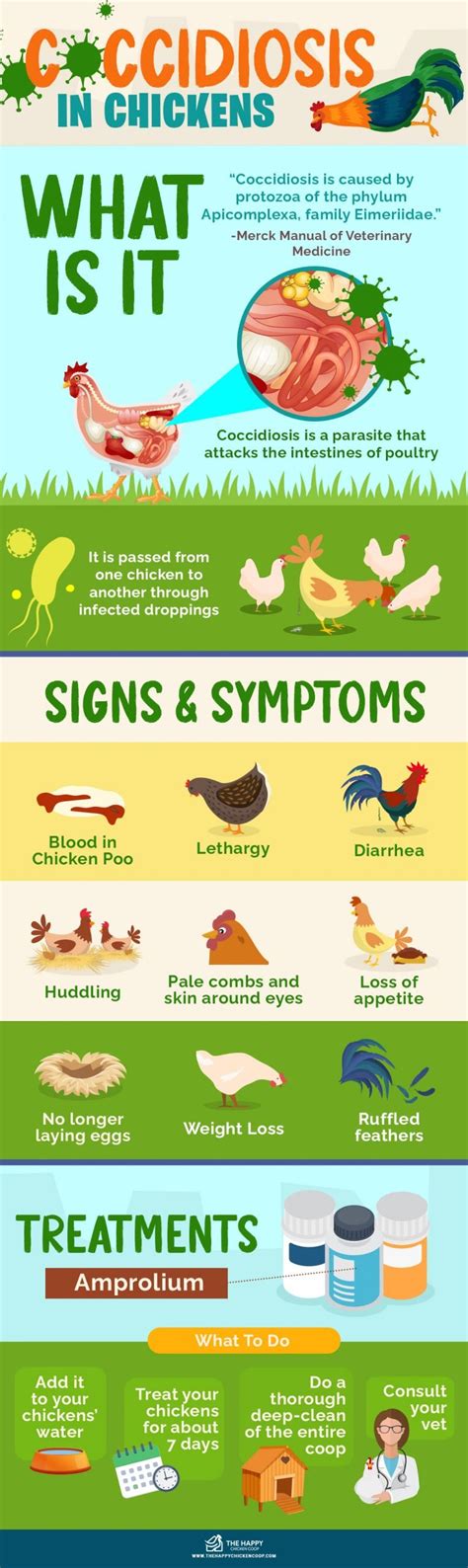
Coccidiosis is caused by the Eimeria parasite, which has a complex life cycle involving both asexual and sexual reproduction. The parasite’s life cycle begins when a chicken ingests oocysts, which are the dormant, environmentally resistant stages of the parasite. Once ingested, the oocysts release sporozoites, which invade the intestinal epithelial cells and undergo a series of developmental stages, eventually producing more oocysts that are excreted in the chicken’s feces.
The seven species of Eimeria that affect chickens have different preferences for the location and type of intestinal tissue they infect, which can influence the severity of the disease. For example, E. tenella and E. necatrix are considered to be the most pathogenic species, as they infect the ceca and small intestine, respectively, causing significant damage to the intestinal lining and leading to severe diarrhea and mortality.
Symptoms and Diagnosis of Coccidiosis
The symptoms of coccidiosis can vary depending on the severity of the infection, the age and health status of the chicken, and the species of Eimeria involved. Common symptoms include:
- Diarrhea, which can be bloody or watery
- Weight loss and decreased growth rate
- Lethargy and depression
- Decreased egg production
- Ruffled feathers and pale comb
Diagnosis of coccidiosis is typically made through a combination of clinical signs, fecal examination, lesion scoring, and histopathology. Fecal examination involves examining the chicken's feces for the presence of oocysts, which can be detected using techniques such as flotation or sedimentation. Lesion scoring involves examining the chicken's intestines for signs of damage, such as hemorrhage, inflammation, and necrosis. Histopathology involves examining tissue samples from the intestines for signs of parasite infection and damage.
| Species of Eimeria | Location of Infection | Severity of Disease |
|---|---|---|
| E. tenella | Ceca | Severe |
| E. necatrix | Small intestine | Severe |
| E. acervulina | Small intestine | Moderate |
| E. brunetti | Small intestine and ceca | Moderate |
| E. maxima | Small intestine | Moderate |
| E. mitis | Small intestine | Mild |
| E. praecox | Small intestine | Mild |
Treatment and Prevention of Coccidiosis
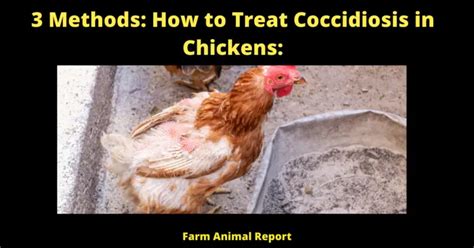
Treatment of coccidiosis typically involves the use of anticoccidial medications, such as amprolium and toltrazuril, which can help to reduce the severity of the disease and prevent mortality. Supportive care, such as ensuring access to clean water and a balanced diet, is also essential to help the chicken recover from the infection.
Prevention of coccidiosis is critical to minimizing the impact of the disease on chicken production. Strategies for prevention include:
- Maintaining good hygiene, such as cleaning and disinfecting equipment and housing
- Providing a balanced diet that includes essential nutrients, such as vitamins and minerals
- Using anticoccidial medications or vaccines, which can help to reduce the severity of the disease
- Implementing good biosecurity practices, such as controlling access to the farm and using personal protective equipment
It's also essential to note that coccidiosis can be a significant challenge in organic or free-range chicken production systems, where the use of anticoccidial medications may be limited or prohibited. In these systems, prevention strategies, such as maintaining good hygiene and providing a balanced diet, are critical to minimizing the impact of the disease.
What is the most effective way to prevent coccidiosis in chickens?
+Maintaining good hygiene, providing a balanced diet, and using anticoccidial medications or vaccines are all effective strategies for preventing coccidiosis in chickens.
How can I diagnose coccidiosis in my chickens?
+Diagnosis of coccidiosis typically involves a combination of clinical signs, fecal examination, lesion scoring, and histopathology.
What are the symptoms of coccidiosis in chickens?
+Symptoms of coccidiosis in chickens can include diarrhea, weight loss, lethargy, and decreased egg production.
In conclusion, coccidiosis is a significant disease that can have a major impact on chicken production. However, with proper management, nutrition, and health strategies, the impact of the disease can be minimized. By understanding the causes, symptoms, diagnosis, treatment, and prevention of coccidiosis, chicken producers can take steps to protect their flocks and maintain a healthy and productive chicken population.