The question of whether psychologists can prescribe medications is a complex one, with the answer varying significantly depending on the country, state, or region in question. In the United States, for instance, the laws governing the prescribing authority of psychologists differ from state to state. Historically, psychologists, whose training is primarily in non-medical models of psychotherapy and psychological assessment, have not been authorized to prescribe medications. This authority has traditionally been reserved for medical doctors (MDs), doctors of osteopathic medicine (DOs), and in some cases, advanced practice nurses and physician assistants, under the supervision of a medical doctor.
Key Points
- Psychologists' prescribing authority varies by country and state.
- In the U.S., some states grant psychologists prescribing authority under specific conditions.
- Training in psychopharmacology is essential for psychologists seeking prescribing authority.
- The movement towards granting psychologists prescribing authority is part of a broader trend towards integrated care.
- Opposition to psychologists prescribing medications often comes from medical professionals who question their training.
Current Legal Framework in the United States

In the United States, the legal framework regarding psychologists’ ability to prescribe medications has evolved over time. As of my last update, a few states, including New Mexico, Louisiana, and Iowa, have granted licensed psychologists with additional training in psychopharmacology the authority to prescribe medications under certain conditions. This typically involves completing a postdoctoral master’s degree program in psychopharmacology and meeting other specific state requirements. The American Psychological Association (APA) has been a key advocate for expanding psychologists’ prescribing authority, arguing that it enhances patient care, especially in underserved areas where access to psychiatric services may be limited.
Training and Education
The training and education required for psychologists to prescribe medications are rigorous and include extensive coursework and clinical training in psychopharmacology. This education is designed to equip psychologists with the knowledge necessary to safely and effectively prescribe psychiatric medications. The curriculum covers pharmacology, neurosciences, and clinical psychopharmacology, ensuring that psychologists understand the biochemical basis of psychiatric disorders and the mechanisms of action of various medications. This level of training is critical for addressing concerns from the medical community about psychologists’ readiness to prescribe.
| State | Prescribing Authority |
|---|---|
| New Mexico | Granted to licensed psychologists with additional training |
| Louisiana | Allowed under specific conditions |
| Iowa | Authorized for certain psychological practices |

International Perspectives
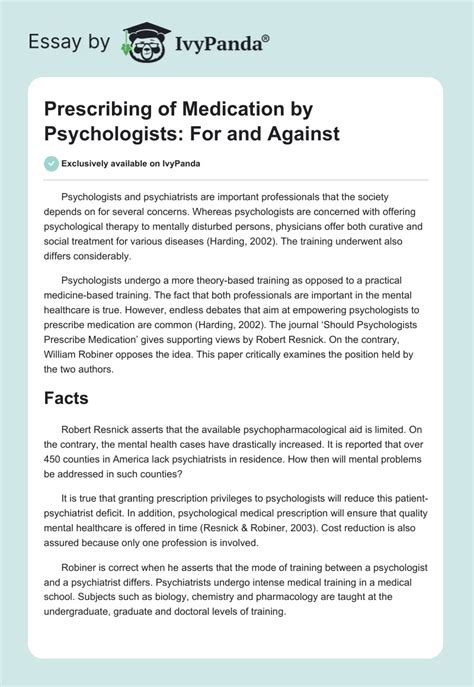
Internationally, the laws and regulations regarding psychologists’ prescribing authority vary widely. In some countries, such as Canada and Australia, psychologists do not have the authority to prescribe medications. However, there are ongoing discussions and debates in these countries about the potential benefits of granting psychologists prescribing rights, particularly in light of the global mental health workforce shortages. In other regions, the integration of psychological services into primary care settings has led to innovative models of collaborative care, where psychologists work closely with medical professionals to provide comprehensive patient care, though prescribing authority may still be limited.
Implications and Future Directions
The debate over whether psychologists should be allowed to prescribe medications touches on fundamental issues of patient care, professional scope of practice, and the future of mental health services. Proponents argue that granting psychologists prescribing authority can enhance patient access to care, improve treatment outcomes, and facilitate more comprehensive mental health services. Opponents, often from within the medical community, express concerns about the adequacy of psychologists’ training in pharmacology and the potential for fragmented care. As the healthcare landscape continues to evolve, with an increasing emphasis on interdisciplinary collaboration and patient-centered care, the role of psychologists in prescribing medications is likely to remain a topic of discussion and policy development.
Can psychologists prescribe medications in all U.S. states?
+No, the authority for psychologists to prescribe medications varies by state, with only a few states currently granting this authority under specific conditions.
What training do psychologists need to prescribe medications?
+Psychologists typically need to complete a postdoctoral master's degree program in psychopharmacology and meet other state-specific requirements to gain prescribing authority.
Is there international consensus on psychologists' prescribing authority?
+No, there is significant variation internationally, with laws and regulations differing widely from one country to another.
In conclusion, the question of whether psychologists can prescribe medications is multifaceted, reflecting broader discussions about the future of mental health care, professional roles, and patient access to services. As healthcare systems around the world grapple with the challenges of providing comprehensive and accessible care, the debate over psychologists’ prescribing authority will undoubtedly continue, shaped by evolving professional standards, legislative changes, and advancements in clinical practice.