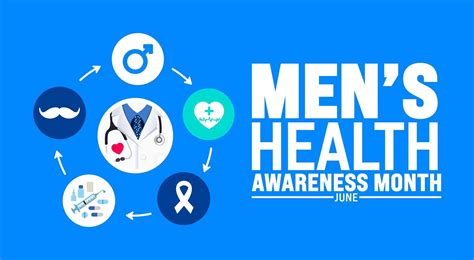
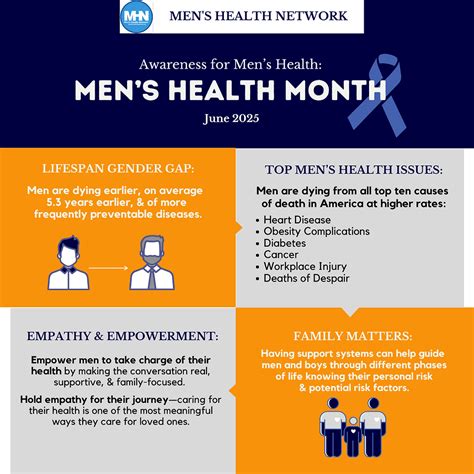
As we enter the month of June, it's essential to acknowledge the importance of men's health, not just for the individual but for the entire family and community. Men's Health Month is a nationwide observance that aims to raise awareness about the unique health challenges faced by men and encourage them to take proactive steps towards maintaining their physical and mental well-being. According to the Centers for Disease Control and Prevention (CDC), men are more likely to die from heart disease, cancer, and accidents, emphasizing the need for targeted interventions and education.
Historically, men have been less likely to seek medical care, often due to societal norms and expectations surrounding masculinity. This reluctance can lead to delayed diagnoses and treatments, resulting in poorer health outcomes. For instance, prostate cancer is a significant health concern for men, with approximately 1 in 8 men developing the disease in their lifetime. Early detection and treatment are crucial, highlighting the importance of regular check-ups and screenings. The American Cancer Society recommends that men discuss their risk factors with their healthcare provider and consider screening options starting at age 50.
Key Points
- Men are more likely to die from heart disease, cancer, and accidents, emphasizing the need for targeted interventions and education.
- Regular health check-ups and screenings are crucial for early detection and treatment of diseases like prostate cancer.
- Mental health is a significant concern for men, with higher rates of substance abuse and suicide compared to women.
- A healthy lifestyle, including a balanced diet, regular exercise, and stress management, can significantly reduce the risk of chronic diseases.
- Support from family, friends, and community is essential for encouraging men to prioritize their health and seek medical care when needed.
Unique Health Challenges Faced by Men
Men face a range of unique health challenges, from cardiovascular disease to mental health concerns. Cardiovascular disease is the leading cause of death among men, accounting for approximately 1 in 4 deaths. Factors such as high blood pressure, high cholesterol, and smoking contribute to this risk. The American Heart Association recommends that men engage in at least 150 minutes of moderate-intensity aerobic activity or 75 minutes of vigorous-intensity aerobic activity per week to reduce their risk.
Mental Health Concerns
Mental health is a significant concern for men, with higher rates of substance abuse and suicide compared to women. According to the National Institute of Mental Health (NIMH), men are more likely to die from suicide, with a rate of 3.5 times higher than that of women. Stigma surrounding mental health issues can prevent men from seeking help, emphasizing the need for education and awareness. The National Alliance on Mental Illness (NAMI) offers resources and support for men struggling with mental health concerns, including online support groups and educational materials.
| Health Issue | Prevalence Among Men |
|---|---|
| Heart Disease | 1 in 4 deaths |
| Prostate Cancer | 1 in 8 men will develop the disease in their lifetime |
| Suicide | 3.5 times higher rate than women |
Encouraging Healthy Behaviors

Encouraging healthy behaviors among men is critical for reducing the risk of chronic diseases. A healthy lifestyle, including a balanced diet, regular exercise, and stress management, can significantly reduce the risk of cardiovascular disease, cancer, and other health concerns. The US Department of Health and Human Services recommends that men aim for a balanced diet that includes a variety of fruits, vegetables, whole grains, and lean protein sources.
The Role of Support Systems
Support from family, friends, and community is essential for encouraging men to prioritize their health and seek medical care when needed. Men are more likely to engage in healthy behaviors when they have a strong support system, emphasizing the importance of social connections and relationships. The American Psychological Association recommends that men prioritize building and maintaining social connections, such as joining a social club or volunteering, to improve their mental and physical health.
What are some common health issues that affect men?
+Common health issues that affect men include heart disease, prostate cancer, and mental health concerns such as depression and anxiety.
How can men prioritize their health?
+Men can prioritize their health by engaging in regular health check-ups, practicing healthy behaviors such as a balanced diet and regular exercise, and seeking medical care when needed.
What role do support systems play in men's health?
+Support from family, friends, and community is essential for encouraging men to prioritize their health and seek medical care when needed. Men are more likely to engage in healthy behaviors when they have a strong support system.
In conclusion, Men’s Health Month serves as a reminder of the importance of prioritizing men’s health and well-being. By acknowledging the unique health challenges faced by men and encouraging healthy behaviors, we can work towards reducing the risk of chronic diseases and improving overall health outcomes. As a society, it’s essential that we promote a culture that values and supports men’s health, recognizing the critical role that men play in their families and communities. By working together, we can create a healthier, more supportive environment for men to thrive.