Graphs are a fundamental concept in mathematics and computer science, used to represent relationships between objects. A graph typically consists of nodes or vertices connected by edges, which can be directed or undirected. The study of graphs has numerous applications in fields such as network analysis, optimization, and data science. One of the key aspects of graph theory is the different ways graphs can be represented and analyzed. In this article, we will explore three ways graph representation can be approached: adjacency matrix, adjacency list, and edge list.
Key Points
- The adjacency matrix representation is useful for dense graphs and allows for efficient edge existence checks.
- The adjacency list representation is suitable for sparse graphs and provides efficient node and edge traversal.
- The edge list representation is a simple and memory-efficient way to store graphs, particularly useful for parallel processing and distributed systems.
- Each representation has its trade-offs in terms of memory usage, computational complexity, and ease of implementation.
- The choice of representation depends on the specific use case, the characteristics of the graph, and the algorithms being applied.
Adjacency Matrix Representation
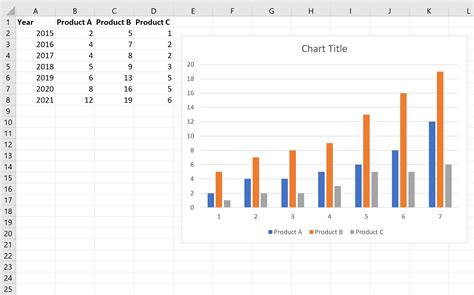
The adjacency matrix is a square matrix where the entry at row i and column j represents the presence or absence of an edge between nodes i and j. This representation is particularly useful for dense graphs, where most nodes are connected to each other. The adjacency matrix allows for efficient checks of edge existence between any two nodes, making it suitable for applications where edge queries are frequent. However, for sparse graphs, the adjacency matrix can be inefficient in terms of memory usage, as it stores a significant amount of zero entries.
| Graph Representation | Memory Usage | Edge Existence Check |
|---|---|---|
| Adjacency Matrix | O(V^2) | O(1) |
| Adjacency List | O(V + E) | O(degree(V)) |
| Edge List | O(E) | O(E) |
Adjacency List Representation
The adjacency list representation stores each node’s neighbors in a list or array. This approach is more memory-efficient than the adjacency matrix for sparse graphs, as it only stores existing edges. The adjacency list allows for efficient traversal of the graph, making it suitable for algorithms that require visiting nodes and their neighbors, such as breadth-first search (BFS) and depth-first search (DFS). However, checking the existence of an edge between two nodes can be less efficient compared to the adjacency matrix, as it may require traversing the list of neighbors.
Edge List Representation
The edge list representation stores each edge as a pair of nodes. This is a simple and memory-efficient way to represent graphs, especially useful for parallel processing and distributed systems, where edges can be processed independently. The edge list is also suitable for graphs that are too large to fit into memory, as edges can be streamed or processed in chunks. However, this representation may not be as efficient for algorithms that require frequent node or edge traversals, as it lacks the direct connectivity information provided by adjacency matrices or lists.
Comparison of Graph Representations
Each of the three graph representations has its strengths and weaknesses. The choice of representation depends on the specific characteristics of the graph, the algorithms being applied, and the trade-offs between memory usage, computational complexity, and ease of implementation. Understanding these trade-offs is crucial for efficiently solving graph-related problems in various domains.
What is the most memory-efficient way to represent a sparse graph?
+The adjacency list representation is generally the most memory-efficient for sparse graphs, as it only stores the existing edges, reducing memory waste compared to the adjacency matrix.
Which graph representation is best for frequent edge existence checks?
+The adjacency matrix is the most efficient for checking the existence of edges between any two nodes, as it allows for constant-time lookups.
What are the advantages of using an edge list representation?
+The edge list representation is simple, memory-efficient, and particularly useful for parallel processing and distributed systems. It also allows for efficient processing of edges in streams or chunks, making it suitable for very large graphs.
In conclusion, the choice of graph representation is critical for the efficient processing and analysis of graph-structured data. By understanding the characteristics and trade-offs of each representation, developers and researchers can select the most appropriate method for their specific use cases, leading to more efficient algorithms and better solutions to complex problems.