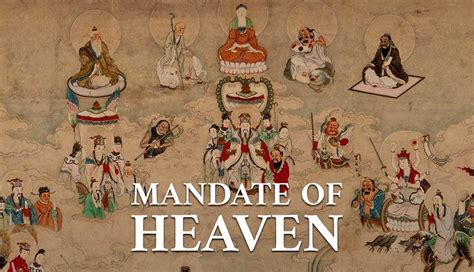
The concept of the Mandate of Heaven, also known as Tianming, is a fundamental idea in ancient Chinese philosophy and religion. It is based on the belief that heaven, or a higher power, has the authority to appoint and remove rulers based on their moral behavior and ability to maintain social order. This concept has played a crucial role in shaping Chinese history, politics, and culture for centuries. In this article, we will delve into the meaning, significance, and evolution of the Mandate of Heaven, providing a comprehensive understanding of its importance in Chinese thought and society.
Origins and Development of the Mandate of Heaven
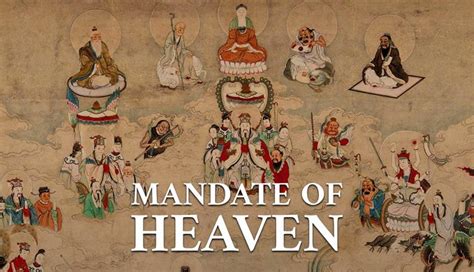
The Mandate of Heaven originated during the Zhou Dynasty (1046–256 BCE), when the concept of heaven as a moral and ethical authority was first introduced. The Zhou rulers believed that they had been appointed by heaven to rule China, and that their authority was based on their ability to maintain social order and ensure the well-being of their people. This idea was further developed during the Han Dynasty (206 BCE–220 CE), when Confucianism became the dominant philosophy in China. Confucian scholars emphasized the importance of moral behavior, personal and governmental ethics, and correct ritual behavior in maintaining the Mandate of Heaven.
Key Principles of the Mandate of Heaven
The Mandate of Heaven is based on several key principles, including the idea that heaven is a moral and ethical authority that judges the behavior of rulers. If a ruler is virtuous and just, heaven will grant them the Mandate, allowing them to maintain power and authority. However, if a ruler is cruel, corrupt, or incompetent, heaven will withdraw the Mandate, leading to the downfall of the ruler and the rise of a new dynasty. The Mandate of Heaven is also closely tied to the concept of the “cycle of history,” which holds that dynasties rise and fall in a predictable pattern, with each new dynasty representing a new opportunity for moral and social renewal.
| Dynasty | Years | Significance |
|---|---|---|
| Zhou | 1046–256 BCE | Introduction of the Mandate of Heaven concept |
| Han | 206 BCE–220 CE | Development of Confucianism and the Mandate of Heaven |
| Ming | 1368–1644 CE | Revival of Confucianism and the Mandate of Heaven |
| Qing | 1644–1912 CE | Final dynasty to claim the Mandate of Heaven |
Key Points
- The Mandate of Heaven is a fundamental concept in ancient Chinese philosophy and religion, based on the belief that heaven has the authority to appoint and remove rulers.
- The concept originated during the Zhou Dynasty and was further developed during the Han Dynasty, with Confucianism playing a significant role in its development.
- The Mandate of Heaven is closely tied to the concept of the "cycle of history," which holds that dynasties rise and fall in a predictable pattern.
- The Mandate of Heaven has played a crucial role in shaping Chinese history, politics, and culture, and continues to influence Chinese thought and society today.
- Understanding the Mandate of Heaven provides insight into the values and principles that have guided Chinese society for centuries, and appreciates the complex and nuanced nature of Chinese thought and culture.
Evolution and Significance of the Mandate of Heaven

Over time, the Mandate of Heaven has evolved and been interpreted in different ways. During the Ming Dynasty (1368–1644 CE), the concept was revived and emphasized as a means of legitimizing the rule of the emperor. The Qing Dynasty (1644–1912 CE) also claimed the Mandate of Heaven, but its interpretation was more nuanced, with an emphasis on the role of the emperor as a guardian of Chinese culture and tradition. Today, the Mandate of Heaven remains an important concept in Chinese thought and culture, with many Chinese people continuing to believe in its significance and relevance.
Impact of the Mandate of Heaven on Chinese Society
The Mandate of Heaven has had a profound impact on Chinese society, shaping the way that Chinese people think about politics, morality, and social order. The concept has been used to justify the rule of emperors and the legitimacy of governments, as well as to criticize and oppose unjust or corrupt rulers. The Mandate of Heaven has also influenced Chinese art, literature, and culture, with many works of art and literature reflecting the themes and ideas associated with the concept.
What is the Mandate of Heaven?
+The Mandate of Heaven is a fundamental concept in ancient Chinese philosophy and religion, based on the belief that heaven has the authority to appoint and remove rulers based on their moral behavior and ability to maintain social order.
How did the Mandate of Heaven originate?
+The Mandate of Heaven originated during the Zhou Dynasty, when the concept of heaven as a moral and ethical authority was first introduced. The concept was further developed during the Han Dynasty, with Confucianism playing a significant role in its development.
What is the significance of the Mandate of Heaven in Chinese history and culture?
+The Mandate of Heaven has played a crucial role in shaping Chinese history, politics, and culture, and continues to influence Chinese thought and society today. The concept has been used to justify the rule of emperors and the legitimacy of governments, as well as to criticize and oppose unjust or corrupt rulers.
In conclusion, the Mandate of Heaven is a rich and complex concept that has played a profound role in shaping Chinese history, politics, and culture. By understanding this concept, we can gain insight into the values and principles that have guided Chinese society for centuries, and appreciate the complex and nuanced nature of Chinese thought and culture. As we continue to navigate the complexities of the modern world, the Mandate of Heaven remains an important and relevant concept, offering valuable lessons and insights into the nature of power, morality, and social order.