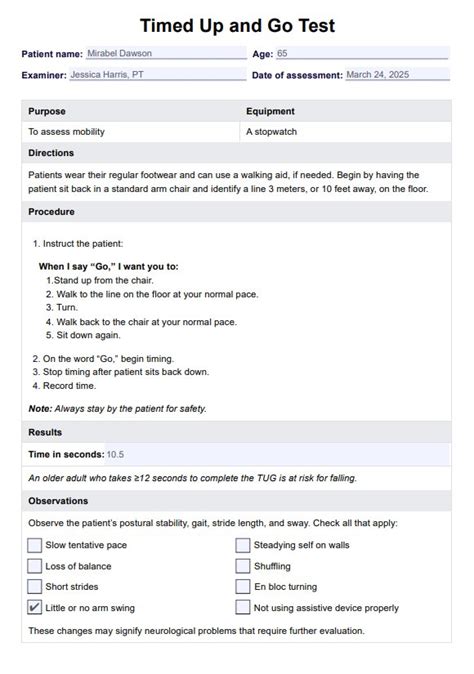
The Timed Up and Go (TUG) test is a widely used clinical assessment tool designed to evaluate an individual's mobility, balance, and fall risk. Initially developed in the 1990s by Podsiadlo and Richardson, the TUG test has become a standard measure in geriatric care, physical therapy, and rehabilitation settings. The test is simple, yet it provides valuable insights into a person's functional ability, making it an essential component of comprehensive geriatric assessments.
The TUG test involves observing an individual as they stand up from a chair, walk to a marked point 3 meters away, turn around, and return to the chair to sit down. The entire sequence is timed, with the goal of completing the task as quickly as possible while maintaining safety. The test requires a combination of strength, balance, mobility, and cognitive function, making it a comprehensive assessment of an individual's physical capabilities. The results of the TUG test can be used to identify individuals at risk of falling, monitor changes in mobility over time, and evaluate the effectiveness of interventions aimed at improving balance and gait.
Key Points
- The TUG test is a widely used assessment tool for evaluating mobility, balance, and fall risk in older adults.
- The test involves standing up from a chair, walking 3 meters, turning around, and returning to the chair, with the entire sequence being timed.
- The TUG test requires a combination of strength, balance, mobility, and cognitive function, making it a comprehensive assessment of physical capabilities.
- Results from the TUG test can be used to identify individuals at risk of falling, monitor changes in mobility over time, and evaluate the effectiveness of interventions.
- A normal TUG test result is generally considered to be less than 10 seconds for community-dwelling older adults, although this can vary depending on the individual's age and health status.
Interpretation of TUG Test Results
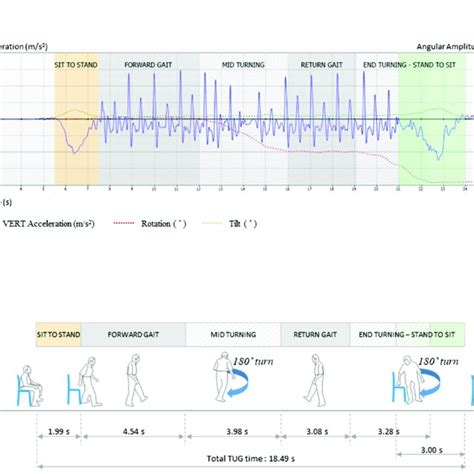
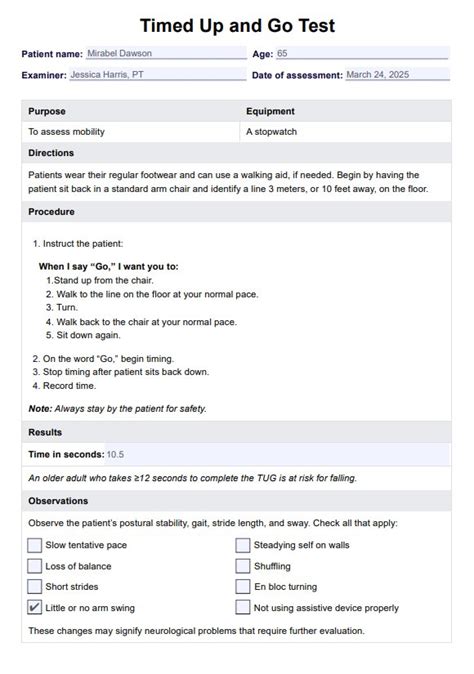
The interpretation of TUG test results is critical for understanding an individual’s mobility and fall risk. A normal TUG test result is generally considered to be less than 10 seconds for community-dwelling older adults. However, this cutoff value can vary depending on the individual’s age, health status, and cognitive function. For example, a study published in the Journal of Gerontology found that older adults with dementia had significantly longer TUG test times compared to those without dementia. Additionally, the TUG test has been shown to be a strong predictor of falls in older adults, with a meta-analysis published in the Journal of the American Geriatrics Society finding that a TUG test time of 12 seconds or longer was associated with an increased risk of falls.
Factors Influencing TUG Test Performance
Several factors can influence an individual’s performance on the TUG test, including age, sex, body mass index (BMI), and cognitive function. For example, a study published in the Journal of Aging and Physical Activity found that older adults with higher BMIs had slower TUG test times compared to those with lower BMIs. Additionally, cognitive impairment has been shown to affect TUG test performance, with a study published in the Journal of Alzheimer’s Disease finding that older adults with mild cognitive impairment had slower TUG test times compared to those without cognitive impairment.
| Factor | Influence on TUG Test Performance |
|---|---|
| Age | Increased age is associated with slower TUG test times |
| Sex | Females tend to have slower TUG test times compared to males |
| Body Mass Index (BMI) | Higher BMIs are associated with slower TUG test times |
| Cognitive Function | Cognitive impairment is associated with slower TUG test times |
Practical Applications of the TUG Test
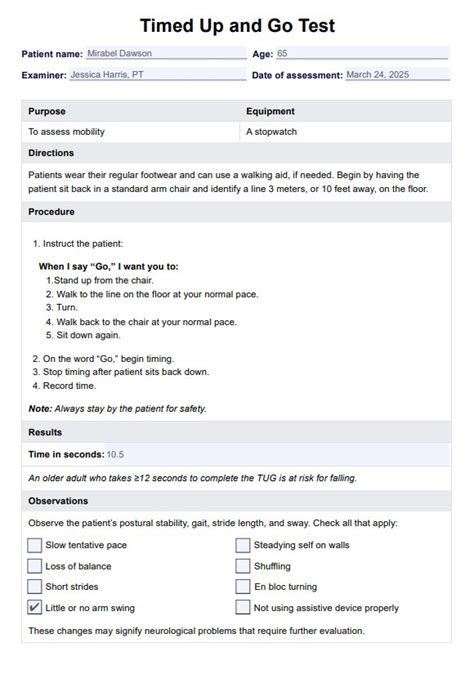
The TUG test has several practical applications in clinical and rehabilitation settings. It can be used to identify individuals at risk of falling and to monitor changes in mobility over time. The test can also be used to evaluate the effectiveness of interventions aimed at improving balance and gait, such as physical therapy or exercise programs. Additionally, the TUG test can be used to assess an individual’s readiness for discharge from a hospital or rehabilitation facility, or to determine their need for ongoing care and support.
Limitations of the TUG Test
While the TUG test is a valuable assessment tool, it has several limitations. The test is a timed measure, and as such, it may not capture all aspects of an individual’s mobility and balance. Additionally, the test is influenced by a range of factors, including age, sex, BMI, and cognitive function, which can affect its validity and reliability. Furthermore, the TUG test is a single measure, and it should be used in conjunction with other assessment tools and clinical evaluations to provide a comprehensive understanding of an individual’s mobility and fall risk.
What is the purpose of the TUG test?
+The purpose of the TUG test is to assess an individual's mobility, balance, and fall risk. The test is widely used in clinical and rehabilitation settings to identify individuals at risk of falling, monitor changes in mobility over time, and evaluate the effectiveness of interventions.
How is the TUG test performed?
+The TUG test involves standing up from a chair, walking 3 meters, turning around, and returning to the chair to sit down. The entire sequence is timed, with the goal of completing the task as quickly as possible while maintaining safety.
What is a normal TUG test result?
+A normal TUG test result is generally considered to be less than 10 seconds for community-dwelling older adults. However, this cutoff value can vary depending on the individual's age, health status, and cognitive function.
In conclusion, the TUG test is a valuable assessment tool for evaluating mobility, balance, and fall risk in older adults. The test is simple, yet it provides valuable insights into an individual’s functional ability, making it an essential component of comprehensive geriatric assessments. By considering the individual’s overall health status, cognitive function, and other factors that may influence test performance, healthcare professionals can use the TUG test to identify individuals at risk of falling, monitor changes in mobility over time, and evaluate the effectiveness of interventions aimed at improving balance and gait.