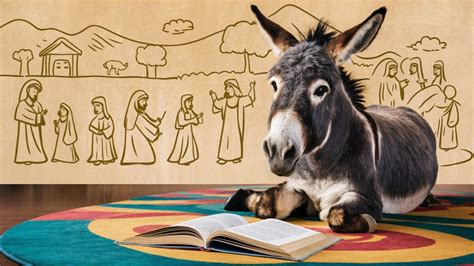
The story of the talking donkey in the Bible is a fascinating and intriguing one, found in the book of Numbers, chapter 22. It is a tale that has been passed down for centuries, and its significance and meaning continue to be debated among scholars and theologians. At its core, the story revolves around the encounter between the prophet Balaam and the talking donkey, an event that not only showcases the supernatural elements present in the biblical narrative but also serves as a pivotal moment in understanding the relationship between God, prophets, and the natural world.
The Context of the Story
To fully appreciate the story of the talking donkey, it is essential to understand the context in which it occurs. The story takes place during the Israelites’ journey through the wilderness, as they approach the land of Moab. The king of Moab, Balak, fearful of the Israelites’ military prowess and their recent victories, decides to hire Balaam, a renowned prophet from a neighboring region, to curse the Israelites. This act is seen as a desperate attempt to weaken the Israelites and thereby protect Moab from potential invasion.
Balaam’s Journey and the Talking Donkey
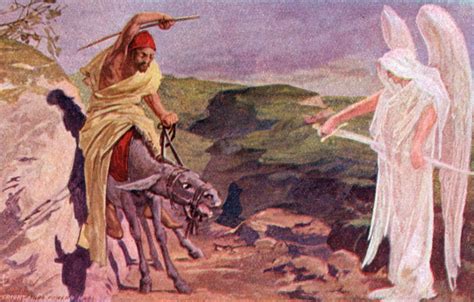
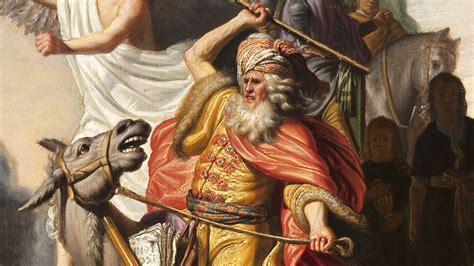
Balaam, though initially hesitant due to God’s instructions not to go, eventually sets out on the journey to Moab, accompanied by his donkey. On their way, the donkey, seeing an angel of the Lord standing in their path with a drawn sword, turns aside three times to avoid the angel, each time being beaten by Balaam for its perceived disobedience. Unbeknownst to Balaam, the donkey is acting on a divine warning that Balaam cannot see. It is only when God opens the donkey’s mouth, allowing it to speak to Balaam, that the prophet becomes aware of the angel’s presence and the reason for the donkey’s actions.
| Key Event | Description |
|---|---|
| God's Initial Instruction | God tells Balaam not to go to Moab or curse the Israelites. |
| Balaam's Decision | Despite God's warning, Balaam decides to go to Moab, driven by the promise of wealth and honor. |
| Encounter with the Angel | The donkey sees an angel of the Lord and turns aside to avoid it, while Balaam is oblivious to the angel's presence. |
| The Donkey Speaks | God opens the donkey's mouth, and it speaks to Balaam, explaining its actions and revealing the angel's presence. |
Themes and Interpretations
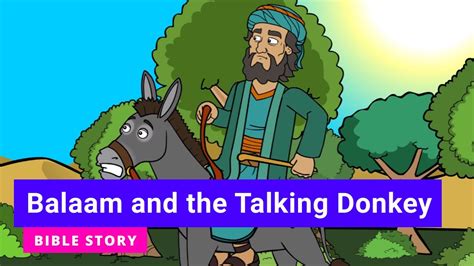
The story of the talking donkey is rich in themes and interpretations. One of the primary themes is the concept of obedience and disobedience. Balaam’s initial disobedience to God’s command not to go to Moab and his subsequent inability to see the angel until the donkey speaks highlight the dangers of ignoring divine guidance. The story also underscores the idea that God can communicate through any means, emphasizing the omnipotence and omniscience of God.
Symbolism and the Role of the Donkey
The donkey in the story can be seen as a symbol of humility and obedience. Unlike Balaam, who is blinded by his own ambitions, the donkey is attentive to the divine presence and acts accordingly. The donkey’s ability to speak also symbolizes the moment when the ordinary becomes extraordinary, highlighting God’s ability to transcend the natural order and communicate in unexpected ways.
Key Points
- The story of the talking donkey is a pivotal moment in the biblical narrative, highlighting themes of obedience, divine guidance, and the relationship between humans and animals.
- Balaam's journey and his encounter with the talking donkey serve as a cautionary tale about the dangers of disobeying God's commands and the importance of humility.
- The talking donkey is a symbol of God's power to communicate in unexpected ways and to use any means to convey His message.
- The story underscores the idea that God's will can be revealed through both conventional and unconventional means, emphasizing the need for constant vigilance and obedience.
- The narrative also explores the concept of perception and understanding, contrasting Balaam's limited perspective with the donkey's intuitive awareness of the divine presence.
In conclusion, the story of the talking donkey in the Bible offers a complex and multifaceted exploration of divine communication, obedience, and the natural world. Through its unique blend of the ordinary and the extraordinary, the story challenges readers to reconsider their assumptions about the ways in which God interacts with the world and the importance of remaining attentive to divine guidance.
What is the main theme of the story of the talking donkey?
+The main theme of the story is the importance of obedience to God’s will and the dangers of disobedience. It also highlights God’s ability to communicate in unexpected ways and the need for humility and vigilance in one’s relationship with the divine.
What role does the donkey play in the story?
+The donkey serves as a symbol of humility and obedience, acting as a conduit for God’s message to Balaam. Its ability to speak underscores the supernatural elements of the story and emphasizes God’s power to transcend the natural order.
What lesson can be learned from Balaam’s encounter with the talking donkey?
+The lesson from Balaam’s encounter is the importance of listening to and obeying God’s guidance, even when it comes through unexpected means. It also teaches about the dangers of allowing personal ambitions and desires to cloud one’s judgment and lead to disobedience.