
The rules of grammar can often seem complex and daunting, especially when it comes to using words like "neither" and "nor" correctly. These two words are known as correlative conjunctions, which means they are used together to connect words or phrases of equal importance within a sentence. Understanding how to use "neither" and "nor" requires a grasp of basic grammar principles, including subject-verb agreement and the structure of negative sentences.
Basic Usage of Neither and Nor
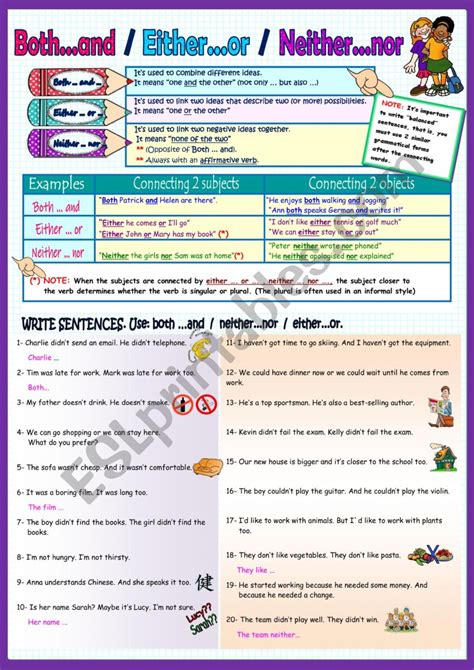
In English grammar, “neither” is used to indicate that two or more alternatives are not true. It is often paired with “nor” to connect these alternatives in a sentence. The basic structure for using “neither” and “nor” is as follows: “Neither [first alternative] nor [second alternative] [rest of the sentence].” For example, “I like neither coffee nor tea” indicates that the speaker does not like either of the two beverages mentioned.
Subject-Verb Agreement with Neither and Nor
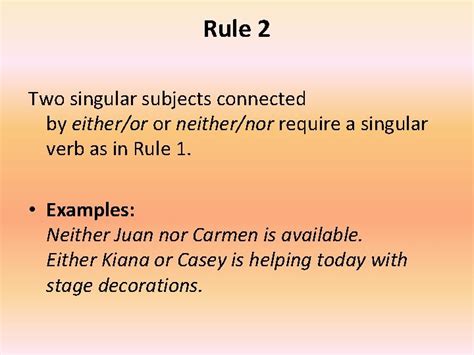
When using “neither” and “nor” in a sentence, subject-verb agreement is crucial. The verb should agree with the subject that immediately precedes it, but when “neither” and “nor” are involved, the verb often agrees with the noun closest to it. However, to maintain grammatical correctness, especially in formal or written English, it’s recommended to use the verb form that agrees with the subject of the sentence. For instance, “Neither the manager nor the employees were present” is grammatically correct because the plural verb “were” agrees with the plural subject “employees,” which is the subject closest to the verb.
| Example Sentence | Explanation |
|---|---|
| Neither John nor his friends are going. | The verb "are" agrees with the plural noun "friends," which is closest to the verb. |
| Neither the apples nor the banana is ripe. | The verb "is" agrees with the singular noun "banana," which is closest to the verb. |
Negative Sentences and Double Negatives
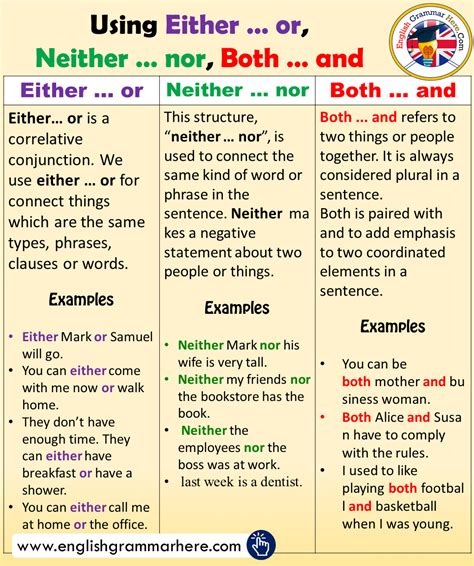
One of the most critical aspects of using “neither” and “nor” is understanding how they interact with other negative words in a sentence. A common mistake is creating a double negative, which can completely reverse the intended meaning of a sentence. For example, saying “I don’t like neither coffee nor tea” is incorrect because “don’t” and “neither” both express negation, resulting in a double negative. The correct sentence would be “I don’t like either coffee or tea” or “I like neither coffee nor tea.”
Avoiding Double Negatives
To avoid double negatives, ensure that you are not combining “neither” or “nor” with other negative words like “not,” “don’t,” “doesn’t,” etc. If you’re using “neither” and “nor,” you should not use any other negative word in the same sentence. For instance, “She doesn’t like neither of the options” is incorrect; the correct sentence would be “She likes neither of the options.”
Key Points
- Use "neither" and "nor" to connect two negative alternatives in a sentence.
- Ensure subject-verb agreement, preferably with the noun closest to the verb.
- Avoid double negatives by not combining "neither" or "nor" with other negative words.
- Use these correlative conjunctions to enhance clarity and precision in your sentences.
- Practice using "neither" and "nor" in different contexts to improve your command of English grammar.
In conclusion, mastering the use of "neither" and "nor" in English grammar requires understanding their function as correlative conjunctions, being mindful of subject-verb agreement, and avoiding the pitfalls of double negatives. By applying these principles, individuals can enhance their communication skills, ensuring that their messages are conveyed clearly and effectively.
What is the primary function of “neither” and “nor” in a sentence?
+The primary function of “neither” and “nor” is to connect two negative alternatives, indicating that neither of the options is true or acceptable.
How do you avoid double negatives when using “neither” and “nor”?
+To avoid double negatives, do not combine “neither” or “nor” with other negative words like “not,” “don’t,” or “doesn’t” in the same sentence.
What is the correct subject-verb agreement when using “neither” and “nor”?
+The verb should agree with the subject that immediately precedes it. However, for grammatical correctness, especially in formal English, the verb often agrees with the noun closest to it, but it’s recommended to use the verb form that agrees with the subject of the sentence for clarity and precision.