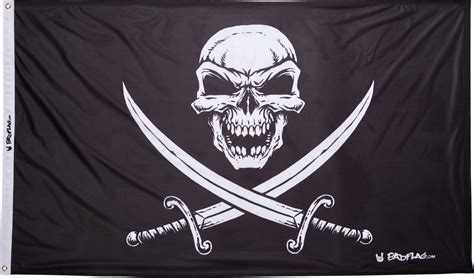
The pirate flag, often referred to as the Jolly Roger, is one of the most recognizable symbols of piracy on the high seas. With its skull and crossbones, or other ominous designs, the flag was used to intimidate and strike fear into the hearts of those who sailed the oceans. The history of the pirate flag is as fascinating as it is complex, with various designs and meanings throughout the Golden Age of Piracy, which roughly spanned from the late 17th century to the early 18th century. To delve into the world of pirate flags, it's essential to understand their historical context, design variations, and the significance they held for pirates and their adversaries alike.
Origins and Evolution of Pirate Flags
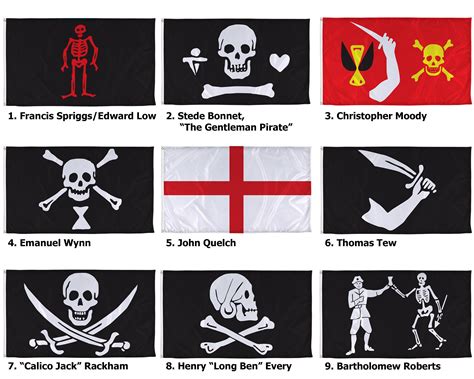
The origins of the pirate flag are shrouded in mystery, but it is believed that the use of such flags dates back to the early days of piracy. Initially, pirate flags may not have been as standardized as they became during the Golden Age of Piracy. The term “Jolly Roger” itself is thought to have originated from the French “joli rouge,” meaning “pretty red,” which could refer to the red flags flown by some pirate ships. Over time, the designs became more complex, incorporating symbols like skulls, crossbones, hearts, and swords, each with its own meaning and significance. For instance, the skull and crossbones, now a ubiquitous symbol of piracy, signified death and danger, serving as a clear warning to potential targets.
Design Variations and Their Meanings
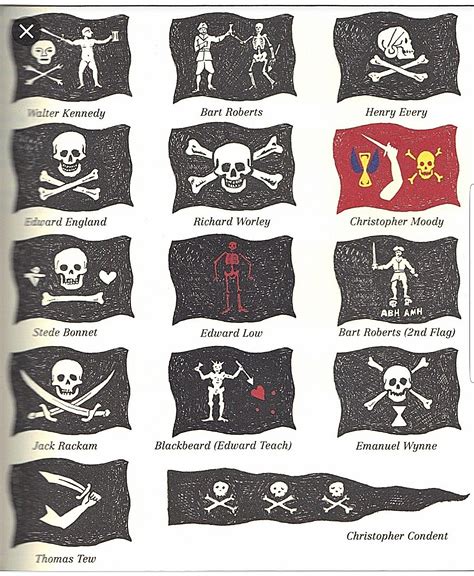
Pirate flags were not uniform; different pirates and pirate ships had their unique designs. These designs often reflected the personality, reputation, or the specific threats that a pirate or a crew wished to convey. For example, Calico Jack Rackham, one of the most infamous pirates, flew a flag featuring a skull and crossed swords, which symbolized the crew’s willingness to fight. Another notable pirate, Bartholomew Roberts, also known as “Black Bart,” had a flag that depicted him standing on two skulls, labeled “ABH” and “AMH,” which stood for “A Barbadian’s Head” and “A Martinician’s Head,” reflecting his hatred for the islands of Barbados and Martinique, which he blamed for his misfortunes. The variety in designs not only showcased the individuality of each pirate crew but also served as a form of psychological warfare, aiming to demoralize their enemies before even engaging in battle.
| Pirate | Flag Design | Meaning |
|---|---|---|
| Calico Jack Rackham | Skull and Crossed Swords | Willingness to Fight |
| Bartholomew Roberts | Pirate Standing on Two Skulls | Hatred for Barbados and Martinique |
| Henry Every | Red Flag with a Skull | Warning of Impending Attack |
Key Points
- The pirate flag, or Jolly Roger, was a symbol of piracy used to intimidate and identify pirate ships.
- The origins of the term "Jolly Roger" are believed to come from the French "joli rouge," meaning "pretty red," which may refer to early red pirate flags.
- Pirate flags varied in design, often reflecting the personality or the specific threats a pirate wished to convey, such as skulls and crossbones signifying death and danger.
- Flags served as a form of psychological warfare and were used strategically to demoralize enemies and convey messages.
- The historical context and evolution of pirate flags reveal a complex system of communication and identification among pirates during the Golden Age of Piracy.
Impact and Legacy of Pirate Flags
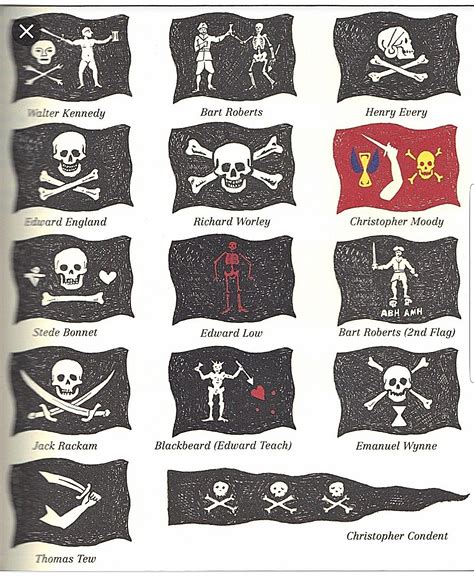
The impact of pirate flags extends beyond their historical use. They have become an integral part of popular culture, symbolizing rebellion, freedom, and the allure of the high seas. In modern times, the Jolly Roger and other pirate symbols are used in various contexts, from entertainment and fashion to political movements, often to convey a sense of nonconformity or challenge to authority. The enduring appeal of pirate flags can be attributed to their rich history, the fascinating stories of the pirates who flew them, and the timeless human desire for adventure and defiance.
Pirate Flags in Modern Culture
The influence of pirate flags can be seen in numerous aspects of modern culture. In film and literature, pirate flags are often used as a visual shorthand to establish the pirate genre and setting. In fashion, pirate symbols like the skull and crossbones are used as motifs, appealing to those who wish to express a sense of edginess or independence. Furthermore, in political and social movements, elements of pirate imagery have been adopted to symbolize resistance against established powers or to represent a desire for freedom and autonomy. This widespread adoption of pirate symbols underscores the profound impact that the Golden Age of Piracy has had on our collective imagination and cultural heritage.
What is the significance of the skull and crossbones on pirate flags?
+The skull and crossbones, one of the most recognizable symbols of piracy, signified death and danger, serving as a warning to potential targets of the pirate's willingness to fight and the fate that awaited those who resisted.
Did all pirate ships fly the Jolly Roger?
+No, not all pirate ships flew the Jolly Roger. While the term "Jolly Roger" is often used generically to refer to any pirate flag, different pirates and crews had their unique flags, reflecting their identities, reputations, or specific messages they wished to convey.
What is the historical context of the term "Jolly Roger"?
+The term "Jolly Roger" is believed to have originated from the French "joli rouge," meaning "pretty red," which could refer to early red flags flown by pirate ships. Over time, the term came to be associated with the skull and crossbones design, among other symbols used by pirates.
In conclusion, pirate flags are more than just symbols of a bygone era; they represent a complex system of communication, identity, and psychological warfare that defined the Golden Age of Piracy. Through their designs, variations, and the stories they tell, pirate flags offer a fascinating glimpse into the lives of pirates and the world they inhabited. As we continue to be captivated by the allure of piracy, the Jolly Roger and its brethren remain potent symbols, reminding us of the power of flags to convey meaning, inspire fear, and capture the imagination of people around the world.