The Jewish calendar is filled with numerous holidays and celebrations that hold significant cultural, historical, and spiritual importance. Among these, seven Jewish holidays stand out for their widespread observance and profound impact on the community. These holidays not only commemorate pivotal moments in Jewish history but also offer opportunities for spiritual reflection, family gatherings, and communal celebrations. Understanding these holidays provides insight into the rich tapestry of Jewish tradition and its enduring relevance in modern times.
Introduction to Jewish Holidays
Jewish holidays are a cornerstone of Jewish life, reflecting the community’s deep connection to its heritage and faith. These observances are woven into the fabric of the Jewish calendar, which is lunisolar, combining elements of both lunar and solar cycles. The holidays are not merely historical commemorations but living, breathing practices that evolve with each passing year, adapting to the needs and contexts of Jewish communities worldwide.
Key Points
- Rosh Hashanah marks the beginning of the Jewish New Year, a time for reflection and renewal.
- Yom Kippur is the Day of Atonement, focusing on forgiveness and repentance.
- Sukkot is a week-long festival commemorating the sheltering of the Israelites in the wilderness.
- Shemini Atzeret/Simchat Torah celebrates the conclusion of the annual Torah reading cycle.
- Passover (Pesach) recalls the Exodus from Egypt, emphasizing freedom and liberation.
- Shavuot commemorates the giving of the Torah at Mount Sinai, highlighting the importance of Jewish law and tradition.
- Hanukkah is an eight-day festival of light, celebrating the miracle of the rededication of the Temple in Jerusalem.
Rosh Hashanah and Yom Kippur: The High Holy Days

Rosh Hashanah and Yom Kippur, known collectively as the High Holy Days, initiate the Jewish holiday season. Rosh Hashanah, observed on the first and second days of the Hebrew month of Tishrei, marks the beginning of the Jewish New Year. It is a time when Jews around the world gather in synagogues, reflecting on the past year and looking forward to the new one with hope and anticipation. The holiday is characterized by the sounding of the shofar, a ram’s horn, which symbolizes awakening to the call of repentance and new beginnings.
Yom Kippur: The Day of Atonement
Yom Kippur, occurring ten days after Rosh Hashanah, is the most solemn day in the Jewish calendar. It is a day of fasting and intense prayer, dedicated to seeking forgiveness for sins committed during the past year. The fast, which lasts from sunset to sunset, is one of the most significant aspects of the holiday, as it allows individuals to focus on their spiritual journey, free from physical distractions. Yom Kippur culminates in the Neilah service, a final, desperate plea for forgiveness before the gates of heaven are considered closed.
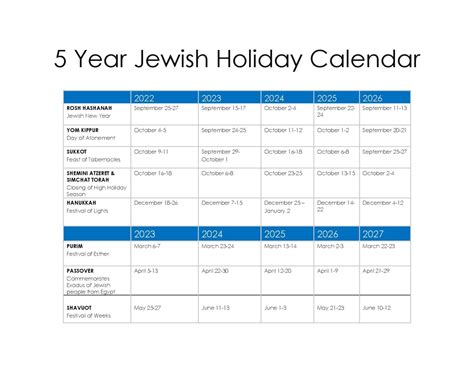
| Holiday | Duration | Purpose |
|---|---|---|
| Rosh Hashanah | 2 days | New Year, Reflection, and Renewal |
| Yom Kippur | 1 day | Atonement and Forgiveness |
| Sukkot | 7 days | Commemoration of Wilderness Shelter |
| Shemini Atzeret/Simchat Torah | 2 days | Conclusion of Torah Reading Cycle |
| Passover (Pesach) | 7 or 8 days | Exodus from Egypt, Freedom |
| Shavuot | 1 or 2 days | Giving of the Torah |
| Hanukkah | 8 days | Miracle of the Temple's Rededication |
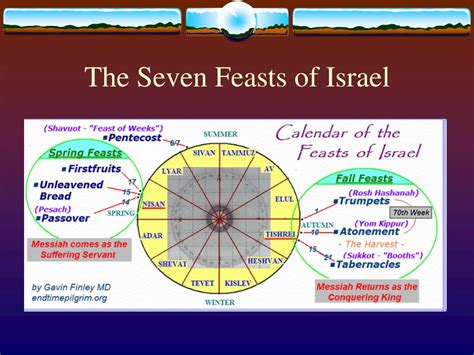
Sukkot, Shemini Atzeret, and Simchat Torah
Sukkot, which begins on the 15th day of the Hebrew month of Tishrei, is a week-long festival that commemorates the sheltering of the Israelites in the wilderness after their exodus from Egypt. The holiday is characterized by the construction of sukkot, temporary dwellings that Jews build and reside in during the festival, symbolizing the fragility and beauty of life. Following Sukkot, Shemini Atzeret and Simchat Torah are celebrated, marking the conclusion of the annual Torah reading cycle and the beginning of a new cycle, respectively. These holidays are marked by joyous processions around the synagogue, known as hakafot, where congregants sing and dance with the Torah scrolls.
Passover: A Celebration of Freedom
Passover, or Pesach, is a week-long holiday that recalls the Exodus from Egypt, one of the most pivotal events in Jewish history. It begins on the 15th day of the Hebrew month of Nisan and is observed by removing all leavened products from the home, symbolizing the haste with which the Israelites left Egypt. The Seder, a ritual meal held on the first night (and, outside of Israel, the second night) of Passover, is a highlight of the holiday, featuring the retelling of the Exodus story, the eating of symbolic foods, and the participation of family and friends.
Shavuot and Hanukkah: Festivals of Light and Law
Shavuot, occurring 49 days after the second day of Passover, commemorates the giving of the Torah at Mount Sinai. It is a time of great rejoicing, as Jews celebrate the receipt of the divine law that has guided their community for millennia. The holiday is traditionally observed by staying up all night to study Torah, known as Tikkun Leil Shavuot, and by eating dairy products, a custom whose origins are rooted in Jewish tradition.
Hanukkah: A Miracle of Light
Hanukkah, an eight-day festival beginning on the 25th day of the Hebrew month of Kislev, celebrates the miracle of the rededication of the Temple in Jerusalem during the Maccabean Revolt. The miracle of Hanukkah refers to the oil that burned in the Temple’s menorah for eight days, despite there only being enough oil for one day, allowing the Jews to prepare new oil. Hanukkah is observed by lighting the hanukkiah, a special nine-branched menorah, adding one light each night until all eight lights and the shamash (helper candle) are lit. It is a joyous holiday, marked by the exchange of gifts, the eating of fried foods (such as latkes and sufganiyot), and the singing of special songs.
What is the significance of the Jewish holiday of Rosh Hashanah?
+Rosh Hashanah marks the beginning of the Jewish New Year, a time for reflection, prayer, and renewal. It is the first of the High Holy Days, leading up to Yom Kippur, the Day of Atonement.
How do Jews observe Yom Kippur?
+Yom Kippur is observed with a 25-hour fast, beginning before sunset and ending after sunset the following day. The day is spent in synagogue, praying for forgiveness, and reflecting on the past year.
What is the meaning behind the construction of sukkot during the holiday of Sukkot?
+The sukkah represents the temporary shelters the Israelites lived in during their journey through the wilderness after leaving Egypt. It serves as a reminder of the fragility of life and the importance of gratitude for what one has.
How is Hanukkah typically celebrated?
+Hanukkah is celebrated by lighting the hanukkiah each night, exchanging gifts, eating traditional foods such as latkes and sufganiyot, and spending time with family and friends.
What is the spiritual significance of Shavuot?
+Shavuot commemorates the giving of the Torah at Mount Sinai, marking the moment when the Jewish people received the divine law that has guided them for centuries. It is a celebration of the Jewish people's acceptance of their covenant with God.
Why is Passover an important holiday in the Jewish calendar?
+Passover is crucial as it recalls the Exodus from Egypt, symbolizing the transition from slavery to freedom. It serves as a reminder of the Jewish people's history and their relationship with God.
In conclusion, the seven Jewish holidays of Rosh Hashanah, Yom Kippur, Sukkot, Shemini Atzeret/Simchat Torah, Passover, Shavuot, and Hanukkah are not just celebrations but profound expressions of Jewish identity, faith, and community. Each holiday offers a unique window into the Jewish experience, providing opportunities for spiritual growth, communal bonding, and the preservation of traditions that have endured for millennia.
Meta Description: Explore the significance and traditions of the seven major Jewish holidays, understanding their role in Jewish life and culture. From Rosh Hashanah to Hanukkah, delve into the history, customs, and spiritual importance of these celebrations.