The concept of reaching a blood alcohol concentration (BAC) of 0.08% is a critical threshold, as it is the legal limit for driving under the influence (DUI) in many jurisdictions. Understanding how different factors, including the type and amount of alcohol consumed, can influence BAC is essential for making informed decisions about drinking and driving. One common question is how many beers it takes to reach a BAC of 0.08%. However, this is not a straightforward calculation due to variables such as body weight, gender, and the alcohol content of the beverages consumed.
Factors Influencing BAC
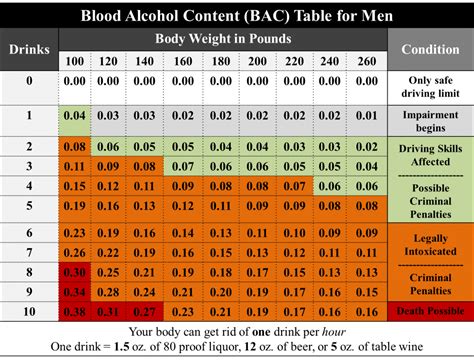
Several factors can affect how quickly a person’s BAC rises, including their weight, the rate of alcohol consumption, and whether they have eaten recently. Generally, the smaller the person and the more alcohol consumed in a short period, the faster their BAC will increase. Additionally, drinking on an empty stomach can lead to a more rapid increase in BAC compared to consuming alcohol with food.
Standard Drink and Alcohol Content
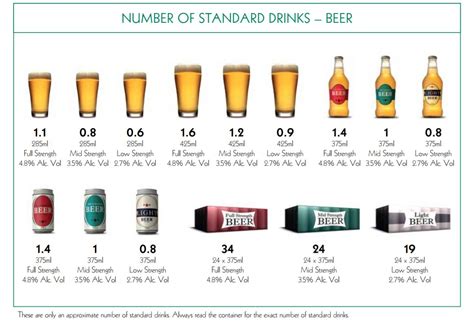
A standard drink in the United States is defined as a 12-ounce beer, a 5-ounce glass of wine, or a 1.5-ounce shot of distilled spirits, each containing about 0.6 ounces (14 grams) of pure alcohol. However, beers can vary significantly in their alcohol content, ranging from about 3% to over 12% alcohol by volume (ABV). The alcohol content of the beer, therefore, plays a crucial role in determining how many beers it would take to reach a BAC of 0.08%.
| Alcohol Content (ABV) | Example Beers |
|---|---|
| 3-4% | Light beers, session ales |
| 5-6% | Standard beers, pale ales |
| 7-8% | IPA, double bocks |
| 9-12% | Imperial stouts, barley wines |
Calculating BAC
To estimate how many beers it might take for an individual to reach a BAC of 0.08%, one can use the Widmark formula, which takes into account the person’s weight, the alcohol content of the drinks, and the time over which the drinks are consumed. However, this formula provides an estimate and does not account for all individual variability, such as differences in metabolism and body composition.
Widmark Formula Simplification
A simplified approach to estimating the number of drinks (assuming a standard drink) is to use the following rough guideline: for a 150-pound person, one standard drink will increase the BAC by about 0.025% to 0.030%. Thus, to reach a BAC of 0.08%, it would take approximately 3 standard drinks for a 150-pound person, assuming the drinks are consumed over a short period and without food. However, for beers with higher or lower ABV, this number would need to be adjusted accordingly.
Key Points
- The number of beers needed to reach a BAC of 0.08% varies significantly based on the beer's alcohol content, the individual's weight, and the consumption rate.
- Standard drinks and their alcohol content serve as a baseline for estimates but may not reflect the specific characteristics of the beverages being consumed.
- Individual factors such as metabolism, eating, and overall health can influence how alcohol affects BAC.
- It's essential to consider these factors and to drink responsibly to avoid impaired driving and other alcohol-related risks.
- Tools and calculators are available that can provide more personalized estimates based on specific details about the drinks and the individual.
In conclusion, while it's challenging to provide an exact number of beers that would result in a BAC of 0.08% without knowing more specific details, understanding the factors that influence BAC and taking a responsible approach to alcohol consumption can help individuals make safer choices. Always prioritize safe drinking practices and plan for a sober ride to avoid the risks associated with driving under the influence.
How does body weight affect BAC?
+Generally, the smaller the person, the fewer drinks it takes to reach a given BAC level. This is because alcohol is distributed throughout the body based on water content, and smaller individuals have less body water in which to dilute the alcohol.
Can eating before drinking reduce BAC?
+Eating before or while drinking can slow down the absorption of alcohol into the bloodstream, potentially reducing the peak BAC level. However, it does not prevent intoxication or significantly lower BAC over time.
How long does it take for BAC to return to zero?
+The time it takes for BAC to return to zero depends on how much alcohol was consumed and the individual’s metabolism. Generally, the body can process about one standard drink per hour, but this can vary based on several factors, including body weight and overall health.