When interacting with Spanish speakers, expressing gratitude is a significant aspect of building relationships and showing respect. The word "gracias" (thank you) is a fundamental term in Spanish, but there are various ways to convey appreciation depending on the context and level of formality. Mastering these expressions can enhance your communication and make your interactions more meaningful.
Understanding the Importance of Gratitude in Spanish Culture

In Spanish-speaking countries, gratitude is highly valued as a social courtesy. It’s essential to learn how to express thanks in different situations, from casual conversations to formal events. The way you say “thank you” can significantly impact how your message is received and perceived by native speakers.
Key Points
- Learn the basic expression "gracias" and its variations.
- Understand the context and level of formality required in different situations.
- Practice using different expressions to convey gratitude.
- Be mindful of cultural nuances and regional differences.
- Use non-verbal cues like body language and tone of voice to reinforce your gratitude.
1. Gracias - The Basic Expression
The most common way to say “thank you” in Spanish is “gracias.” This term is widely used in both formal and informal settings. You can use it when someone helps you, gives you something, or shows you kindness. For example, “Gracias por tu ayuda” (thank you for your help).
2. Muchas Gracias - Expressing Greater Appreciation
To express more significant gratitude, you can use “muchas gracias,” which translates to “thank you very much.” This phrase is suitable for situations where you want to show deeper appreciation, such as when someone goes out of their way to help you. For instance, “Muchas gracias por todo” (thank you very much for everything).
3. De Nada - You’re Welcome
Although not a direct expression of gratitude, “de nada” (you’re welcome) is an essential phrase to know when interacting with Spanish speakers. When someone thanks you, you can respond with “de nada” to acknowledge their gratitude and show that you’re happy to have helped.
4. Por Favor - Please
While “por favor” (please) is not exclusively an expression of gratitude, it can be used to show appreciation when making a request. For example, “¿Podrías ayudarme, por favor?” (could you help me, please?). This phrase demonstrates politeness and consideration for the other person’s time and effort.
5. Estoy Muy Agradecido/Agradecida - I’m Very Thankful
To express a deeper sense of gratitude, you can use “estoy muy agradecido” (I’m very thankful) for males or “estoy muy agradecida” for females. This phrase is suitable for formal situations or when you want to convey a strong sense of appreciation. For example, “Estoy muy agradecido por su apoyo” (I’m very thankful for your support).
| Expression | Translation | Usage |
|---|---|---|
| Gracias | Thank you | Basic, informal, and formal situations |
| Muchas Gracias | Thank you very much | Situations requiring deeper appreciation |
| De Nada | You're welcome | Responding to gratitude |
| Por Favor | Please | Making polite requests |
| Estoy Muy Agradecido/Agradecida | I'm very thankful | Formal situations or strong appreciation |
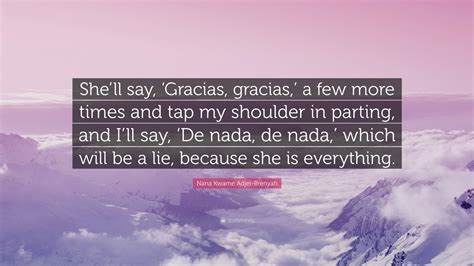
In conclusion, mastering various ways to say "gracias" in Spanish can significantly enhance your interactions with native speakers. By understanding the context, level of formality, and cultural nuances, you can choose the most appropriate expression to convey your gratitude and appreciation.
What is the most common way to say “thank you” in Spanish?
+The most common way to say “thank you” in Spanish is “gracias.”
How do you express greater appreciation in Spanish?
+To express greater appreciation, you can use “muchas gracias,” which translates to “thank you very much.”
What is the difference between “gracias” and “de nada”?
+“Gracias” is used to express gratitude, while “de nada” is used to respond to gratitude, meaning “you’re welcome.”