
The term "Dx" is a commonly used abbreviation in the medical field, which stands for "diagnosis." It refers to the process of identifying and determining the nature of a disease, injury, or condition that is affecting a patient. In medical terminology, the diagnosis is the conclusion reached by a healthcare professional after evaluating a patient's symptoms, medical history, physical examination, laboratory tests, and other relevant information. The diagnosis is a critical component of the medical decision-making process, as it guides the development of an effective treatment plan and helps healthcare providers to predict the patient's prognosis.
Understanding the Diagnostic Process
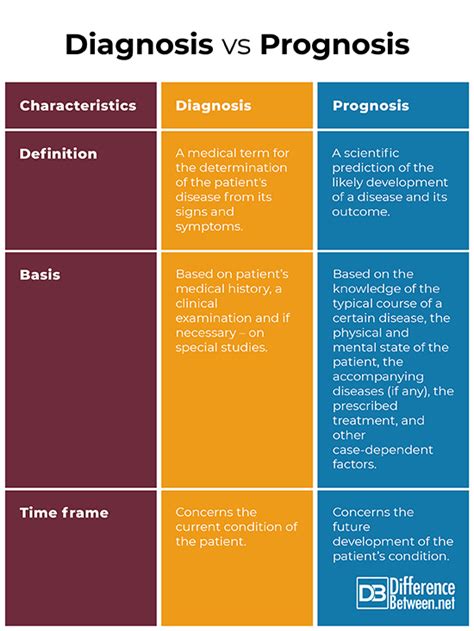
The diagnostic process involves several steps, including data collection, hypothesis generation, and testing. Healthcare professionals use a combination of clinical judgment, medical knowledge, and diagnostic tests to formulate a diagnosis. The diagnostic process can be complex and may involve multiple iterations, as new information becomes available or as the patient’s condition evolves. In some cases, a definitive diagnosis may not be possible, and a healthcare provider may need to provide a differential diagnosis, which is a list of potential causes for the patient’s symptoms.
Types of Diagnoses
There are several types of diagnoses, including clinical diagnoses, laboratory diagnoses, and radiologic diagnoses. A clinical diagnosis is based on the patient’s symptoms, medical history, and physical examination. A laboratory diagnosis is based on the results of laboratory tests, such as blood work or urinalysis. A radiologic diagnosis is based on the results of imaging studies, such as X-rays or MRI scans. In some cases, a diagnosis may be provisional, meaning that it is subject to change as new information becomes available.
| Diagnostic Category | Definition |
|---|---|
| Clinical Diagnosis | Based on patient symptoms, medical history, and physical examination |
| Laboratory Diagnosis | Based on laboratory test results |
| Radiologic Diagnosis | Based on imaging study results |
Key Points
- The term "Dx" is an abbreviation for "diagnosis," which refers to the process of identifying and determining the nature of a disease, injury, or condition.
- The diagnostic process involves data collection, hypothesis generation, and testing, and may involve multiple iterations.
- There are several types of diagnoses, including clinical diagnoses, laboratory diagnoses, and radiologic diagnoses.
- A definitive diagnosis may not always be possible, and healthcare providers may need to provide a differential diagnosis.
- The diagnostic process is critical to healthcare, as it enables healthcare providers to develop effective treatment plans and improve patient outcomes.
Diagnostic Challenges and Opportunities

Despite the importance of diagnosis, there are several challenges and opportunities in the diagnostic process. One of the major challenges is diagnostic error, which can occur due to a variety of factors, including incomplete or inaccurate information, cognitive biases, and systemic errors. According to a study published in the Journal of the American Medical Association, diagnostic errors affect approximately 12 million adults in the United States each year, resulting in significant morbidity, mortality, and economic costs.
Improving Diagnostic Accuracy
To improve diagnostic accuracy, healthcare providers can use a variety of strategies, including clinical decision support systems, diagnostic checklists, and multidisciplinary team meetings. Additionally, healthcare providers can engage in ongoing education and training to stay up-to-date with the latest medical knowledge and diagnostic techniques. By working together and using a combination of these strategies, healthcare providers can reduce diagnostic errors and improve patient outcomes.
| Diagnostic Error Category | Definition |
|---|---|
| No-Fault Error | Error that occurs despite proper care and attention |
| Systemic Error | Error that occurs due to flaws in the healthcare system |
| Cognitive Error | Error that occurs due to cognitive biases or limitations |
What is the definition of diagnosis in medicine?
+Diagnosis in medicine refers to the process of identifying and determining the nature of a disease, injury, or condition that is affecting a patient.
What are the different types of diagnoses?
+There are several types of diagnoses, including clinical diagnoses, laboratory diagnoses, and radiologic diagnoses.
What is diagnostic error, and how can it be prevented?
+Diagnostic error refers to the failure to establish an accurate and timely explanation of the patient's health problem. It can be prevented by using clinical decision support systems, diagnostic checklists, and multidisciplinary team meetings, as well as engaging in ongoing education and training.
The diagnostic process is a complex and critical component of healthcare, and understanding its various aspects is essential for healthcare providers to deliver high-quality care. By recognizing the importance of diagnosis and working to improve diagnostic accuracy, healthcare providers can reduce errors, improve patient outcomes, and enhance the overall quality of care.