The terms "externship" and "internship" are often used interchangeably, but they have distinct differences in terms of their purpose, duration, and benefits. Both externships and internships provide students and young professionals with valuable work experience, but they serve different goals and offer varying levels of involvement. In this article, we will delve into the differences between externships and internships, exploring their definitions, characteristics, and implications for career development.
Definitions and Purposes
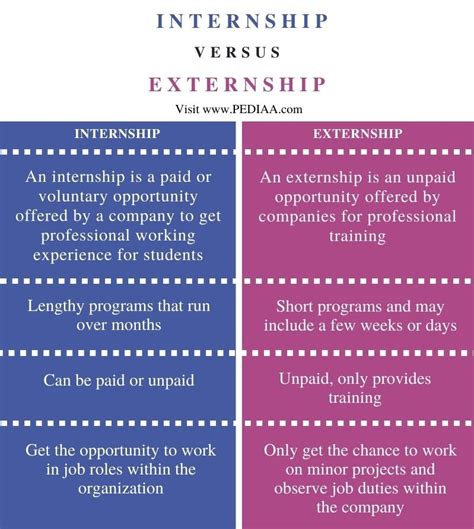
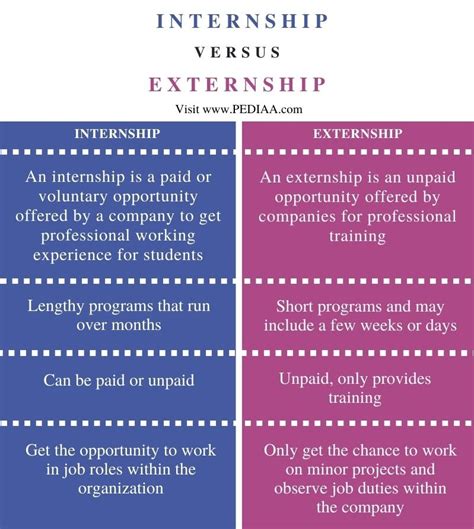
An internship is a temporary work experience that allows individuals to gain practical skills and knowledge in a specific field or industry. Internships can be paid or unpaid and usually last from a few months to a year. The primary purpose of an internship is to provide hands-on experience, allowing individuals to apply theoretical knowledge in a real-world setting and develop industry-specific skills. Internships often involve a significant amount of work, and interns may be given responsibilities and tasks similar to those of regular employees.
An externship, on the other hand, is a shorter, more observational work experience that provides individuals with an opportunity to explore a particular field or industry. Externships typically last from a few days to a few weeks and are often unpaid. The primary purpose of an externship is to give individuals a glimpse into a specific profession or industry, allowing them to gain insight into the daily activities and responsibilities of professionals in that field. Externships often involve shadowing professionals, attending meetings, and participating in discussions, but may not involve direct work responsibilities.
Key Differences
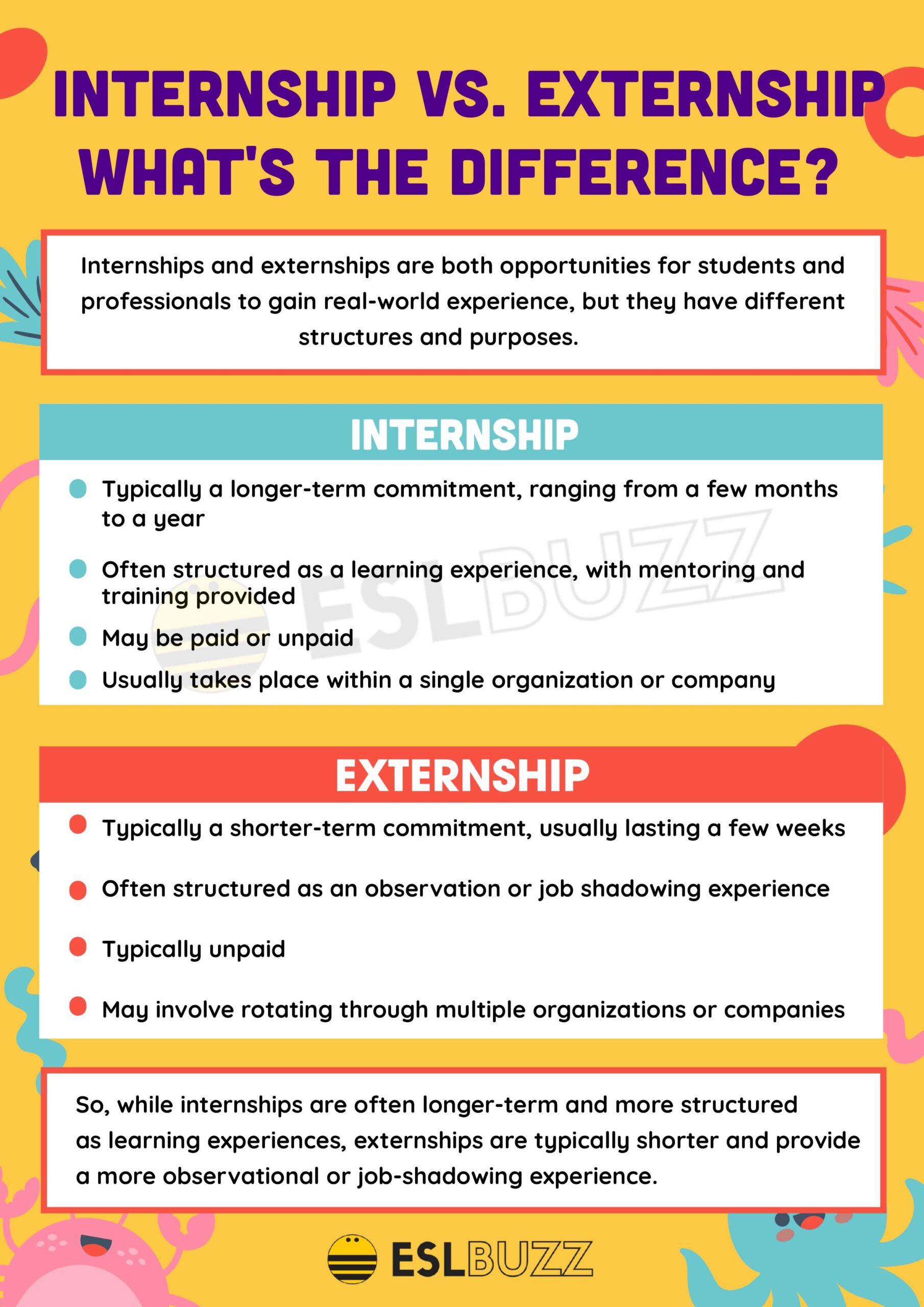
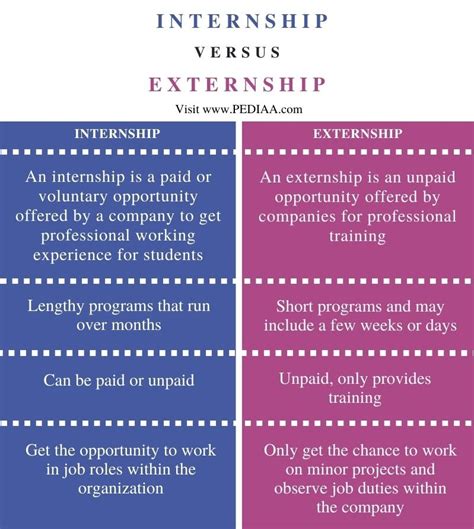
The main differences between externships and internships lie in their duration, level of involvement, and purpose. Internships are generally longer and more immersive, providing individuals with a deeper understanding of a specific field or industry. Externships, while shorter and more observational, offer a broader introduction to a profession or industry, allowing individuals to explore different career paths and gain a general understanding of the field.
| Characteristic | Internship | Externship |
|---|---|---|
| Duration | Several months to a year | A few days to a few weeks |
| Purpose | Hands-on experience and skill development | Exploration and introduction to a field or industry |
| Level of involvement | Significant work responsibilities | Observational, with some participation |
| Payment | May be paid or unpaid | Usually unpaid |
Key Points
- Internships provide hands-on experience and skill development in a specific field or industry.
- Externships offer a broader introduction to a profession or industry, allowing individuals to explore different career paths.
- Internships are generally longer and more immersive than externships.
- Externships are often shorter and more observational, with a focus on exploration and introduction.
- Both internships and externships can be valuable for career development, but they serve different purposes and offer varying levels of involvement.
Benefits and Implications
Both internships and externships can have a significant impact on career development, but they offer different benefits and implications. Internships provide individuals with a deeper understanding of a specific field or industry, allowing them to develop industry-specific skills and build a network of professional contacts. Internships can also lead to job offers or recommendations, as employers often use internships as a way to recruit and evaluate potential employees.
Externships, while shorter and more observational, can provide individuals with a broader understanding of different fields and industries, allowing them to explore different career paths and gain insight into the daily activities and responsibilities of professionals in those fields. Externships can also help individuals build a network of professional contacts and gain references, which can be valuable for future career opportunities.
Strategic Considerations
When considering internships and externships, individuals should think strategically about their career goals and objectives. If the goal is to gain hands-on experience and develop specific skills in a particular field or industry, an internship may be the better choice. However, if the goal is to explore different fields and industries, and gain a broader understanding of different career paths, an externship may be more suitable.
In addition, individuals should consider the level of commitment and involvement required for each type of experience. Internships often require a significant amount of time and effort, while externships may be more flexible and accommodating. Ultimately, the choice between an internship and an externship depends on individual circumstances, career goals, and personal preferences.
What is the main difference between an internship and an externship?
+The main difference between an internship and an externship is the level of involvement and purpose. Internships provide hands-on experience and skill development, while externships offer a broader introduction to a field or industry.
How long do internships and externships typically last?
+Internships can last from several months to a year, while externships typically last from a few days to a few weeks.
What are the benefits of internships and externships for career development?
+Both internships and externships can provide individuals with valuable work experience, skill development, and networking opportunities. Internships can lead to job offers or recommendations, while externships can help individuals explore different career paths and gain insight into different fields and industries.
In conclusion, while both internships and externships can be valuable for career development, they serve different purposes and offer varying levels of involvement. By understanding the differences between these two types of experiences, individuals can make informed decisions about their career goals and objectives, and choose the experience that best aligns with their needs and aspirations.