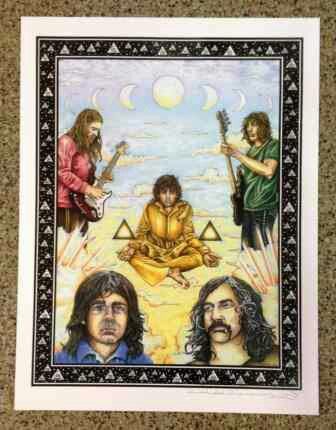
Pink Floyd, one of the most iconic and influential rock bands in history, has a rich and complex past that spans over five decades. Formed in London in 1965, the band's original members were Syd Barrett, Nick Mason, Roger Waters, and Richard Wright. Later, David Gilmour joined the band, replacing Syd Barrett due to his struggles with mental health. The band's lineup evolved over the years, with various members contributing to their distinctive sound and style.
Founding Members and Early Years

The founding members of Pink Floyd were Syd Barrett, Nick Mason, Roger Waters, and Richard Wright. Syd Barrett, the band’s primary songwriter and lead vocalist during their early years, was instrumental in shaping their psychedelic sound. However, his mental health issues, exacerbated by drug use, led to his departure from the band in 1968. David Gilmour, who had previously played with Barrett in a band called Joker’s Wild, was invited to join Pink Floyd as a replacement for Barrett. Gilmour’s distinctive guitar playing and vocal style would later become an integral part of the band’s sound.
Syd Barrett: The Enigmatic Founder
Syd Barrett, born Roger Keith Barrett on January 6, 1946, was a talented musician, singer, and songwriter. His creative genius and innovative approach to music were evident in Pink Floyd’s early work, including their debut album, “The Piper at the Gates of Dawn.” Barrett’s mental health issues, which led to his departure from the band, were a significant loss for Pink Floyd. Despite his struggles, Barrett released two solo albums, “The Madcap Laughs” and “Barrett,” before retiring from music in the early 1970s. He passed away on July 11, 2006, at the age of 60.
| Band Member | Instrument | Years Active |
|---|---|---|
| Syd Barrett | Guitar, Vocals | 1965-1968 |
| Nick Mason | Drums | 1965-present |
| Roger Waters | Bass, Vocals | 1965-1985 |
| Richard Wright | Keyboards, Vocals | 1965-1979, 1990-2008 |
| David Gilmour | Guitar, Vocals | 1968-present |
Main Band Members and Their Contributions
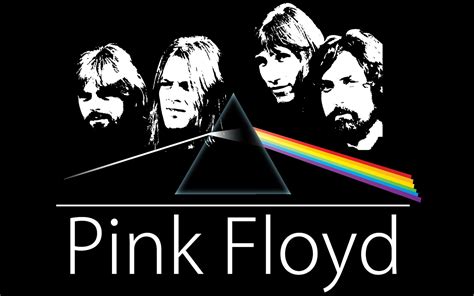
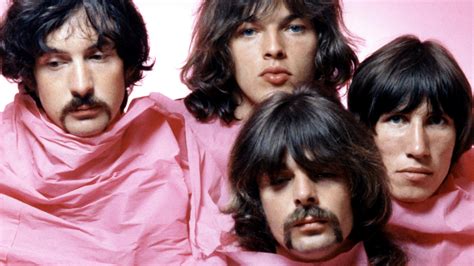
The main band members, including David Gilmour, Roger Waters, Richard Wright, and Nick Mason, each brought their unique talents and perspectives to Pink Floyd’s music. Roger Waters, the band’s primary songwriter and bassist, was instrumental in shaping their conceptual and thematic approach to music. His iconic albums, such as “The Dark Side of the Moon,” “Wish You Were Here,” and “The Wall,” are testaments to his creative genius. David Gilmour’s soaring guitar solos and soulful vocals added a new dimension to Pink Floyd’s sound, while Richard Wright’s keyboard playing provided a rich texture to their music. Nick Mason, the band’s drummer, was the only constant member throughout their entire career, providing a steady rhythmic foundation for their music.
Roger Waters: The Driving Force Behind Pink Floyd
Roger Waters, born George Roger Waters on September 6, 1943, was the primary driving force behind Pink Floyd’s conceptual and thematic approach to music. His songwriting and bass playing were instrumental in shaping the band’s sound, and his iconic albums continue to inspire and influence new generations of musicians and fans. Waters’ departure from Pink Floyd in 1985 marked a significant turning point in the band’s history, leading to a highly publicized feud with David Gilmour and Nick Mason.
Key Points
- Pink Floyd's original members were Syd Barrett, Nick Mason, Roger Waters, and Richard Wright.
- David Gilmour replaced Syd Barrett in 1968 and became an integral part of the band's sound.
- Roger Waters was the primary songwriter and driving force behind Pink Floyd's conceptual and thematic approach to music.
- The band's lineup evolved over the years, with various members contributing to their distinctive sound and style.
- Pink Floyd's music continues to inspire and influence new generations of musicians and fans, with their iconic albums remaining a testament to their creative genius.
Late Career and Reunions
In the 1980s and 1990s, Pink Floyd continued to release music, albeit with a changing lineup. Roger Waters’ departure in 1985 led to a highly publicized feud with David Gilmour and Nick Mason, resulting in a series of lawsuits and counter-suits. Despite this, the band continued to tour and release music, with Richard Wright rejoining the band in 1990. In 2005, Pink Floyd reunited for a one-off performance at the Live 8 concert in London, with Roger Waters joining David Gilmour, Nick Mason, and Richard Wright on stage. This reunion marked a significant moment in the band’s history, with the four members performing together for the first time in over 20 years.
Richard Wright: The Quiet Mastermind
Richard Wright, born Richard William Wright on July 28, 1943, was a talented keyboard player and vocalist who played a crucial role in shaping Pink Floyd’s sound. His contributions to the band’s music were often overlooked, but his keyboard playing added a rich texture to their songs. Wright passed away on September 15, 2008, at the age of 65, leaving behind a legacy as one of the most underrated and talented musicians in rock history.
What was the original lineup of Pink Floyd?
+The original lineup of Pink Floyd consisted of Syd Barrett, Nick Mason, Roger Waters, and Richard Wright.
Who replaced Syd Barrett in Pink Floyd?
+David Gilmour replaced Syd Barrett in Pink Floyd in 1968.
What was the name of Pink Floyd's iconic album released in 1973?
+The name of Pink Floyd's iconic album released in 1973 was "The Dark Side of the Moon."
Who was the primary songwriter and driving force behind Pink Floyd's conceptual and thematic approach to music?
+Roger Waters was the primary songwriter and driving force behind Pink Floyd's conceptual and thematic approach to music.
What was the name of Pink Floyd's reunion concert in 2005?
+Pink Floyd's reunion concert in 2005 was part of the Live 8 concert in London.
Meta description: Discover the history and evolution of Pink Floyd, one of the most iconic and influential rock bands in history, and learn about the contributions of each band member to their distinctive sound and style. (150 characters)