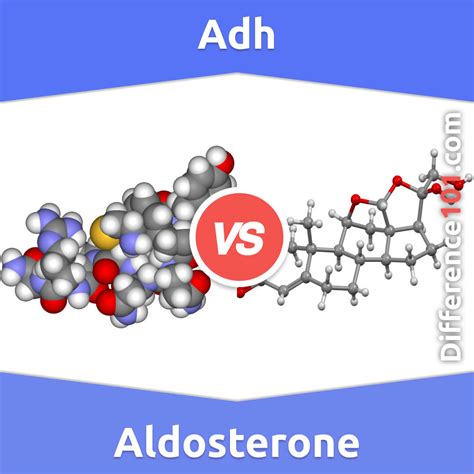
The human body is a complex system with various hormones playing crucial roles in maintaining homeostasis. Two such hormones that are often discussed in the context of fluid balance and blood pressure regulation are ADH (Antidiuretic Hormone) and Aldosterone. While both hormones are vital for the body's functioning, they have distinct differences in terms of their origin, function, and mechanism of action.
Introduction to ADH and Aldosterone
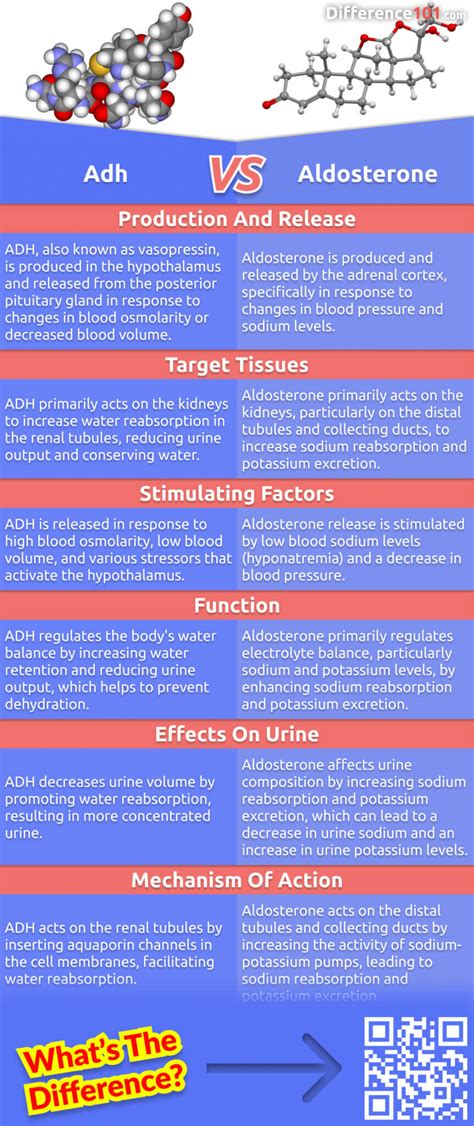
ADH, also known as Vasopressin, is a hormone produced by the hypothalamus in the brain and stored in the posterior pituitary gland. Its primary function is to regulate the amount of water in the body by acting on the kidneys. On the other hand, Aldosterone is a steroid hormone produced by the adrenal cortex, which is the outer layer of the adrenal glands. It plays a critical role in regulating the balance of fluids and electrolytes in the body.
Key Points
- ADH primarily regulates water balance in the body.
- Aldosterone is crucial for sodium and potassium balance.
- Both hormones are vital for maintaining blood pressure.
- ADH is produced by the hypothalamus and stored in the posterior pituitary gland.
- Aldosterone is produced by the adrenal cortex.
Function and Mechanism of Action
ADH acts on the kidneys to increase water reabsorption, which leads to a decrease in urine production. This mechanism helps in conserving water in the body, especially during dehydration. ADH also has a vasoconstrictive effect, which helps in increasing blood pressure. Aldosterone, on the other hand, acts on the kidneys to increase the reabsorption of sodium and the excretion of potassium. This action helps in regulating the balance of fluids and electrolytes in the body, which is essential for maintaining blood pressure.
| Hormone | Origin | Primary Function |
|---|---|---|
| ADH | Hypothalamus/Posterior Pituitary | Water balance, blood pressure regulation |
| Aldosterone | Adrenal Cortex | Sodium and potassium balance, fluid balance, blood pressure regulation |
Differences in Pathophysiology

In conditions where there is an imbalance of ADH, such as Diabetes Insipidus, the body loses its ability to regulate water, leading to excessive thirst and urination. In contrast, imbalances of Aldosterone, such as in Conn’s syndrome (Primary Aldosteronism), lead to hypertension and potassium deficiency due to excessive sodium retention. These differences highlight the distinct roles of ADH and Aldosterone in the body’s fluid and electrolyte balance.
Clinical Implications
The clinical implications of ADH and Aldosterone imbalances are significant. For instance, SIADH (Syndrome of Inappropriate Antidiuretic Hormone Secretion) can lead to hyponatremia due to excessive water retention, while hyperaldosteronism can cause hypertension and hypokalemia. Accurate diagnosis and management of these conditions require a deep understanding of the pathophysiology of ADH and Aldosterone.
In conclusion, while both ADH and Aldosterone play critical roles in maintaining fluid balance and blood pressure, their origins, mechanisms of action, and clinical implications are distinct. Understanding these differences is essential for healthcare professionals to provide accurate diagnoses and effective treatments for related disorders.
What is the primary function of ADH in the body?
+The primary function of ADH is to regulate the amount of water in the body by increasing water reabsorption in the kidneys.
How does Aldosterone affect blood pressure?
+Aldosterone increases blood pressure by promoting sodium retention, which leads to water retention and an increase in blood volume.
What are the clinical implications of an ADH imbalance?
+An imbalance of ADH can lead to conditions such as Diabetes Insipidus or SIADH, characterized by excessive thirst and urination or water retention, respectively.
Meta Description: Discover the differences between ADH and Aldosterone, including their origins, functions, and clinical implications, to understand their roles in fluid balance and blood pressure regulation.