Aaron Hernandez, the former New England Patriots tight end, led a life marked by both athletic excellence and personal turmoil. His story took a dramatic turn when, in 2017, it was revealed that he suffered from Chronic Traumatic Encephalopathy (CTE), a brain disease linked to repeated head trauma. This condition has been at the forefront of discussions regarding player safety in the National Football League (NFL) and its long-term effects on athletes' health. Here are five key facts about Aaron Hernandez and his struggle with CTE:
Introduction to CTE and Its Connection to Football

Chronic Traumatic Encephalopathy (CTE) is a type of brain disease that results from repeated blows to the head, causing brain damage, particularly in the areas that control memory, emotion, and other functions. It is commonly found in athletes who participate in contact sports, such as football, hockey, and soccer. The disease can lead to symptoms like memory loss, depression, anxiety, and in severe cases, dementia and suicidal tendencies. The connection between CTE and football has been a subject of intense study and debate, with many former NFL players being diagnosed with the disease posthumously.
Aaron Hernandez’s Football Career and Initial Signs of Trouble
Aaron Hernandez had a promising football career, playing college football for the University of Florida before being drafted by the New England Patriots in the fourth round of the 2010 NFL Draft. He quickly became a key player for the Patriots, known for his speed, agility, and ability to catch passes. However, his career was cut short due to off-field issues, including his involvement in several violent incidents, culminating in his arrest and conviction for the murder of Odin Lloyd, a semi-professional football player who was dating the sister of Hernandez’s fiancée. These events, while shocking, were also seen as symptoms of deeper psychological issues, which were later attributed to CTE.
| CTE Stage | Symptoms |
|---|---|
| Early Stage | Memory loss, depression, anxiety |
| Advanced Stage | Dementia, suicidal tendencies, significant cognitive decline |

The Autopsy and Diagnosis of CTE
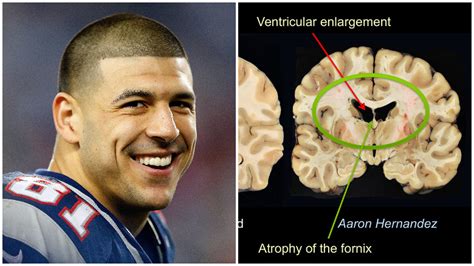
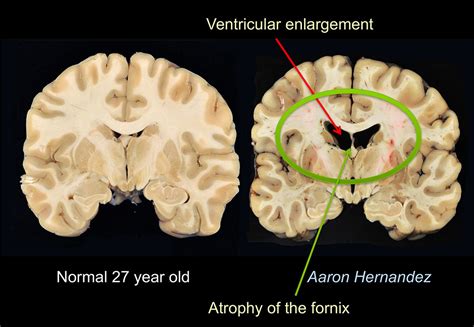
After Aaron Hernandez’s death in 2017, his brain was donated to science for further study. The examination conducted by researchers at Boston University’s CTE Center revealed that Hernandez had stage 3 CTE, one of the most severe cases ever discovered in a person as young as 27. Stage 3 CTE is characterized by significant brain atrophy, including the loss of brain cells and the accumulation of tau protein, which are hallmarks of the disease. This diagnosis provided a medical explanation for some of Hernandez’s erratic and violent behavior in the years leading up to his death.
Implications for the NFL and Player Safety
The diagnosis of CTE in Aaron Hernandez and other former NFL players has significant implications for the league and its approach to player safety. The NFL has faced criticism for its handling of head injuries and its commitment to protecting players from the long-term effects of repeated concussions. In response, the league has implemented various measures, including rule changes to reduce helmet-to-helmet hits, increased investment in concussion research, and the development of safer helmets. However, the issue remains contentious, with many arguing that more needs to be done to protect players and ensure their long-term health.
Key Points
- Aaron Hernandez suffered from stage 3 CTE, a severe case of the brain disease.
- His CTE diagnosis was made posthumously, after his brain was donated to science.
- Hernandez's case has highlighted the need for greater awareness and action on CTE and player safety in the NFL.
- The NFL has taken steps to address the issue, including rule changes and increased investment in research.
- Despite these efforts, the long-term health implications of playing in the NFL remain a significant concern for current and former players.
In conclusion, Aaron Hernandez's story serves as a tragic reminder of the potential consequences of repeated head trauma in football. His case, along with others, continues to drive discussions about CTE, player safety, and the long-term health effects of participating in contact sports. As research into CTE and its effects continues, it is crucial for leagues, teams, and players to prioritize brain health and take proactive measures to mitigate the risks associated with head injuries.
What is Chronic Traumatic Encephalopathy (CTE)?
+CTE is a brain disease caused by repeated blows to the head, leading to brain damage and symptoms such as memory loss, depression, and dementia.
How common is CTE among NFL players?
+Studies have shown that a significant number of former NFL players suffer from CTE, although the exact prevalence is still a subject of ongoing research.
What steps is the NFL taking to address CTE and player safety?
+The NFL has implemented rule changes, invested in concussion research, and developed safer helmets to reduce the risk of head injuries and their long-term effects.