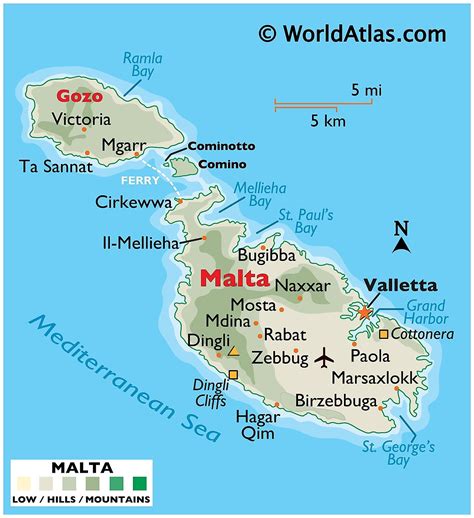
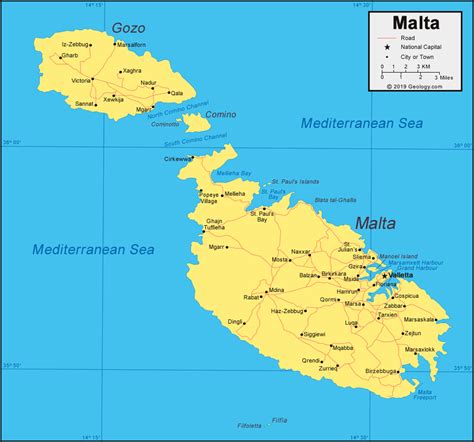
Malta, an archipelago located in the central Mediterranean, is a country with a rich history and unique cultural heritage. To find Malta on a map, you can look for it south of Sicily, Italy, and north of Libya. The country consists of three main islands: Malta, Gozo, and Comino. With a total area of approximately 316 square kilometers, Malta is one of the smallest countries in the world.
Geographical Location and Climate
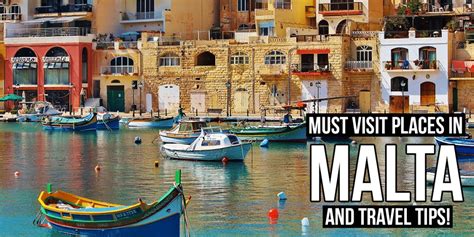
Malta’s geographical location has played a significant role in its history, with the country being a crucial hub for trade and cultural exchange between Europe, Africa, and the Middle East. The climate is typically Mediterranean, characterized by warm summers and mild winters. The country’s terrain is generally flat, with few hills and no mountains. The capital city, Valletta, is a UNESCO World Heritage Site and is known for its well-preserved Baroque architecture.
Islands of Malta
The main island of Malta is the largest of the three islands, accounting for about 246 square kilometers of the country’s total area. Gozo, the second-largest island, is about 67 square kilometers in size and is known for its more rural and scenic landscapes. Comino, the smallest island, is approximately 3.5 square kilometers in size and is mostly uninhabited, with the exception of a few hotels and tourist facilities.
| Island | Area (km²) | Population |
|---|---|---|
| Malta | 246 | over 400,000 |
| Gozo | 67 | around 30,000 |
| Comino | 3.5 | less than 10 |
Key Points
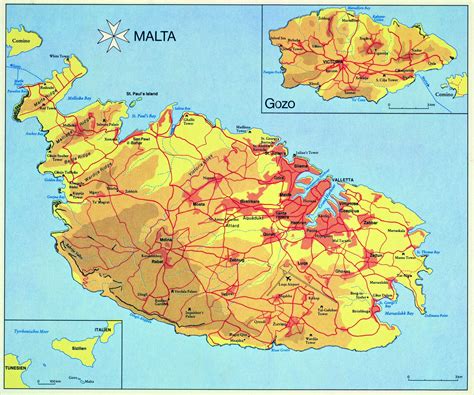
- Malta is located in the central Mediterranean, south of Sicily and north of Libya.
- The country consists of three main islands: Malta, Gozo, and Comino.
- Malta has a total area of approximately 316 square kilometers, making it one of the smallest countries in the world.
- The climate is Mediterranean, with warm summers and mild winters.
- The capital city, Valletta, is a UNESCO World Heritage Site known for its Baroque architecture.
Economic and Cultural Significance
Despite its small size, Malta has a significant economic presence, with a strong focus on financial services, tourism, and manufacturing. The country is also known for its vibrant culture, which reflects its complex history and strategic location. From ancient megalithic temples to modern art galleries, Malta offers a unique blend of historical and contemporary attractions.
Tourism and Historical Sites
Tourism plays a vital role in Malta’s economy, with visitors drawn to the country’s rich history, beautiful landscapes, and pleasant climate. Some of the most popular historical sites include the Ħal Saflieni Hypogeum, a subterranean necropolis dating back to around 4000 BC, and the Mdina, the ancient capital city known as the “Silent City” due to its narrow, quiet streets.
In conclusion, Malta's unique blend of history, culture, and geography makes it a fascinating country to explore, whether you are interested in history, architecture, or simply enjoying the Mediterranean lifestyle.
What is the capital city of Malta?
+The capital city of Malta is Valletta, which is also a UNESCO World Heritage Site.
What are the main islands of Malta?
+The main islands of Malta are Malta, Gozo, and Comino.
What is the climate like in Malta?
+Malta has a Mediterranean climate, characterized by warm summers and mild winters.