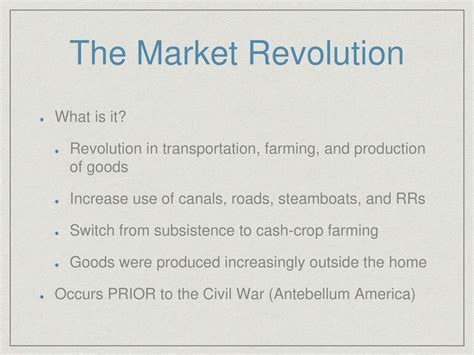
The Market Revolution, a pivotal period in American economic history, transformed the nation from a largely agrarian society to a more industrialized and market-oriented economy. This transformation was marked by significant developments in transportation, communication, and technology, which in turn fueled the growth of industry and commerce. To understand the complexities and impacts of the Market Revolution, it’s essential to examine its timeline, which spans from the early 19th century to the mid-19th century.
Early Developments: 1790s-1820s
The seeds of the Market Revolution were sown in the late 18th and early 19th centuries. During this period, the United States saw the emergence of new technologies and innovations that would eventually contribute to its industrial and economic growth. The construction of the Erie Canal, which was completed in 1825, is a notable example. This canal connected the Great Lakes to the Hudson River, facilitating trade between the East Coast and the interior of the continent. It not only reduced transportation costs and times but also opened up new markets and areas for settlement, laying the groundwork for further economic expansion.
Impact of the Erie Canal
The Erie Canal’s impact on the American economy was profound. By providing a direct and efficient route for goods to travel between the East Coast and the Midwest, it stimulated trade and commerce, helping to integrate the national economy. This integration, in turn, encouraged the growth of industries such as textiles and manufacturing, as goods could now be produced in one region and easily sold in another. The success of the Erie Canal also spurred the construction of other canals and the development of railroads, further expanding the nation’s transportation infrastructure and facilitating the Market Revolution.
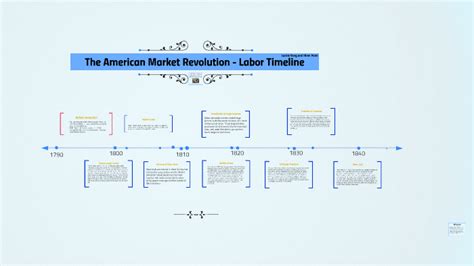
| Year | Event | Description |
|---|---|---|
| 1825 | Completion of the Erie Canal | Connected the Great Lakes to the Hudson River, revolutionizing trade and commerce. |
| 1830s | Railroad Expansion | Railroads began to crisscross the country, further facilitating the transportation of goods and people. |
| 1840s | Telegraph Introduction | The telegraph enabled rapid communication over long distances, facilitating business transactions and market coordination. |
Mid-19th Century Developments: 1830s-1850s
As the Market Revolution gained momentum, the United States witnessed significant advancements in transportation and communication. The 1830s saw the beginning of railroad expansion, with railroads spreading across the country. This expansion had a profound impact, as railroads could transport goods and people more quickly and efficiently than canals. The introduction of the telegraph in the 1840s further accelerated the pace of the Market Revolution by enabling almost instantaneous communication over long distances, which was crucial for coordinating business activities and responding to market changes.
Industrialization and Urbanization
The improvements in transportation and communication contributed to the rapid industrialization of the United States. New industries emerged, and existing ones expanded, leading to increased productivity and output. As industries grew, so did cities, as people moved from rural areas to urban centers in search of employment. This period of industrialization and urbanization was marked by both unprecedented economic growth and significant social and environmental challenges, including the growth of urban poverty and the exploitation of workers.
Key Points
- The Market Revolution was characterized by significant advancements in transportation, including the construction of canals and the expansion of railroads.
- Improvements in communication, such as the introduction of the telegraph, played a crucial role in facilitating business transactions and market coordination.
- The period saw rapid industrialization and urbanization, leading to economic growth but also to social and environmental challenges.
- The development of financial systems, including banks and stock exchanges, was essential for facilitating economic expansion.
- The Market Revolution transformed the United States from a largely agrarian society to a more industrialized and market-oriented economy.
Legacy of the Market Revolution
The Market Revolution had a lasting impact on the United States, laying the foundation for the country’s emergence as a global economic power. It drove the transformation of the American economy, spurred technological innovation, and facilitated the growth of industries. However, it also led to significant social and environmental challenges, including the exploitation of workers, urban poverty, and environmental degradation. Understanding the Market Revolution is crucial for grasping the complexities of American economic history and the roots of the country’s current economic and social structures.
What were the primary drivers of the Market Revolution?
+The primary drivers of the Market Revolution included advancements in transportation (such as canals and railroads) and communication (such as the telegraph), as well as the development of financial systems and the expansion of markets.
How did the Market Revolution impact American society?
+The Market Revolution had a profound impact on American society, leading to rapid industrialization and urbanization. While it spurred economic growth, it also resulted in significant social challenges, including the exploitation of workers and the growth of urban poverty.
What is the legacy of the Market Revolution in the context of American economic history?
+The Market Revolution laid the foundation for the United States' emergence as a global economic power. It drove technological innovation, facilitated the growth of industries, and transformed the American economy from agrarian to industrial. However, it also left a legacy of social and environmental challenges that continue to influence American society and economy today.
Meta Description: Explore the Market Revolution timeline, understanding its impact on American economic history, from the construction of the Erie Canal to the expansion of railroads and the introduction of the telegraph, and how it transformed the United States into a global economic power. (149 characters)