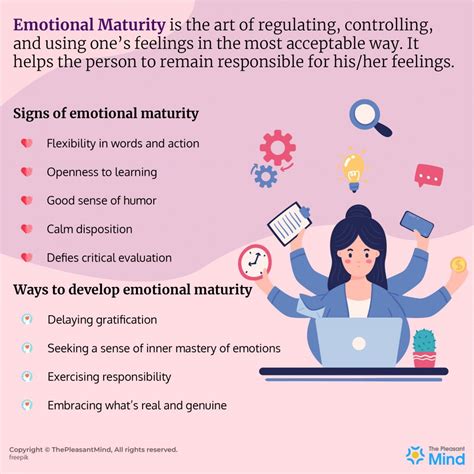
Emotional maturity is a complex and multifaceted concept that has garnered significant attention in recent years, particularly in the context of men's emotional development. The notion that men emotionally mature at a slower pace than women has been a topic of debate among researchers, psychologists, and sociologists. While there is no straightforward answer to the question of when men emotionally mature, research suggests that men's emotional development is influenced by a combination of biological, psychological, and sociocultural factors.
One of the primary challenges in addressing men's emotional maturity is the societal expectation that men should conform to traditional masculine norms, which often emphasize stoicism, aggression, and emotional restraint. These norms can hinder men's ability to express and manage their emotions in a healthy and adaptive way, leading to delays in emotional maturity. Moreover, the pressure to conform to these norms can result in men experiencing emotional numbing, decreased empathy, and increased aggression, all of which can negatively impact their relationships and overall well-being.
Key Points
- Emotional maturity in men is influenced by a combination of biological, psychological, and sociocultural factors
- Traditional masculine norms can hinder men's emotional development and lead to delays in emotional maturity
- Men's emotional maturity is closely tied to their ability to express and manage emotions in a healthy and adaptive way
- Emotional intelligence, self-awareness, and empathy are essential components of emotional maturity in men
- Men's emotional maturity can have a significant impact on their relationships, mental health, and overall well-being
Theories of Emotional Maturity in Men

Several theories have been proposed to explain the development of emotional maturity in men. One of the most influential theories is the concept of “emotional intelligence,” which was first introduced by Peter Salovey and John D. Mayer in 1990. Emotional intelligence refers to the ability to recognize and understand emotions in oneself and others, and to use this awareness to guide thought and behavior. Men with high emotional intelligence are better equipped to navigate complex social situations, manage their emotions, and form meaningful relationships.
Another theory that has gained significant attention in recent years is the concept of "masculine norms theory." This theory posits that traditional masculine norms, such as stoicism and aggression, can have a negative impact on men's emotional development and overall well-being. Men who adhere to these norms may experience decreased emotional expression, increased emotional numbing, and decreased empathy, all of which can hinder their ability to form meaningful relationships and achieve emotional maturity.
Biological and Neurological Factors
Biological and neurological factors also play a significant role in men’s emotional development. Research has shown that men’s brains are wired differently than women’s brains, with differences in the structure and function of the amygdala, hippocampus, and prefrontal cortex. These differences can influence men’s emotional processing, regulation, and expression, and may contribute to delays in emotional maturity.
Additionally, hormonal fluctuations, such as those experienced during puberty and midlife, can also impact men's emotional development. Testosterone, in particular, has been shown to play a significant role in men's emotional regulation, with higher levels of testosterone associated with increased aggression and decreased emotional expression.
| Biological Factor | Influence on Emotional Maturity |
|---|---|
| Brain structure and function | Differences in amygdala, hippocampus, and prefrontal cortex structure and function can influence emotional processing, regulation, and expression |
| Hormonal fluctuations | Testosterone and other hormones can impact emotional regulation, with higher levels of testosterone associated with increased aggression and decreased emotional expression |
| Genetic predisposition | Genetic factors can influence emotional development, with some men more prone to emotional difficulties due to genetic predisposition |

Practical Strategies for Achieving Emotional Maturity
Achieving emotional maturity requires a combination of self-awareness, emotional intelligence, and intentional practice. Men can develop emotional maturity by engaging in activities that promote emotional expression, such as journaling, meditation, or creative pursuits. Additionally, men can benefit from seeking out social support, such as therapy or support groups, to help them process and manage their emotions in a healthy and adaptive way.
Men can also develop emotional maturity by practicing self-compassion, self-forgiveness, and self-awareness. This can involve recognizing and challenging negative self-talk, practicing mindfulness and self-care, and engaging in activities that promote a sense of purpose and meaning. By prioritizing emotional development and well-being, men can achieve emotional maturity and improve their overall quality of life.
Case Studies and Real-World Examples
Several case studies and real-world examples demonstrate the importance of emotional maturity in men. For example, a study published in the Journal of Men’s Studies found that men who engaged in emotional expression and vulnerability experienced increased emotional intimacy and relationship satisfaction. Another study published in the Journal of Counseling Psychology found that men who practiced mindfulness and self-compassion experienced decreased symptoms of depression and anxiety.
What is emotional maturity, and why is it important for men?
+Emotional maturity refers to the ability to recognize, understand, and manage emotions in a healthy and adaptive way. It's essential for men because it can improve their relationships, mental health, and overall well-being.
How can men develop emotional maturity?
+Men can develop emotional maturity by engaging in activities that promote emotional expression, such as journaling, meditation, or creative pursuits. They can also benefit from seeking out social support, such as therapy or support groups, and practicing self-compassion, self-forgiveness, and self-awareness.
What are some common challenges that men face in developing emotional maturity?
+Men may face challenges such as societal pressure to conform to traditional masculine norms, difficulty expressing emotions, and a lack of social support. They may also struggle with emotional numbing, decreased empathy, and increased aggression, all of which can hinder their ability to form meaningful relationships and achieve emotional maturity.
In conclusion, men’s emotional maturity is a complex and multifaceted concept that is influenced by a combination of biological, psychological, and sociocultural factors. By recognizing and addressing these factors, men can work towards achieving emotional maturity and improving their overall well-being. It’s essential to prioritize emotional development and well-being, and to seek out social support and intentional practice to promote emotional expression, self-awareness, and self-compassion.