
The Safety Data Sheet (SDS) is a critical document that provides detailed information about the safe handling, use, storage, and disposal of chemical products. It is an essential component of workplace safety and health, as it helps employers, employees, and emergency responders understand the potential hazards associated with a particular chemical substance.
Introduction to SDS
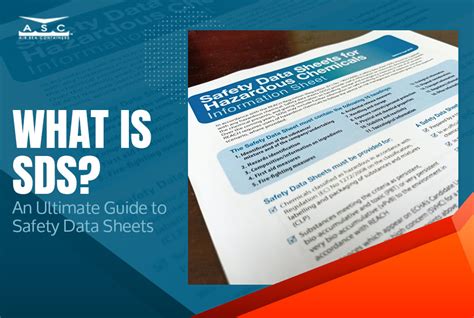
The SDS is a standardized document that is widely used across various industries, including manufacturing, construction, and healthcare. It is typically prepared by the manufacturer or supplier of the chemical product and is designed to provide a comprehensive overview of the substance’s physical and chemical properties, toxicity, and potential environmental impacts. The SDS is usually several pages long and is divided into 16 sections, each addressing a specific aspect of the chemical substance.
Sections of an SDS
The 16 sections of an SDS are:
- Section 1: Identification
- Section 2: Hazard(s) identification
- Section 3: Composition/information on ingredients
- Section 4: First aid measures
- Section 5: Fire-fighting measures
- Section 6: Accidental release measures
- Section 7: Handling and storage
- Section 8: Exposure controls/personal protection
- Section 9: Physical and chemical properties
- Section 10: Stability and reactivity
- Section 11: Toxicological information
- Section 12: Ecological information
- Section 13: Disposal considerations
- Section 14: Transport information
- Section 15: Regulatory information
- Section 16: Other information
Each section provides critical information about the chemical substance, including its hazards, safe handling procedures, and emergency response measures. The SDS is an essential tool for employers, employees, and emergency responders, as it helps them understand the potential risks associated with a particular chemical substance and take necessary precautions to prevent accidents and injuries.
Key Points
- The Safety Data Sheet (SDS) is a critical document that provides detailed information about the safe handling, use, storage, and disposal of chemical products.
- The SDS is a standardized document that is widely used across various industries.
- The SDS is divided into 16 sections, each addressing a specific aspect of the chemical substance.
- The SDS provides critical information about the chemical substance, including its hazards, safe handling procedures, and emergency response measures.
- The SDS is an essential tool for employers, employees, and emergency responders, as it helps them understand the potential risks associated with a particular chemical substance and take necessary precautions to prevent accidents and injuries.
| Section | Description |
|---|---|
| Section 1: Identification | Provides information about the chemical substance, including its name, synonyms, and manufacturer contact information. |
| Section 2: Hazard(s) identification | Describes the potential hazards associated with the chemical substance, including its toxicity, flammability, and reactivity. |
| Section 3: Composition/information on ingredients | Provides information about the chemical composition of the substance, including its ingredients and concentrations. |

Importance of SDS
The SDS is a critical document that plays a vital role in ensuring workplace safety and health. It provides essential information about the potential hazards associated with a particular chemical substance, including its toxicity, flammability, and reactivity. The SDS also provides guidance on safe handling procedures, emergency response measures, and disposal considerations, which helps employers and employees take necessary precautions to prevent accidents and injuries.
Benefits of SDS
The SDS offers several benefits, including:
- Improved workplace safety and health
- Reduced risk of accidents and injuries
- Enhanced emergency response measures
- Increased compliance with regulatory requirements
- Better decision-making about chemical substance use and handling
Overall, the SDS is a critical document that provides essential information about the safe handling, use, storage, and disposal of chemical products. Its importance cannot be overstated, as it helps employers, employees, and emergency responders understand the potential risks associated with a particular chemical substance and take necessary precautions to prevent accidents and injuries.
What is the purpose of an SDS?
+The purpose of an SDS is to provide detailed information about the safe handling, use, storage, and disposal of chemical products.
Who is responsible for preparing an SDS?
+The manufacturer or supplier of the chemical product is typically responsible for preparing an SDS.
What information is included in an SDS?
+An SDS includes information about the chemical substance, including its hazards, safe handling procedures, and emergency response measures.