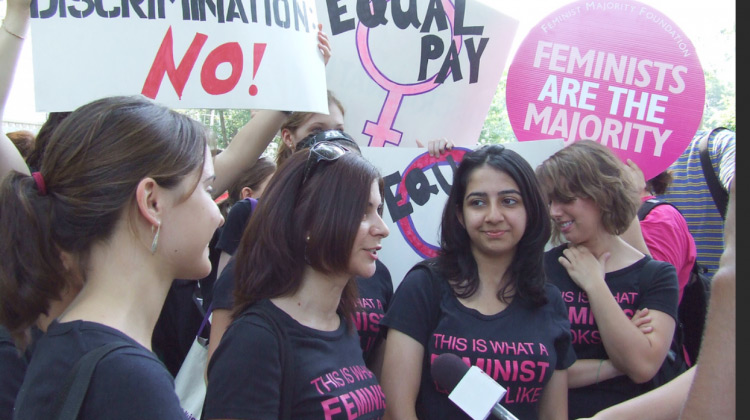
Feminism, a social and political movement, has been a cornerstone of societal change for centuries. Its primary goal is to achieve equality between the sexes, addressing issues such as reproductive rights, domestic violence, and equal pay. The movement has evolved over time, incorporating various waves and ideologies, each contributing to its growth and diversification. This article will delve into five ways feminism works, exploring its theoretical frameworks, practical applications, and real-world examples.
Key Points
- Feminism promotes equality and challenges patriarchal structures through various theoretical frameworks and practical applications.
- The movement addresses a wide range of issues, including reproductive rights, domestic violence, and equal pay.
- Feminism has evolved over time, incorporating different waves and ideologies, such as liberal, radical, and intersectional feminism.
- Practical applications of feminism can be seen in real-world examples, such as the #MeToo movement and the fight for equal pay.
- The movement's impact is not limited to women, as it also benefits men and society as a whole by promoting a more equitable distribution of power and resources.
Challenging Patriarchal Structures

One of the primary ways feminism works is by challenging patriarchal structures that have historically perpetuated inequality. This involves questioning and subverting traditional power dynamics, where men have often held positions of authority and women have been relegated to subordinate roles. Feminist theories, such as liberal and radical feminism, provide frameworks for understanding and addressing these power imbalances. For instance, liberal feminism focuses on achieving equality through legal and political means, while radical feminism seeks to dismantle the existing patriarchal system and replace it with a more equitable one.
Theoretical Frameworks
Feminist theories offer a range of perspectives on how to challenge patriarchal structures. Liberal feminism, for example, emphasizes the importance of equal rights and opportunities, advocating for women’s participation in the public sphere. In contrast, radical feminism seeks to fundamentally transform society, arguing that patriarchy is a systemic issue that requires a revolutionary response. Intersectional feminism, a more recent development, highlights the need to consider how different forms of oppression, such as racism and homophobia, intersect and compound, affecting women’s experiences in unique ways.
| Feminist Theory | Description |
|---|---|
| Liberal Feminism | Focuses on achieving equality through legal and political means |
| Radical Feminism | Seeks to dismantle the existing patriarchal system and replace it with a more equitable one |
| Intersectional Feminism | Highlights the need to consider how different forms of oppression intersect and compound |

Promoting Reproductive Rights
Another way feminism works is by promoting reproductive rights, ensuring that women have control over their own bodies and reproductive choices. This involves advocating for access to safe and legal abortion, as well as comprehensive sex education and contraception. The reproductive justice movement, a key aspect of feminism, recognizes that reproductive rights are inextricably linked to issues of economic justice, racial justice, and human rights.
Practical Applications
Feminism has numerous practical applications, from grassroots organizing to policy advocacy. The #MeToo movement, for example, has highlighted the prevalence of sexual harassment and assault, sparking a national conversation about consent and accountability. Similarly, the fight for equal pay has led to increased awareness and advocacy around the issue of wage disparities, with many organizations and governments implementing policies to address the pay gap.
Addressing Domestic Violence
Feminism also works to address domestic violence, recognizing that violence against women is a pervasive and systemic issue. This involves providing support services for survivors, such as shelters and counseling, as well as advocating for policy changes that hold perpetrators accountable. The Domestic Violence Awareness Month campaign, for instance, raises awareness about the issue and promotes resources for survivors.
Real-World Examples
Feminism has had a significant impact in real-world contexts, from the women’s suffrage movement to the present-day fight for LGBTQ+ rights. The movement’s emphasis on intersectionality has also led to increased recognition of the ways in which different forms of oppression intersect and compound, affecting marginalized communities in unique ways.
What is the primary goal of feminism?
+The primary goal of feminism is to achieve equality between the sexes, addressing issues such as reproductive rights, domestic violence, and equal pay.
How has feminism evolved over time?
+Feminism has evolved over time, incorporating various waves and ideologies, each contributing to its growth and diversification. The movement has become more inclusive, recognizing the need to address intersectional issues and promote a more equitable distribution of power and resources.
What are some practical applications of feminism?
+Practical applications of feminism can be seen in real-world examples, such as the #MeToo movement and the fight for equal pay. Feminism has also led to increased awareness and advocacy around issues such as reproductive rights and domestic violence.
In conclusion, feminism works in various ways to promote equality and challenge patriarchal structures. By understanding and applying feminist theories, promoting reproductive rights, addressing domestic violence, and recognizing intersectionality, we can work towards creating a more just and equitable society. The movement’s impact is not limited to women, as it also benefits men and society as a whole by promoting a more equitable distribution of power and resources.