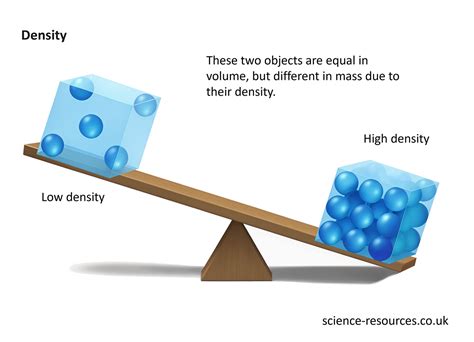
Density, a fundamental physical property, is defined as the amount of mass per unit volume of a substance. It is a measure of how much mass is contained in a given volume. Density is typically measured in units of mass per unit volume, such as grams per cubic centimeter (g/cm³) or kilograms per cubic meter (kg/m³). Understanding density is crucial in various fields, including physics, engineering, and materials science, as it plays a significant role in determining the behavior and properties of substances under different conditions.
Units of Density
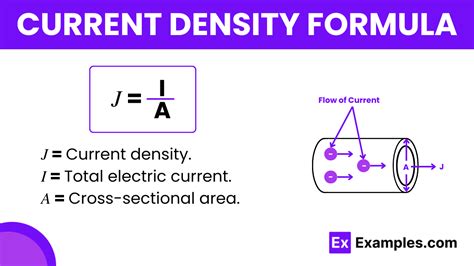
The units used to express density can vary depending on the system of measurement being employed. In the International System of Units (SI), the standard unit of density is kilograms per cubic meter (kg/m³). However, other units such as grams per cubic centimeter (g/cm³) are also commonly used, especially in contexts where smaller volumes are being considered. The choice of unit depends on the specific application and the convenience of the measurement in that context. For instance, in the United States, pounds per cubic foot (lb/ft³) might be used for certain engineering applications.
Density Measurement Techniques
Measuring density can be achieved through various techniques, each suited to different types of substances and levels of precision required. One of the most straightforward methods is the use of a density column or a hydrometer, which measures the density of a liquid by observing how deep a floating object sinks. For solids, particularly those with irregular shapes, the volume can be determined by measuring the displacement of water when the object is submerged, based on Archimedes’ Principle. Modern techniques, such as using a pycnometer, offer high precision for measuring the volume of a solid, and thus its density, by determining the volume of a known mass of the substance.
| Substance | Density (kg/m³) |
|---|---|
| Air | 1.2 |
| Water | 1000 |
| Steel | 7850 |
| Lead | 11340 |
Key Points
- Density is a measure of mass per unit volume, crucial for understanding physical properties and behaviors of substances.
- The SI unit of density is kilograms per cubic meter (kg/m³), but other units like grams per cubic centimeter (g/cm³) are also used.
- Measurement techniques include using a hydrometer, density column, or pycnometer, depending on the substance and required precision.
- Accurate density measurements are essential for various applications, including engineering, materials science, and physics.
- Different substances have vastly different densities, which is a key factor in their selection for specific applications.
Applications of Density

The concept of density has numerous practical applications across different fields. In engineering, understanding the density of materials is vital for designing structures that need to withstand certain stresses and loads. In physics, density is used to describe the properties of states of matter and the behavior of gases, liquids, and solids under various conditions. In materials science, the density of a material can influence its selection for specific applications, considering factors such as strength, weight, and buoyancy.
Historical Developments
The study of density has a long history, dating back to ancient civilizations that observed differences in the weights of equal volumes of different substances. However, it was not until the development of precise measurement tools and the formulation of scientific principles, such as Archimedes’ Principle, that density could be accurately measured and understood. Over time, advancements in technology have led to more sophisticated methods of density measurement, enabling precise calculations and a deeper understanding of material properties.
As technology continues to evolve, the importance of understanding density will only grow, especially in emerging fields like nanotechnology and advanced materials science, where the unique properties of materials at the nanoscale are being explored for innovative applications.
What is the significance of density in everyday life?
+Density plays a crucial role in various aspects of everyday life, from the design of buildings and bridges to the selection of materials for consumer products. Understanding density helps in creating safer, more efficient, and innovative products and structures.
How does density affect the buoyancy of objects in water?
+An object will float in water if its density is less than that of water (approximately 1000 kg/m³) and sink if its density is greater. This principle is fundamental in understanding why certain materials or objects behave in specific ways when submerged in water.
What are some common units used to express density?
+Common units for expressing density include kilograms per cubic meter (kg/m³), grams per cubic centimeter (g/cm³), and pounds per cubic foot (lb/ft³). The choice of unit often depends on the context and the system of measurement being used.
In conclusion, density is a vital physical property that influences the behavior and application of substances across various fields. Understanding density and its measurement is essential for advancements in science, technology, and engineering, and its significance extends into everyday life, affecting the design, safety, and functionality of products and structures.