A statistician is a professional who specializes in the collection, analysis, interpretation, presentation, and organization of data. Statisticians use their knowledge of statistical theory and methods to help organizations and individuals make informed decisions based on data. They work in a variety of fields, including business, government, healthcare, and social sciences, and are essential in helping to understand and solve complex problems.
Statisticians are skilled in designing experiments, surveys, and other methods for collecting data, as well as in developing and applying statistical models to analyze and interpret the data. They use a range of techniques, including regression analysis, hypothesis testing, and confidence intervals, to extract insights from data and communicate their findings to stakeholders. Statisticians must also be skilled in programming languages such as R or Python, and have experience with data visualization tools such as Tableau or Power BI.
Key Points
- A statistician is a professional who collects, analyzes, and interprets data to help organizations make informed decisions.
- Statisticians work in a variety of fields, including business, government, healthcare, and social sciences.
- They are skilled in designing experiments, surveys, and other methods for collecting data, as well as in developing and applying statistical models to analyze and interpret the data.
- Statisticians must be skilled in programming languages such as R or Python, and have experience with data visualization tools such as Tableau or Power BI.
- Statisticians play a critical role in helping to understand and solve complex problems, and are essential in many industries.
The Role of a Statistician
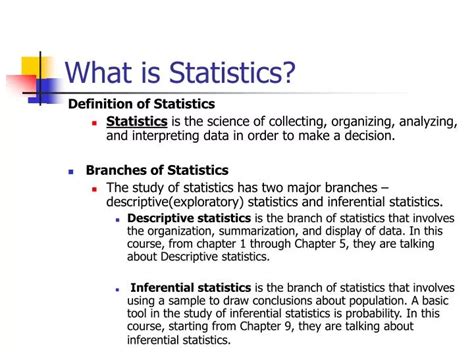
The role of a statistician is multifaceted and can vary depending on the industry or organization they work for. Some common tasks that statisticians perform include:
- Designing and implementing experiments and surveys to collect data
- Developing and applying statistical models to analyze and interpret data
- Communicating findings and insights to stakeholders through reports, presentations, and data visualizations
- Collaborating with other professionals, such as data scientists and data engineers, to integrate statistical analysis into larger projects
- Staying up-to-date with new statistical methods and technologies, and applying them to real-world problems
Statisticians use a range of techniques, including regression analysis, hypothesis testing, and confidence intervals, to extract insights from data. They must also be skilled in programming languages such as R or Python, and have experience with data visualization tools such as Tableau or Power BI.
Types of Statisticians
There are several types of statisticians, including:
- Applied statisticians, who work in industries such as business, government, and healthcare, and apply statistical techniques to real-world problems
- Theoretical statisticians, who develop new statistical methods and theories, and often work in academia
- Biostatisticians, who work in the field of medicine and healthcare, and apply statistical techniques to medical research and public health
- Environmental statisticians, who work in the field of environmental science, and apply statistical techniques to understand and mitigate the impact of human activity on the environment
Regardless of the type of statistician, they all share a common goal: to use data to tell a story and inform decision-making.
| Type of Statistician | Description |
|---|---|
| Applied Statistician | Works in industries such as business, government, and healthcare, and applies statistical techniques to real-world problems |
| Theoretical Statistician | Develops new statistical methods and theories, and often works in academia |
| Biostatistician | Works in the field of medicine and healthcare, and applies statistical techniques to medical research and public health |
| Environmental Statistician | Works in the field of environmental science, and applies statistical techniques to understand and mitigate the impact of human activity on the environment |
Education and Training
To become a statistician, one typically needs to have a strong foundation in mathematics and statistics, as well as experience with statistical software and programming languages. A bachelor’s degree in statistics, mathematics, or a related field is often required, and many statisticians also pursue advanced degrees, such as master’s or Ph.D.s.
In addition to formal education, statisticians must also stay up-to-date with new statistical methods and technologies, and apply them to real-world problems. This requires ongoing training and professional development, as well as a commitment to lifelong learning.
Certifications and Professional Development
There are several certifications and professional development opportunities available for statisticians, including:
- The Certified Statistician (CStat) designation, which is offered by the Royal Statistical Society
- The Professional Statistician (PStat) designation, which is offered by the American Statistical Association
- The Certified Analytics Professional (CAP) designation, which is offered by the Institute for Operations Research and the Management Sciences (INFORMS)
These certifications and professional development opportunities can help statisticians demonstrate their expertise and stay current with the latest developments in the field.
What is the role of a statistician in business?
+A statistician in business helps organizations make informed decisions by analyzing and interpreting data. They design experiments, surveys, and other methods for collecting data, and develop and apply statistical models to analyze and interpret the data.
What skills do statisticians need to have?
+Statisticians need to have strong technical skills, including programming languages such as R or Python, and experience with data visualization tools such as Tableau or Power BI. They also need to have strong communication and interpersonal skills, as well as the ability to work collaboratively with other professionals.
What are some common applications of statistics?
+Statistics has a wide range of applications, including business, government, healthcare, and social sciences. Statisticians use their knowledge of statistical theory and methods to help organizations and individuals make informed decisions based on data.