The concept of measurement at the nanoscale is fundamental in various fields of science and technology, including physics, chemistry, and engineering. One nanometer (nm) is a unit of length that represents one billionth of a meter. To put this into perspective, the width of a human hair is approximately 80,000 to 100,000 nanometers. This tiny scale is crucial for understanding and manipulating materials at the atomic and molecular level, which has significant implications for advancements in electronics, medicine, and materials science.
Understanding the Nanoscale
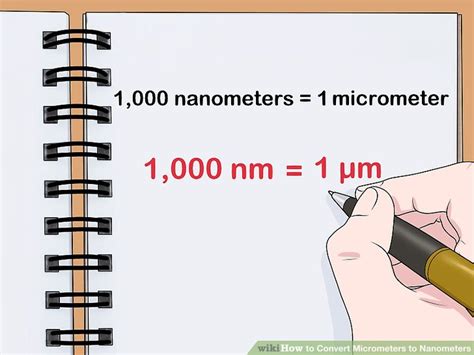
The nanoscale, which spans from about 1 to 100 nanometers, is a realm where the physical, chemical, and biological properties of materials can differ substantially from those at larger scales. At this scale, quantum effects become more pronounced, and the surface area to volume ratio of particles increases dramatically, affecting their reactivity and interaction with their environment. This unique behavior at the nanoscale is harnessed in various technologies, including nanoelectronics, drug delivery systems, and catalysts.
Measurement and Visualization
Measuring and visualizing objects at the nanoscale pose significant challenges due to their minuscule size. Techniques such as atomic force microscopy (AFM) and transmission electron microscopy (TEM) are essential tools for characterizing the morphology and structure of nanoparticles and nanostructured materials. These methods allow scientists to observe and measure objects that are only a few nanometers in size, facilitating the development of new materials and devices with tailored properties.
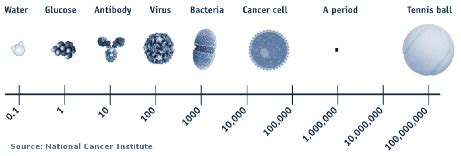
| Scale | Measurement |
|---|---|
| Human Hair Width | 80,000 to 100,000 nm |
| typical Virus Size | 20 to 400 nm |
| DNA Double Helix Diameter | about 2 nm |
Key Points
- One nanometer equals one billionth of a meter, a scale at which material properties can significantly differ from bulk properties.
- The nanoscale, spanning 1 to 100 nanometers, is critical for understanding quantum effects and the increased surface area to volume ratio of particles.
- Techniques like atomic force microscopy (AFM) and transmission electron microscopy (TEM) are vital for measuring and visualizing nanostructures.
- Applications of nanotechnology include electronics, drug delivery, catalysts, and the development of new materials with unique properties.
- Advancements in nanotechnology rely on the ability to engineer and characterize materials at the nanoscale, driving innovation across various scientific and industrial fields.
Applications and Implications
The implications of understanding and manipulating materials at the nanoscale are vast and varied. In electronics, nanotechnology enables the creation of smaller, faster, and more efficient devices, such as transistors and memory chips. In medicine, nanoparticles can be designed to target specific cells or tissues, improving drug delivery and reducing side effects. Furthermore, nanostructured materials can exhibit enhanced mechanical, thermal, or optical properties, making them ideal for applications in energy storage, aerospace, and consumer goods.
Challenges and Future Directions
Despite the significant progress made in nanotechnology, several challenges remain, including the scalability of nanostructure production, the stability and toxicity of nanoparticles, and the integration of nanostructured materials into functional devices and systems. Addressing these challenges will require continued advances in characterization techniques, synthesis methods, and theoretical understanding of nano-scale phenomena. Moreover, the ethical, environmental, and societal implications of nanotechnology need to be carefully considered to ensure that its benefits are realized while minimizing potential risks.
As research and development in nanotechnology continue to evolve, it is expected that innovations at the nanoscale will play an increasingly important role in addressing global challenges and improving quality of life. The manipulation of matter at the nanoscale represents a frontier of human knowledge and technological capability, with profound implications for the future of science, technology, and society.
What is the significance of the nanoscale in materials science?
+The nanoscale is significant because at this size, materials can exhibit unique physical, chemical, and biological properties that differ from their bulk counterparts. This allows for the creation of materials with tailored properties for specific applications.
How are nanoparticles measured and visualized?
+Nanoparticles are measured and visualized using advanced microscopy techniques such as atomic force microscopy (AFM) and transmission electron microscopy (TEM). These methods allow for the characterization of nanoparticles in terms of size, shape, and structure.
What are some potential applications of nanotechnology?
+Nanotechnology has a wide range of potential applications, including electronics, medicine, energy, and consumer products. It can be used to create smaller, faster, and more efficient devices, as well as to develop new materials with unique properties.
The journey into the nanoscale is a fascinating exploration of the minuscule, where the laws of physics as we know them begin to blur and new properties emerge. Understanding and harnessing the power of the nanoscale is not just about advancing technology; it’s about pushing the boundaries of human knowledge and innovation, with the potential to transform industries, improve lives, and redefine what is possible.