The Spanish language is known for its complex grammar system, and one of the most difficult aspects to master is the use of verb tenses, particularly the preterite and imperfect tenses. Understanding the difference between these two tenses is crucial to communicate effectively in Spanish, as they convey different aspects of the past. In this article, we will delve into the world of the preterite and imperfect tenses, exploring their usage, examples, and the nuances that distinguish them.
Introduction to the Preterite Tense
The preterite tense, also known as the simple past, is used to describe completed actions that occurred at a specific point in the past. It is often translated to English as the simple past tense. The preterite tense is used to convey a sense of finality, indicating that the action started and finished in the past. For example, yo estudié (I studied) or ella comió (she ate) are sentences that use the preterite tense to describe actions that were completed in the past.
Formation of the Preterite Tense
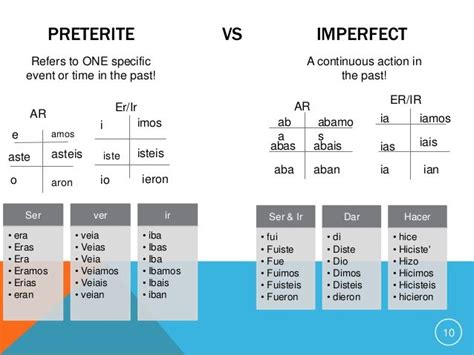
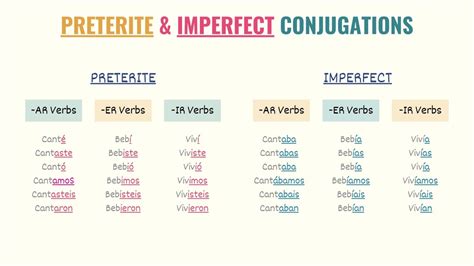
The formation of the preterite tense in Spanish varies depending on the type of verb. Regular -ar verbs, such as hablar (to speak), form the preterite tense by adding the following endings: -é, -aste, -ó, -amos, -asteis, -aron. For example, hablé (I spoke), hablaste (you spoke), habló (he/she/it spoke). On the other hand, regular -er and -ir verbs, such as comer (to eat) and vivir (to live), form the preterite tense with different endings: -í, -iste, -ió, -imos, -isteis, -ieron.
| Verb Type | Preterite Endings |
|---|---|
| -ar verbs | -é, -aste, -ó, -amos, -asteis, -aron |
| -er verbs | -í, -iste, -ió, -imos, -isteis, -ieron |
| -ir verbs | -í, -iste, -ió, -imos, -isteis, -ieron |
Introduction to the Imperfect Tense
The imperfect tense, also known as the past continuous, is used to describe ongoing or repeated actions in the past. It is often translated to English as the past continuous tense or the past simple tense with an ongoing or repetitive meaning. The imperfect tense is used to convey a sense of continuity or habit, indicating that the action was in progress or repeated over a period in the past. For example, yo estudiaba (I was studying) or ella comía (she used to eat) are sentences that use the imperfect tense to describe actions that were ongoing or repeated in the past.
Formation of the Imperfect Tense
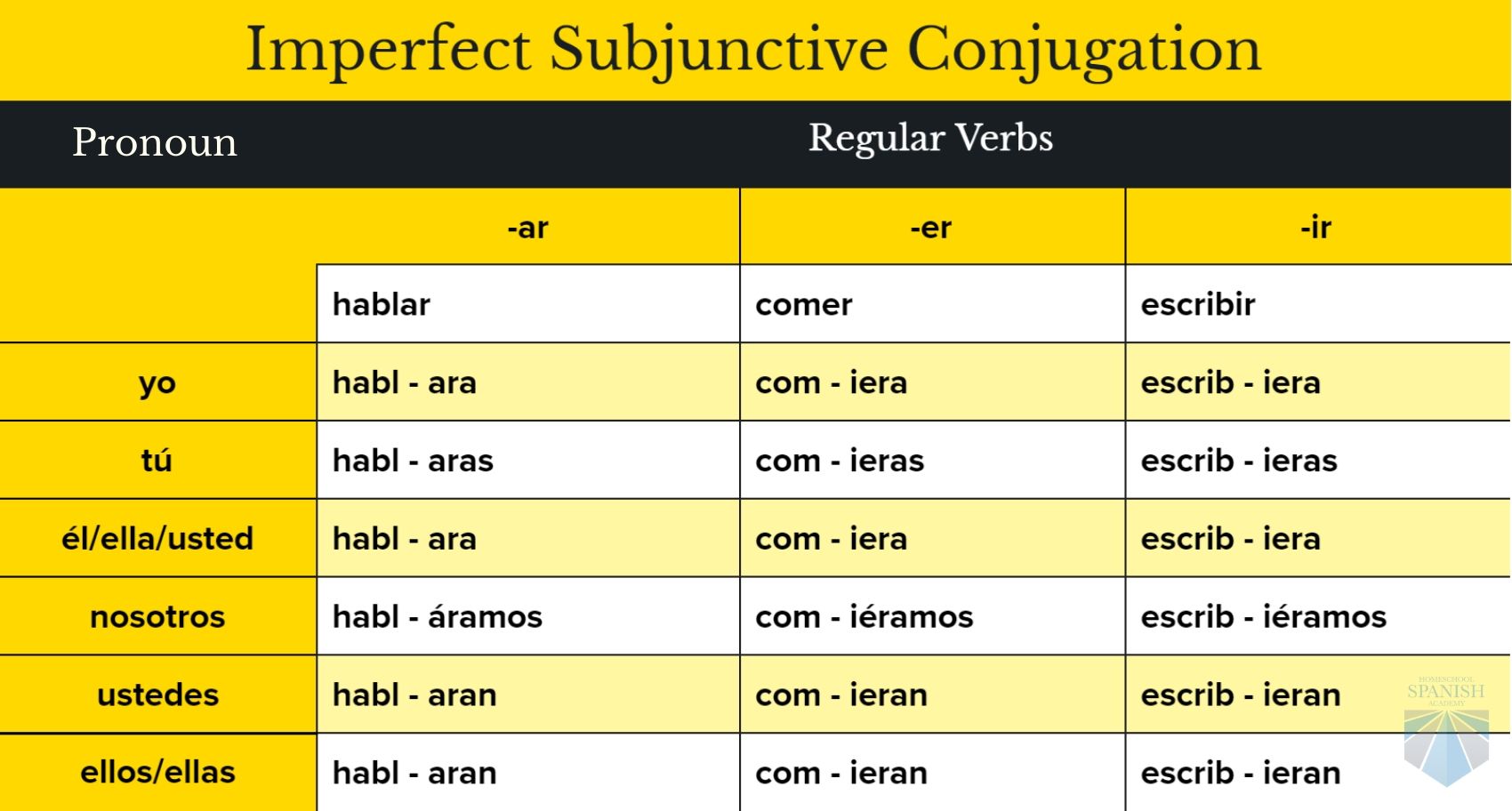
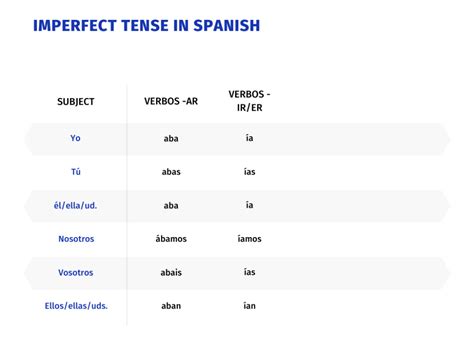
The formation of the imperfect tense in Spanish also varies depending on the type of verb. Regular -ar verbs form the imperfect tense by adding the following endings: -aba, -abas, -aba, -ábamos, -abais, -aban. For example, hablaba (I was speaking), hablabas (you were speaking), hablaba (he/she/it was speaking). Regular -er and -ir verbs form the imperfect tense with different endings: -ía, -ías, -ía, -íamos, -íais, -ían.
Key Points
- The preterite tense is used for completed actions in the past, while the imperfect tense is used for ongoing or repeated actions.
- Regular -ar verbs form the preterite tense with endings -é, -aste, -ó, -amos, -asteis, -aron, and the imperfect tense with endings -aba, -abas, -aba, -ábamos, -abais, -aban.
- Regular -er and -ir verbs form the preterite tense with endings -í, -iste, -ió, -imos, -isteis, -ieron, and the imperfect tense with endings -ía, -ías, -ía, -íamos, -íais, -ían.
- Some verbs are irregular in the preterite and imperfect tenses, requiring memorization for accurate usage.
- Mastering the preterite and imperfect tenses is crucial for effective communication in Spanish, as they convey different aspects of the past.
Using the Preterite and Imperfect Tenses Together
In many cases, both the preterite and imperfect tenses are used together in the same sentence to convey a more complex meaning. This is known as the “preterite-imperfect” combination. For example, yo estudiaba cuando mi amigo llegó (I was studying when my friend arrived). In this sentence, the imperfect tense estudiaba (I was studying) describes an ongoing action, while the preterite tense
Common Mistakes and Challenges
One of the most common mistakes made by learners of Spanish is the incorrect usage of the preterite and imperfect tenses. This can lead to confusion and miscommunication, as the wrong tense can change the meaning of a sentence entirely. For example, saying yo estudié cuando mi amigo llegaba (I studied when my friend was arriving) instead of yo estudiaba cuando mi amigo llegó (I was studying when my friend arrived) can alter the intended meaning and create confusion.
What is the main difference between the preterite and imperfect tenses in Spanish?
+The main difference between the preterite and imperfect tenses is that the preterite tense is used for completed actions in the past, while the imperfect tense is used for ongoing or repeated actions.
How do I form the preterite tense for regular -ar verbs?
+Regular -ar verbs form the preterite tense by adding the following endings: -é, -aste, -ó, -amos, -asteis, -aron.
Can I use the preterite and imperfect tenses together in the same sentence?
+Yes, the preterite and imperfect tenses can be used together in the same sentence to convey a more complex meaning, known as the "preterite-imperfect" combination.
In conclusion, the preterite and imperfect tenses are essential components of the Spanish language, allowing speakers to convey nuanced meanings and relationships between past actions. By mastering these tenses and understanding their usage, learners can improve their communication skills and express themselves more effectively in Spanish. Remember, practice and context are key to developing a deep understanding of these complex grammar concepts.