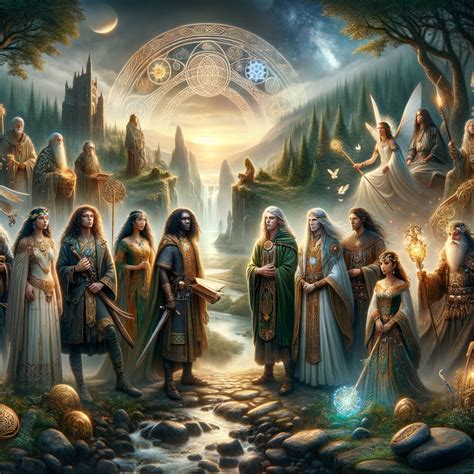
The Tuatha Dé Danann, which translates to "the people of the goddess Danu," are a pantheon of supernatural beings in Irish mythology. They are believed to have inhabited the island of Ireland before the arrival of human beings and are often associated with the land, the cycles of nature, and the forces of fate. The mythology surrounding the Tuatha Dé Danann is rich and complex, filled with stories of their magical powers, their conflicts with other supernatural beings, and their eventual decline and withdrawal from the world of humans. Here are five key facts about the Tuatha Dé Danann, offering a glimpse into their intriguing world and the significance they hold in Irish mythology.
Origins and Arrival in Ireland
The Tuatha Dé Danann are said to have arrived in Ireland in a mist, coming from four mythical islands: Falias, Gorias, Finias, and Murias. Each of these islands is associated with a particular aspect of knowledge or magical power. Falias is connected with the stone of Fál, which was said to roar three times when the rightful king of Ireland stood on it. Gorias is associated with the spear of Lugh, which was said to be unstoppable in battle. Finias is linked with the sword of Nuada, which could cut through any material. Murias is associated with the cauldron of the Dagda, which could feed an entire army. These islands and the treasures they represent symbolize the Tuatha Dé Danann’s connection to the mystical and their role as guardians of ancient wisdom.
Principal Gods and Goddesses
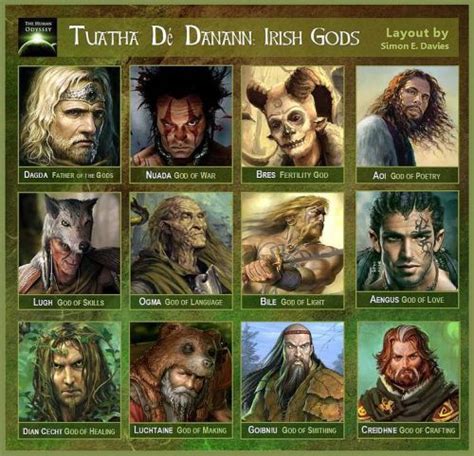
The Tuatha Dé Danann include a wide range of gods and goddesses, each with their own distinct powers and roles. The Dagda, with his mighty club that could kill with one end and bring back to life with the other, is one of the most notable figures. Lugh, known as the master of skills, is another key deity, often depicted as a warrior and associated with light, craftsmanship, and war. Brigid, the goddess of poetry, healing, and smithcraft, represents the feminine aspect of the Tuatha Dé Danann’s power and is revered for her wisdom and creative energy. These deities, along with others like Manannán mac Lir, who is associated with the sea and guardianship, and Danu, the mother goddess from whom the Tuatha Dé Danann derive their name, form a complex pantheon that reflects the multifaceted nature of Irish mythology.
| Deity | Domain |
|---|---|
| The Dagda | Agriculture, Fertility, and War |
| Lugh | Light, Craftsmanship, and War |
| Brigid | Poetry, Healing, and Smithcraft |
| Manannán mac Lir | The Sea and Guardianship |
| Danu | Mother Goddess and Sovereignty |
Wars and Battles
The Tuatha Dé Danann were involved in several significant battles, the most famous of which are the First and Second Battles of Moytura. The First Battle of Moytura saw the Tuatha Dé Danann, led by Nuada, clash with their rivals, the Fir Bolg. The Second Battle of Moytura was a conflict between the Tuatha Dé Danann and the Fomorians, a group of supernatural beings often depicted as dark or evil forces. This battle is notable for the Tuatha Dé Danann’s ultimate victory, achieved through the bravery and cunning of their warriors, particularly Lugh. These battles symbolize the eternal struggle between light and darkness, order and chaos, and are central to understanding the role of the Tuatha Dé Danann in Irish mythology.
Decline and Legacy
After their victories, the Tuatha Dé Danann eventually ceded their power to the Milesians, the mortal invaders of Ireland, and retreated to the sidhe (fairy mounds), where they continue to live in mythological accounts. This retreat marks the end of their reign as rulers of the earthly realm and the beginning of their role as guardians of the spiritual and mystical realms. The legacy of the Tuatha Dé Danann can be seen in the rich cultural heritage of Ireland, influencing folklore, literature, and the national identity. Their stories continue to captivate audiences, offering insights into the human experience, the natural world, and the complexities of good and evil.
Key Points
- The Tuatha Dé Danann are supernatural beings in Irish mythology, associated with the land, nature, and fate.
- They arrived in Ireland from four mythical islands, each associated with a different aspect of magical power or knowledge.
- Their pantheon includes gods and goddesses like the Dagda, Lugh, Brigid, and Danu, each with unique powers and roles.
- They were involved in significant battles, including the First and Second Battles of Moytura, which symbolize the struggle between light and darkness.
- Their decline and retreat to the sidhe mark the end of their earthly reign and the beginning of their role as spiritual guardians, leaving a lasting legacy in Irish culture and identity.
In conclusion, the Tuatha Dé Danann represent a fascinating aspect of Irish mythology, embodying the mystical, the natural, and the human condition. Their stories, powers, and legacy continue to inspire and educate, offering a window into the beliefs, values, and traditions of ancient Ireland. As guardians of the land and the forces of nature, the Tuatha Dé Danann remind us of the importance of respecting and honoring the world around us, ensuring their relevance and appeal endure through the ages.
Who are the main gods and goddesses of the Tuatha Dé Danann?
+The main gods and goddesses include the Dagda, Lugh, Brigid, Manannán mac Lir, and Danu, each associated with different aspects of life, nature, and power.
What are the four mythical islands from which the Tuatha Dé Danann came?
+The four islands are Falias, Gorias, Finias, and Murias, each associated with a particular treasure or aspect of knowledge.
What is the significance of the Tuatha Dé Danann’s battles?
+The battles, such as the First and Second Battles of Moytura, symbolize the eternal struggle between light and darkness, order and chaos, and are central to the mythology of the Tuatha Dé Danann.
What happened to the Tuatha Dé Danann after they ceded their power to the Milesians?
+They retreated to the sidhe, where they continue to live in mythological accounts, serving as guardians of the spiritual and mystical realms.
What is the legacy of the Tuatha Dé Danann in Irish culture?
+Their legacy can be seen in the rich cultural heritage of Ireland, influencing folklore, literature, and national identity, with their stories continuing to captivate audiences and offer insights into the human experience and the natural world.