The use of topical corticosteroids is a common practice in the treatment of various skin conditions, including eczema, psoriasis, and dermatitis. These medications work by reducing inflammation and suppressing the immune system, thereby alleviating symptoms such as redness, itching, and swelling. However, with numerous topical corticosteroids available, each with its own level of potency, selecting the most appropriate one for a specific condition can be challenging. A topical corticosteroid potency chart is a valuable tool that helps healthcare professionals and patients understand the relative strengths of these medications.
Key Points
- Topical corticosteroids are classified into seven potency categories, ranging from Class I (super potent) to Class VII (least potent).
- The potency of a topical corticosteroid is determined by its vasoconstrictive properties, which are assessed through a standardized test known as the McKenzie-Stoughton test.
- Higher potency corticosteroids are generally used for more severe skin conditions or for shorter treatment durations, while lower potency corticosteroids are preferred for mild conditions or for use on sensitive areas of the body.
- The choice of topical corticosteroid should be based on the severity of the condition, the size of the affected area, and the patient's age and medical history.
- Prolonged use of high-potency corticosteroids can lead to adverse effects, such as skin thinning, easy bruising, and perioral dermatitis.
Understanding Topical Corticosteroid Potency
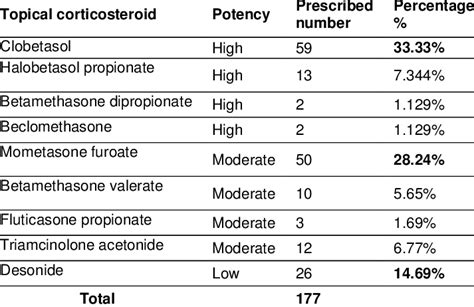
The potency of topical corticosteroids is classified based on their ability to constrict blood vessels, a property that correlates with their anti-inflammatory effects. The classification system, which ranges from Class I (super potent) to Class VII (least potent), helps guide the selection of the most appropriate corticosteroid for a particular condition. Class I corticosteroids, such as clobetasol propionate, are the most potent and are typically used for short periods on small areas of the body to treat severe skin conditions. In contrast, Class VII corticosteroids, such as hydrocortisone, are the least potent and are often used for mild conditions or for prolonged periods on larger body areas.
Class I: Super Potent Corticosteroids
Class I corticosteroids are the most potent and are usually prescribed for severe skin conditions that are resistant to less potent corticosteroids. Examples of Class I corticosteroids include clobetasol propionate (Temovate), halobetasol propionate (Ultravate), and betamethasone dipropionate (Diprolene). These medications are highly effective but should be used with caution due to the risk of adverse effects, particularly with prolonged use.
| Class | Example Medications | Potency |
|---|---|---|
| Class I | Clobetasol propionate, Halobetasol propionate | Super Potent |
| Class II | Triamcinolone acetonide, Fluticasone propionate | Highly Potent |
| Class III | Betamethasone valerate, Mometasone furoate | Potent |
| Class IV | Hydrocortisone butyrate, Triamcinolone acetonide | Moderately Potent |
| Class V | Fluticasone propionate, Prednicarbate | Moderately Potent |
| Class VI | Alclometasone dipropionate, Hydrocortisone valerate | Mildly Potent |
| Class VII | Hydrocortisone | Least Potent |
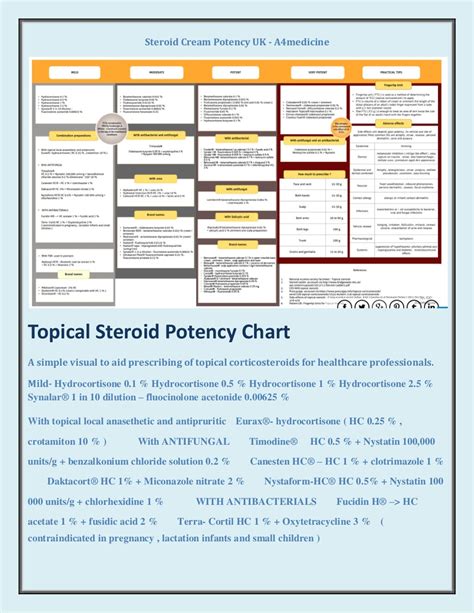
Practical Considerations for Using Topical Corticosteroids
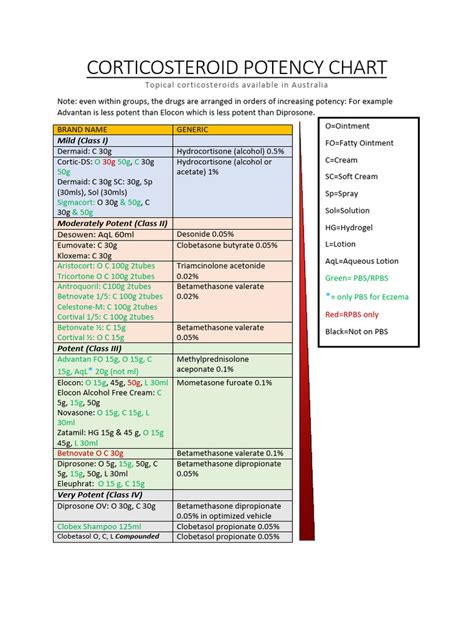
When selecting a topical corticosteroid, several factors should be considered, including the severity of the condition, the size of the affected area, the patient’s age, and any history of adverse reactions to corticosteroids. Higher potency corticosteroids are generally recommended for severe conditions or for use on smaller areas of the body, while lower potency corticosteroids are preferred for mild conditions or for use on larger body areas. Additionally, the duration of treatment should be as short as possible to minimize the risk of side effects.
Risks and Side Effects
While topical corticosteroids are effective in treating various skin conditions, their use is associated with potential risks and side effects. Common side effects include skin thinning, easy bruising, and perioral dermatitis. More severe side effects, such as Cushing’s syndrome and adrenal suppression, can occur with prolonged use of high-potency corticosteroids. It is essential for patients to follow the prescribed treatment regimen carefully and to report any concerns or side effects to their healthcare provider.
What is the primary factor in determining the potency of a topical corticosteroid?
+The primary factor is the vasoconstrictive properties of the corticosteroid, as assessed by the McKenzie-Stoughton test.
How should the choice of topical corticosteroid be made?
+The choice should be based on the severity of the condition, the size of the affected area, the patient's age, and their medical history.
What are the potential risks of prolonged use of high-potency topical corticosteroids?
+Potential risks include skin thinning, easy bruising, perioral dermatitis, Cushing's syndrome, and adrenal suppression.
In conclusion, understanding the potency of topical corticosteroids is essential for the effective management of skin conditions. By considering the severity of the condition, the size of the affected area, and the patient’s medical history, healthcare professionals can select the most appropriate corticosteroid, minimizing the risk of adverse effects while maximizing therapeutic benefits. Patients should be informed about the potential risks and side effects associated with topical corticosteroid use and should follow the prescribed treatment regimen carefully to ensure safe and effective treatment.