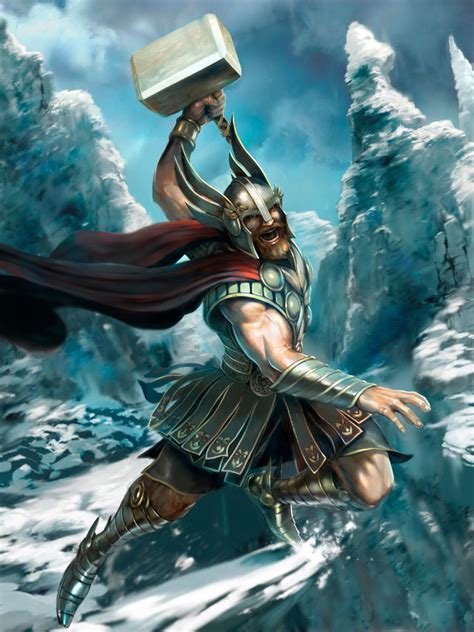
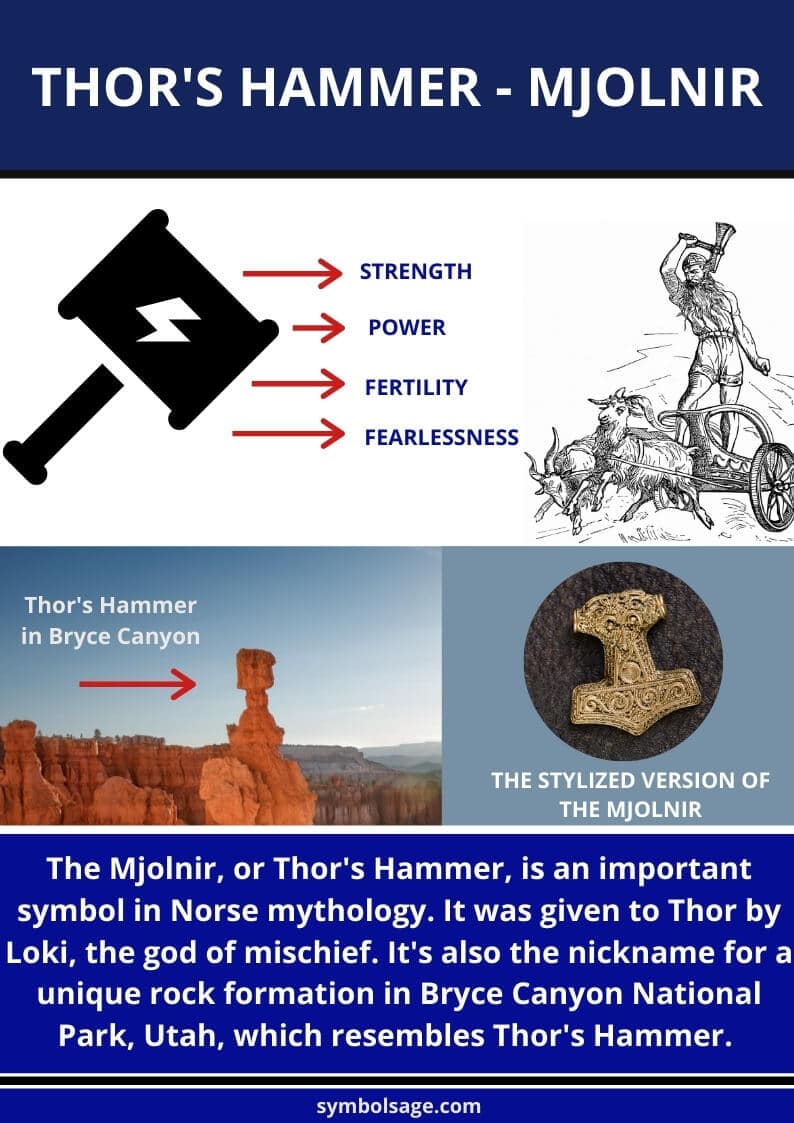
Delving into the realm of Norse mythology, one figure stands out among the pantheon of gods, goddesses, and other supernatural beings - Thor, the god of thunder. With his iconic hammer Mjolnir in hand, Thor has become an enduring symbol of strength and protection, not only in Norse mythology but also in modern popular culture. To understand the significance of Thor, it's essential to explore his role within the Norse mythological landscape, his characteristics, and the stories that have been passed down through the centuries.
Introduction to Thor and Norse Mythology
Norse mythology is rooted in the cultural and religious beliefs of the ancient Scandinavian people, particularly during the Viking Age. It is a complex web of stories, legends, and myths that describe the creation of the world, the lives and actions of gods, goddesses, giants, and other beings, and the eventual destruction of the world in the event known as Ragnarök. Thor, as one of the most prominent gods, plays a central role in many of these myths, embodying the power of thunder and the protection of humanity.
Characteristics and Role of Thor
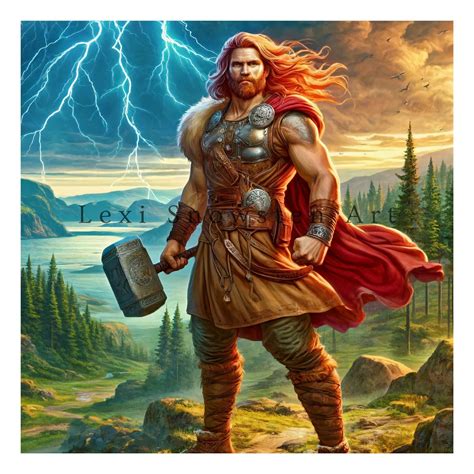
Thor is often depicted as a large, powerful man with a red beard and hair, wearing a belt that doubles his strength, known as Megingjardir, and wielding the mighty hammer Mjolnir. This hammer is so central to Thor’s identity and powers that it is nearly inseparable from him. According to myth, Mjolnir is capable of leveling mountains and is so powerful that it always returns to Thor’s hand after being thrown. Thor’s primary role is to protect the gods and humanity from the giants and other threats, making him a pivotal figure in the defense against chaos and destruction.
| Attribute | Description |
|---|---|
| Physical Appearance | Large, powerful build, red beard and hair |
| Strength | Enhanced by the belt Megingjardir |
| Weapon | Mjolnir, the hammer capable of leveling mountains |
| Role | Protector of the gods and humanity |
Thor in Norse Mythology and Modern Culture
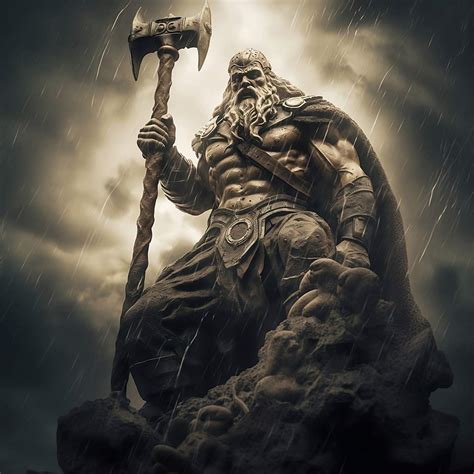
Thor’s adventures and exploits are the subject of many myths, including his battles with giants, his encounter with the giant Hrungnir, and the story of how he retrieved his hammer from the giant Þrym. These stories not only showcase Thor’s bravery and strength but also his cunning and willingness to adapt. Beyond Norse mythology, Thor has become a cultural icon, appearing in literature, art, film, and comic books. The Marvel Comics character Thor, for example, brings the god of thunder into a modern superhero context, blending mythological roots with contemporary storytelling.
Impact and Legacy of Thor
The impact of Thor on popular culture is undeniable, with his image and character influencing art, literature, and entertainment for centuries. From the Norse poems and sagas to modern comic books and movies, Thor remains a compelling figure, symbolizing strength, protection, and the human desire for heroes who can safeguard against the uncertainties of life. His legacy extends beyond the boundaries of Norse mythology, entering the broader cultural consciousness as a symbol of courage and power.
Key Points
- Thor is the Norse god of thunder, known for his strength and the hammer Mjolnir.
- He plays a central role in Norse mythology, protecting the gods and humanity from threats.
- Thor's character and stories have influenced art, literature, and popular culture for centuries.
- The Marvel Comics character Thor brings the god into a modern context, blending mythology with contemporary storytelling.
- Thor's legacy symbolizes strength, protection, and the human desire for heroes who safeguard against life's uncertainties.
Historical and Cultural Context of Thor
Understanding Thor within his historical and cultural context is crucial. The Viking Age, during which many of the Norse myths were recorded, was a time of significant change and upheaval in Scandinavia. The myths, including those of Thor, served as a way to explain natural phenomena, the creation of the world, and the will of the gods. Thor’s prominence in these myths reflects the importance of strength, courage, and protection in Viking society. Moreover, the worship of Thor and other Norse gods was an integral part of Viking religious practices, with rituals and sacrifices performed to ensure the gods’ favor and protection.
Evolution of Thor’s Character
Over time, the character of Thor has evolved, influenced by Christianization, the Renaissance, and modern media. From being a central deity in Norse paganism to becoming a figure in medieval Christian literature, and eventually a superhero in comic books and movies, Thor’s image has undergone significant transformations. Despite these changes, his core characteristics as a protector and a symbol of strength have remained relatively consistent, demonstrating the enduring appeal of the god of thunder across different cultures and time periods.
What is Thor's role in Norse mythology?
+Thor is the god of thunder and plays a central role in protecting the gods and humanity from giants and other threats.
What is the significance of Mjolnir, Thor's hammer?
+Mjolnir symbolizes Thor's authority and his role as a protector, embodying the power of the storm and the stability it brings to the world.
How has Thor's character evolved over time?
+Thor's character has evolved significantly from his origins in Norse paganism, through the Middle Ages, and into modern times, influenced by Christianity, literature, and popular media, yet his core characteristics as a protector and symbol of strength have remained consistent.
In conclusion, Thor, the Norse god of thunder, stands as a powerful symbol of strength, protection, and the human desire for heroes. His stories, from the myths of old to the modern tales of today, continue to captivate audiences, offering insights into the cultural, historical, and mythological contexts in which they were told. As a figure who has transcended his mythological origins to become a part of broader cultural consciousness, Thor remains an enduring and fascinating character, embodying the timeless appeal of mythology and the power of storytelling.