When it comes to writing in the third person, many authors and writers struggle to find the right tone and voice. The third person narrative is a powerful tool that can add depth and complexity to any story or article, but it requires a certain level of skill and practice to master. In this article, we will explore five tips for writing in the third person, including how to create a strong narrative voice, how to use pronouns effectively, and how to avoid common pitfalls.
Key Points
- Use a strong narrative voice to guide the reader through the story
- Choose the right pronouns to create a clear and concise narrative
- Avoid head-hopping and stick to a single narrative perspective
- Use action and dialogue to bring the characters to life
- Edit and revise carefully to ensure a polished and professional final product
Creating a Strong Narrative Voice
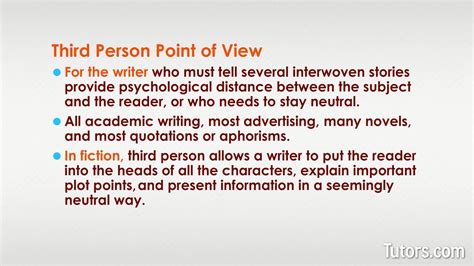
A strong narrative voice is essential for writing in the third person. This voice should be distinct and consistent throughout the story, and it should guide the reader through the narrative. To create a strong narrative voice, authors should use a clear and concise writing style, avoiding ambiguity and confusion. They should also use descriptive language to bring the characters and settings to life, and to create a vivid and immersive atmosphere. For example, instead of saying “the room was dark,” an author might say “the room was shrouded in a deep, foreboding shadow that seemed to swallow all light and sound.” This creates a more vivid and engaging image in the reader’s mind, and helps to establish a strong narrative voice.
Using Pronouns Effectively
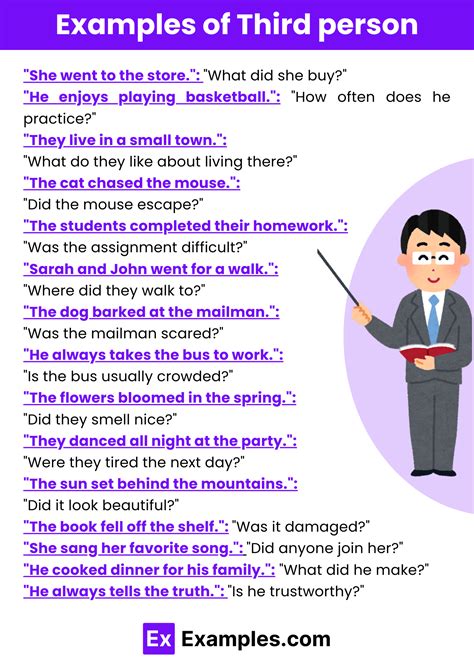
Pronouns are a crucial aspect of third person writing, and they can be used to create a clear and concise narrative. Authors should choose the right pronouns to refer to their characters, using “he” and “she” instead of “they” or “it.” This helps to create a more personal and intimate narrative, and it avoids confusion and ambiguity. For example, instead of saying “the character went to the store,” an author might say “he went to the store, his eyes scanning the crowded aisles for the perfect gift.” This creates a more vivid and engaging image, and it helps to establish a strong narrative voice.
| Pronoun | Example Sentence |
|---|---|
| He | He walked into the room, his presence commanding attention. |
| She | She smiled, her eyes sparkling with amusement. |
| They | They walked together, their arms entwined in a romantic gesture. |
Avoiding Head-Hopping
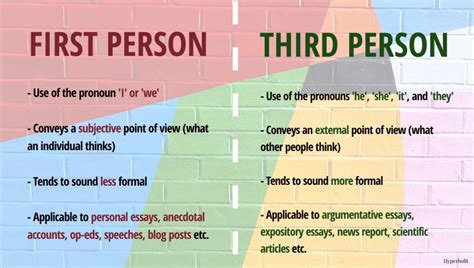
Head-hopping is a common pitfall of third person writing, and it occurs when an author switches between different narrative perspectives without warning. This can be confusing and disorienting for the reader, and it can disrupt the flow of the narrative. To avoid head-hopping, authors should stick to a single narrative perspective, using transitions and descriptive language to guide the reader through the story. For example, instead of saying “he thought she was beautiful, and she thought he was handsome,” an author might say “he couldn’t help but notice the way she smiled, her eyes sparkling with amusement. As he watched her, he felt a surge of attraction, and he wondered if she felt the same way.” This creates a more cohesive and engaging narrative, and it avoids the confusion and ambiguity of head-hopping.
Using Action and Dialogue
Action and dialogue are essential elements of third person writing, and they can be used to bring the characters to life. Authors should use descriptive language to create vivid and engaging images, and they should use dialogue to reveal character traits and relationships. For example, instead of saying “the character was angry,” an author might say “he slammed his fist on the table, his face red with rage. ‘I’m so tired of this,’ he exclaimed, his voice rising in frustration.” This creates a more vivid and engaging image, and it helps to establish a strong narrative voice.
Editing and Revising
Finally, authors should edit and revise their work carefully to ensure a polished and professional final product. This involves checking for grammar and punctuation errors, as well as reviewing the narrative for clarity and coherence. Authors should also seek feedback from beta readers and editors, using their comments and suggestions to refine and improve the narrative. By following these tips and using the third person narrative effectively, authors can create a vivid and immersive story that engages and captivates the reader.
What is the most important aspect of writing in the third person?
+The most important aspect of writing in the third person is creating a strong narrative voice. This voice should be distinct and consistent throughout the story, and it should guide the reader through the narrative.
How can I avoid head-hopping in my writing?
+To avoid head-hopping, stick to a single narrative perspective and use transitions and descriptive language to guide the reader through the story. This will help to create a more cohesive and engaging narrative.
What is the best way to use pronouns in third person writing?
+The best way to use pronouns in third person writing is to choose the right pronouns to refer to your characters, using “he” and “she” instead of “they” or “it.” This will help to create a more personal and intimate narrative.