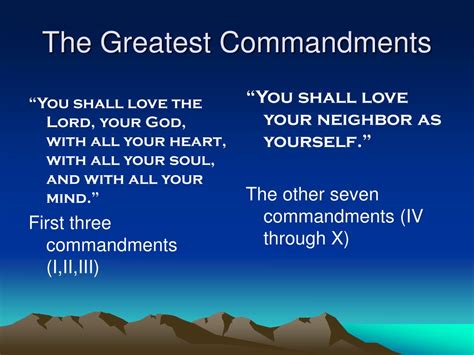
The Greatest Commandment, as stated in the Bible, is to "love the Lord your God with all your heart, with all your soul, with all your mind, and with all your strength" (Mark 12:30). This commandment is considered the most important by Jesus himself, and it serves as the foundation for all other commandments. But what does it mean to love God with every aspect of our being, and how can we put this commandment into practice in our daily lives? In this article, we will explore five ways to fulfill the Greatest Commandment, with a focus on practical applications and real-world examples.
Key Points
- Understanding the depths of God's love for us is crucial for reciprocating that love.
- Engaging in regular prayer and worship helps to cultivate a deeper relationship with God.
- Serving others in need is a tangible way to demonstrate our love for God.
- Studying Scripture and applying its teachings to our lives is essential for loving God with our minds.
- Prioritizing our relationship with God above all else is vital for fulfilling the Greatest Commandment.
Loving God with Our Hearts

Loving God with our hearts involves developing a deep emotional connection with Him. This can be achieved by understanding the depths of God’s love for us and recognizing the sacrifices He made for our salvation. When we grasp the extent of God’s love, we are more likely to respond with love and devotion. One way to cultivate this emotional connection is through worship and praise. Singing hymns, reading Psalms, or simply spending time in contemplative prayer can help us express our love and adoration for God.
The Role of Prayer in Loving God
Prayer is an essential component of loving God with our hearts. Through regular prayer, we can communicate with God, express our gratitude, and seek His guidance. Prayer helps us develop a deeper understanding of God’s character and will, which in turn fosters a stronger emotional bond. Additionally, prayer provides an opportunity for us to confess our sins and receive forgiveness, which is critical for maintaining a healthy and loving relationship with God.
| Aspect of Loving God | Practical Application |
|---|---|
| Heart | Regular worship and prayer, understanding God's love for us |
| Soul | Serving others, caring for the poor and marginalized |
| Mind | Studying Scripture, applying its teachings to our lives |
| Strength | Prioritizing our relationship with God, making sacrifices for His sake |

Loving God with Our Souls
Loving God with our souls involves seeking to please Him in every aspect of our lives. This includes -serving others, particularly those in need. When we care for the poor, the sick, and the marginalized, we are demonstrating our love for God. As Jesus said, “Whatever you did for one of the least of these brothers and sisters of mine, you did for me” (Matthew 25:40). By serving others, we are not only showing our love for God, but also fulfilling our responsibility as His followers.
The Importance of Serving Others
Serving others is a tangible way to demonstrate our love for God. By caring for those in need, we are reflecting God’s love and character. This can be done through volunteering at local charities, participating in community service projects, or simply being a good neighbor. As we serve others, we must remember that we are not just doing it for them, but for God, who sees our actions and rewards our obedience.
Loving God with Our Minds
Loving God with our minds involves seeking to understand His will and ways. This can be achieved by studying Scripture and applying its teachings to our lives. As we read and meditate on God’s Word, we gain a deeper understanding of His character, His plans, and His expectations for us. By applying biblical principles to our daily lives, we demonstrate our love for God and our commitment to following His will.
The Role of Scripture in Loving God
Scripture is essential for loving God with our minds. Through regular Bible study, we can gain a deeper understanding of God’s nature, His promises, and His expectations for us. As we apply biblical teachings to our lives, we are able to make informed decisions, prioritize our values, and cultivate a stronger love for God. Additionally, Scripture provides us with wisdom and guidance for navigating life’s challenges, which is critical for maintaining a strong and loving relationship with God.
Loving God with Our Strength
Loving God with our strength involves being willing to make sacrifices for His sake. This can include prioritizing our relationship with God above all else, being willing to take a stand for our faith, and being committed to living a life of obedience. When we put God first in our lives, we are demonstrating our love and devotion to Him. As Jesus said, “If anyone comes to me and does not hate father and mother, wife and children, brothers and sisters—yes, even their own life—such a person cannot be my disciple” (Luke 14:26).
What is the most important commandment in the Bible?
+The most important commandment in the Bible is to love the Lord your God with all your heart, with all your soul, with all your mind, and with all your strength.
How can I demonstrate my love for God?
+You can demonstrate your love for God by prioritizing your relationship with Him, serving others, studying Scripture, and being willing to make sacrifices for His sake.
What is the role of prayer in loving God?
+Prayer is essential for loving God, as it allows us to communicate with Him, express our gratitude, and seek His guidance. Regular prayer helps us develop a deeper understanding of God's character and will, which fosters a stronger emotional bond.
In conclusion, fulfilling the Greatest Commandment requires a multifaceted approach. By loving God with our hearts, souls, minds, and strength, we can demonstrate our devotion and commitment to Him. As we prioritize our relationship with God, serve others, study Scripture, and make sacrifices for His sake, we are not only fulfilling the Greatest Commandment, but also living a life that is pleasing to Him. Remember, loving God is a choice, and by choosing to put Him first in our lives, we can experience a deeper and more meaningful relationship with Him.