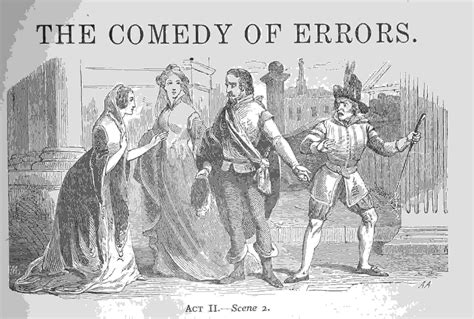
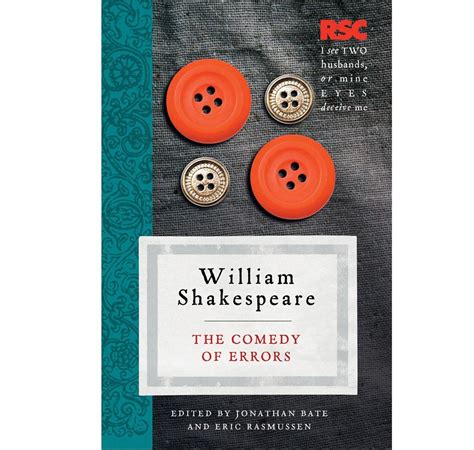
The Comedy of Errors, a play by William Shakespeare, is a masterful exploration of mistaken identities, slapstick humor, and the complexities of human relationships. Written around 1592-1594, this early work by Shakespeare showcases his remarkable ability to craft a narrative that is both entertaining and thought-provoking. The play's title, "The Comedy of Errors," is a clear indication of the chaos and confusion that ensues when two sets of identical twins, separated at birth, find themselves in the same city, leading to a series of hilarious misunderstandings and unexpected reunions.
Plot Overview and Character Analysis
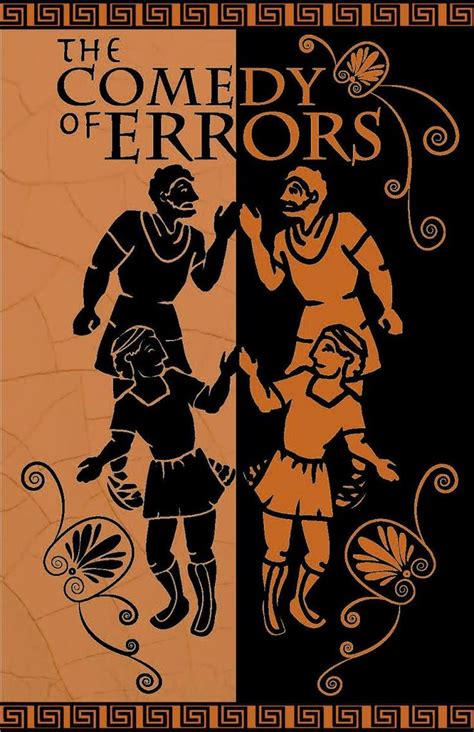
The story revolves around two sets of identical twins: Antipholus of Syracuse and Antipholus of Ephesus, and their respective servants, Dromio of Syracuse and Dromio of Ephesus. The twins were separated at birth, and their father, Egeon, has been searching for them for years. When Antipholus of Syracuse and his servant Dromio arrive in Ephesus, they are mistaken for their twin brothers, leading to a series of comedic misunderstandings. Meanwhile, Egeon’s search for his sons leads him to Ephesus, where he is sentenced to death for being a merchant from Syracuse, a city at war with Ephesus.
Themes and Symbolism in The Comedy of Errors
One of the primary themes of The Comedy of Errors is the concept of identity and how it is shaped by our relationships and experiences. The play highlights the complexities of human identity and how easily it can be mistaken or misunderstood. The character of Antipholus of Syracuse, for example, struggles with his own identity as he navigates the unfamiliar city of Ephesus and encounters people who claim to know him. The play also explores the theme of family and the bonds that tie us together, as seen in the relationship between Egeon and his sons, as well as the friendship between the two Dromios.
| Character | Description |
|---|---|
| Antipholus of Syracuse | The protagonist of the play, a young man from Syracuse who is searching for his twin brother. |
| Antipholus of Ephesus | The twin brother of Antipholus of Syracuse, a merchant who lives in Ephesus. |
| Dromio of Syracuse | The servant of Antipholus of Syracuse, who is also a twin. |
| Dromio of Ephesus | The servant of Antipholus of Ephesus, who is the twin brother of Dromio of Syracuse. |
| Egeon | The father of the twin brothers, who is searching for them and is sentenced to death in Ephesus. |
Key Points and Takeaways
Key Points
- The Comedy of Errors is a play by William Shakespeare that explores the themes of identity, family, and relationships.
- The play features two sets of identical twins, Antipholus of Syracuse and Antipholus of Ephesus, and their respective servants, Dromio of Syracuse and Dromio of Ephesus.
- The twins were separated at birth, and their father, Egeon, has been searching for them for years.
- The play is a masterful example of comedic storytelling, with a complex plot that is full of twists and turns.
- The Comedy of Errors has been delighting audiences for centuries with its hilarious and entertaining narrative.
Historical Context and Cultural Significance
The Comedy of Errors was written during a time of great social and cultural change in England. The play reflects the anxieties and concerns of the time, including the fear of strangers and the importance of family and social status. The play’s use of mistaken identities and slapstick humor also reflects the influence of Italian commedia dell’arte, a type of improvisational theater that was popular in Italy during the 16th century.
The Comedy of Errors has had a significant impact on the development of Western literature and theater. The play's influence can be seen in the works of later playwrights, such as Molière and Oscar Wilde, who also used mistaken identities and slapstick humor in their comedies. The play has also been adapted and interpreted in many different ways, including film, television, and stage productions.
What is the main theme of The Comedy of Errors?
+The main theme of The Comedy of Errors is the concept of identity and how it is shaped by our relationships and experiences.
Who are the main characters in The Comedy of Errors?
+The main characters in The Comedy of Errors are Antipholus of Syracuse, Antipholus of Ephesus, Dromio of Syracuse, Dromio of Ephesus, and Egeon.
What is the historical context of The Comedy of Errors?
+The Comedy of Errors was written during a time of great social and cultural change in England, and reflects the anxieties and concerns of the time.
The Comedy of Errors is a play that continues to delight audiences with its hilarious and entertaining narrative. The play’s exploration of identity, family, and relationships is both thought-provoking and relatable, and its use of mistaken identities and slapstick humor creates a comedic masterpiece that has stood the test of time. As a work of literature, The Comedy of Errors is a significant contribution to the Western literary canon, and its influence can be seen in many later works of literature and theater.