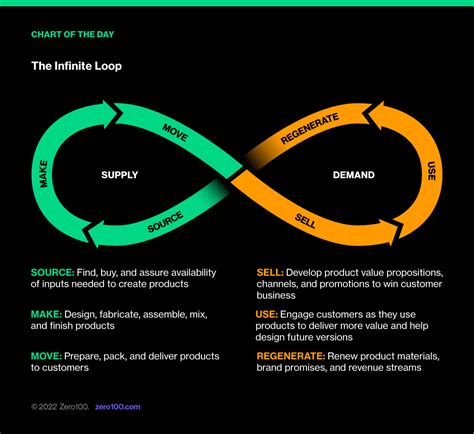
The concept of supply and demand is a fundamental principle in economics, describing the relationship between the availability of a product or service and the desire for it among consumers. This delicate balance plays a crucial role in determining prices, production levels, and the overall allocation of resources within an economy. The mechanics of supply and demand can be observed in various markets, from commodities and stocks to labor and real estate. Understanding how supply and demand work is essential for businesses, policymakers, and individuals looking to navigate the complexities of the market.
Introduction to Supply and Demand Dynamics
The dynamics of supply and demand are intertwined, with each influencing the other in a continuous cycle. The supply side refers to the availability of goods or services, which is typically determined by factors such as production costs, technology, and expectations of future prices. On the other hand, demand is driven by consumer preferences, income levels, prices of related goods, and demographic changes. When demand for a product increases, businesses respond by increasing production, assuming all other factors remain constant. Conversely, if demand decreases, production is reduced to avoid surplus and potential losses.
Key Points
- The law of demand states that as the price of a product increases, the quantity demanded decreases, ceteris paribus.
- The law of supply posits that as the price of a product increases, the quantity supplied also increases, given that production costs and technology remain constant.
- Equilibrium is reached when the quantity supplied equals the quantity demanded, determining the market price and quantity.
- Shifts in the supply or demand curve can result from various factors, including changes in consumer preferences, technological advancements, or government policies.
- Understanding supply and demand is crucial for making informed decisions in business, investment, and policymaking.
How Supply and Demand Interact in Different Markets
The interaction between supply and demand can be observed in various markets, each with its unique characteristics and factors influencing the equilibrium. For instance, in the labor market, the supply of labor is determined by the number of workers willing to work at a given wage, while the demand for labor is influenced by the productivity of workers and the prevailing wage rate. In commodity markets, such as oil or gold, global events, geopolitical tensions, and speculative activities can significantly impact supply and demand, leading to price volatility.
| Market Type | Key Influencing Factors |
|---|---|
| Labor Market | Wage rates, worker productivity, labor laws |
| Commodity Market | Global demand, production costs, geopolitical events |
| Stock Market | Corporate earnings, economic indicators, investor sentiment |
5 Ways Supply and Demand Work in Real-World Scenarios
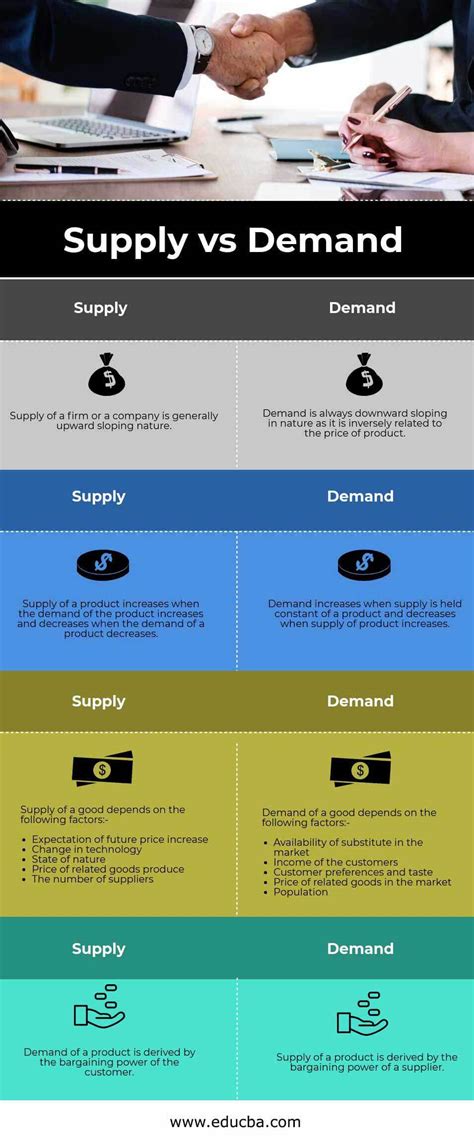
1. Price Adjustment Mechanism: One of the primary ways supply and demand work is through the price adjustment mechanism. When demand exceeds supply, prices tend to rise, encouraging producers to increase production and discouraging consumption. Conversely, when supply exceeds demand, prices fall, stimulating consumption and discouraging production. This mechanism helps in achieving equilibrium in the market.
2. Resource Allocation: The principle of supply and demand plays a vital role in the allocation of resources within an economy. Resources are allocated to the production of goods and services based on consumer demand. If demand for a particular product is high, resources are shifted towards its production, ensuring that resources are utilized efficiently.
3. Innovation and Efficiency: The dynamics of supply and demand drive innovation and efficiency. Companies are incentivized to innovate and reduce production costs to increase supply and meet demand more effectively. This leads to technological advancements and better products, ultimately benefiting consumers.
4. Market Entry and Exit: Supply and demand influence the decision of firms to enter or exit a market. When demand is high and supply is limited, new firms are encouraged to enter the market, increasing supply. Conversely, if demand is low and supply is excessive, firms may exit the market to avoid losses.
5. Policymaking and Regulation: Understanding supply and demand is crucial for policymakers. Governments can influence supply and demand through policies such as taxation, subsidies, and regulation. For instance, imposing a tax on a good can reduce demand, while a subsidy can increase supply. Policymakers must carefully consider the impact of their decisions on the balance between supply and demand to achieve desired economic outcomes.
Challenges and Limitations in Supply and Demand Analysis
While the concept of supply and demand provides valuable insights into market dynamics, its application is not without challenges. Real-world markets are subject to numerous factors that can affect supply and demand, making predictions complex. Additionally, the assumption of perfect competition, which underlies the basic supply and demand model, is rarely met in reality. Asymmetric information, externalities, and the presence of monopoly power can all distort the functioning of supply and demand, leading to market failures.
What is the law of demand, and how does it influence consumer behavior?
+The law of demand states that as the price of a product increases, the quantity demanded decreases, assuming all other factors remain constant. This principle influences consumer behavior by making products less attractive as their prices rise, thus reducing the quantity purchased.
How do changes in technology affect supply and demand in different markets?
+Technological advancements can increase supply by improving production efficiency and reducing costs. In some cases, technology can also increase demand by creating new products or improving the quality of existing ones, thereby attracting more consumers.
What role do government policies play in influencing supply and demand, and what are their potential impacts on the economy?
+Government policies, such as taxes, subsidies, and regulations, can significantly influence supply and demand. These policies can either stimulate or suppress economic activity, depending on their design and implementation. For instance, a subsidy can increase supply by making production more economical, while a tax can reduce demand by increasing the cost to consumers.
In conclusion, the dynamics of supply and demand are fundamental to understanding how markets function. By analyzing how these forces interact, businesses, policymakers, and individuals can make more informed decisions. Whether it’s adjusting production levels, setting prices, or formulating economic policies, a deep understanding of supply and demand is crucial for navigating the complexities of the market and achieving desired outcomes.