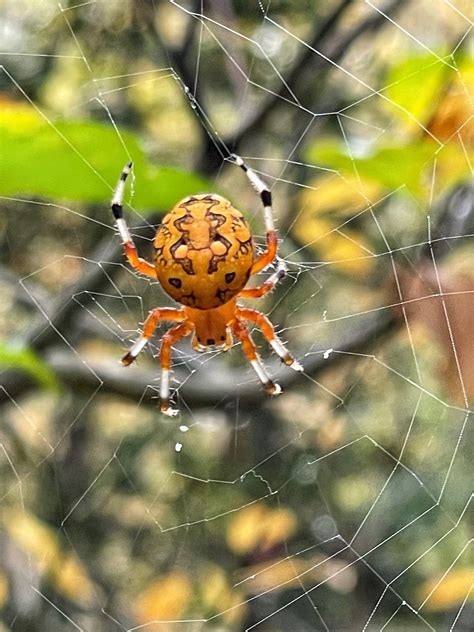
The Spider Marbled Orb Weaver, scientifically known as Araneus marmoreus, is a species of spider that belongs to the family Araneidae. These spiders are known for their distinctive marbled pattern on their abdomens, which can vary in color from yellow to brown to black. Native to North America, the Marbled Orb Weaver is a common sight in gardens, meadows, and forests, where they spin their characteristic orb-shaped webs to catch prey.
One of the most interesting facts about the Marbled Orb Weaver is their unique web-spinning behavior. These spiders are skilled engineers, using their silk to construct intricate webs that can reach up to 2 feet in diameter. The webs are typically built in a vertical plane, with the spider sitting at the center, waiting for unsuspecting insects to get caught in the sticky threads. The Marbled Orb Weaver's web is not just a tool for catching prey, but also a complex structure that provides protection from predators and harsh weather conditions.
Key Points
- The Marbled Orb Weaver is a common species of spider found in North America.
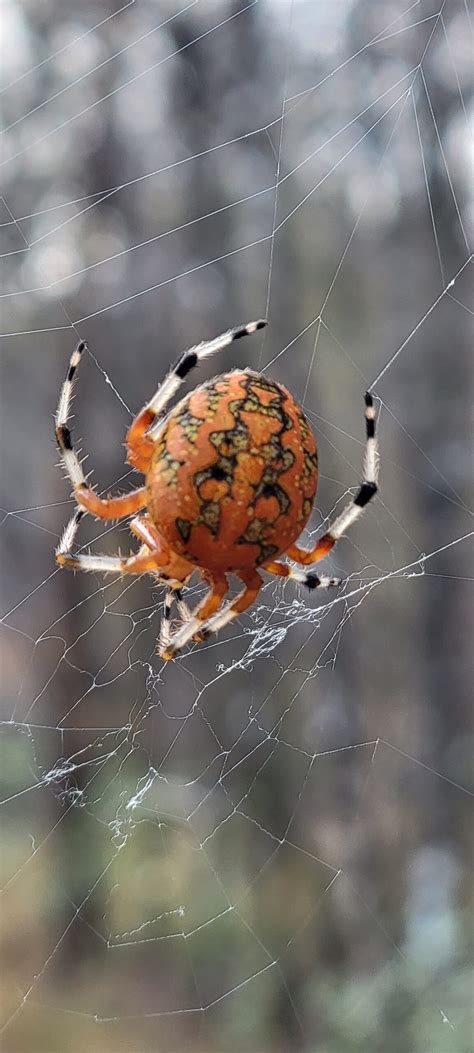
- These spiders are known for their distinctive marbled pattern on their abdomens.
- The Marbled Orb Weaver spins orb-shaped webs to catch prey, which can reach up to 2 feet in diameter.
- The spider's web is a complex structure that provides protection from predators and harsh weather conditions.
- Marbled Orb Weavers are skilled engineers, using their silk to construct intricate webs.
Physical Characteristics and Behavior
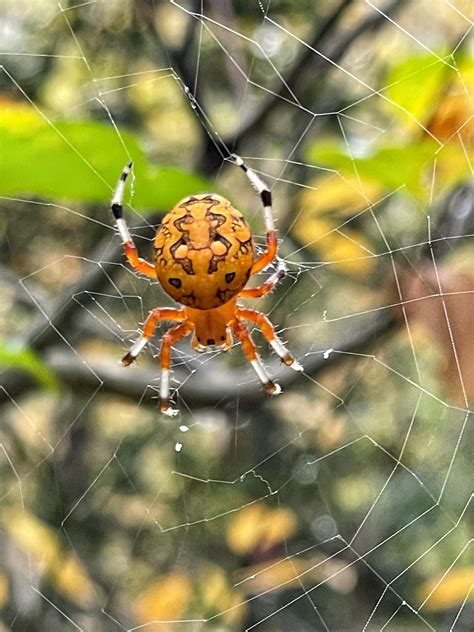
The Marbled Orb Weaver is a relatively large spider, with females reaching up to 1⁄2 inch in body length, while males are slightly smaller. The spider’s body is divided into two main parts: the cephalothorax, which contains the head and thorax, and the abdomen, which contains the digestive organs and silk glands. The Marbled Orb Weaver’s abdomen is rounded and bulbous, with a distinctive marbled pattern that gives the species its name. The spider’s legs are long and slender, with the front pair being the longest, and are used for sensing and manipulating prey.
In terms of behavior, the Marbled Orb Weaver is a solitary animal, only coming together with other spiders to mate. Female Marbled Orb Weavers are known to be aggressive when defending their webs and territories, and will not hesitate to attack other spiders or insects that get too close. Males, on the other hand, are more docile and will often wander away from their webs in search of females. The Marbled Orb Weaver is also a nocturnal species, meaning they are most active at night, and will often hide in protected areas during the day to avoid predators.
Web-Spinning and Prey Capture
The Marbled Orb Weaver’s web is an intricate structure made up of radial threads and spiral threads. The radial threads are non-sticky and provide the framework for the web, while the spiral threads are sticky and are used to catch prey. The spider will typically spin a new web every day, using up to 60 feet of silk in the process. The web is designed to catch a wide range of prey, from small flies and bees to larger insects like butterflies and moths.
| Web Characteristic | Value |
|---|---|
| Diameter | Up to 2 feet |
| Silk length | Up to 60 feet |
| Prey capture rate | Up to 50% of prey that contact the web |
Life Cycle and Reproduction
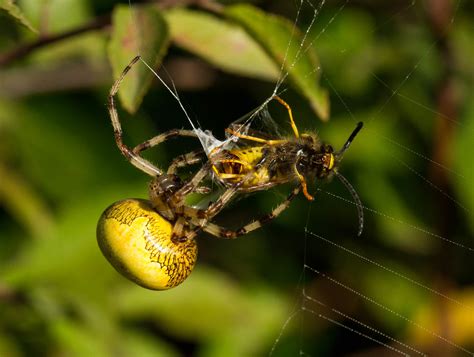
The Marbled Orb Weaver’s life cycle typically lasts for one year, with the spider undergoing a process called “incomplete metamorphosis”. The female Marbled Orb Weaver will lay up to 1,000 eggs in a protected area, which will hatch into spiderlings after about 2 weeks. The spiderlings will then disperse and start spinning their own webs, growing and molting several times as they develop into adult spiders. The male Marbled Orb Weaver will typically mate with multiple females during his lifetime, and will often die soon after mating due to the female’s aggressive behavior.
In terms of reproduction, the Marbled Orb Weaver is a species that exhibits a unique mating behavior. The male will typically perform a complex courtship ritual, involving vibrations and movements of the web, to attract a female. The female will then signal her receptivity to mating by vibrating her own web, and the male will approach her and deposit his sperm. The female will then store the sperm in her reproductive organs and use it to fertilize her eggs.
What is the average lifespan of a Marbled Orb Weaver?
+The average lifespan of a Marbled Orb Weaver is about 1 year, although some individuals may live up to 2 years in captivity.
How big can a Marbled Orb Weaver's web get?
+A Marbled Orb Weaver's web can reach up to 2 feet in diameter, although the average size is typically smaller.
What is the main purpose of a Marbled Orb Weaver's web?
+The main purpose of a Marbled Orb Weaver's web is to catch prey, although it also provides protection from predators and harsh weather conditions.
In conclusion, the Marbled Orb Weaver is a fascinating species of spider that exhibits unique characteristics and behaviors. From their intricate web-spinning abilities to their complex mating rituals, the Marbled Orb Weaver is a species that continues to capture the imagination of scientists and spider enthusiasts alike. By studying the Marbled Orb Weaver and its habits, we can gain a deeper appreciation for the natural world and the importance of conservation efforts to protect these incredible creatures.