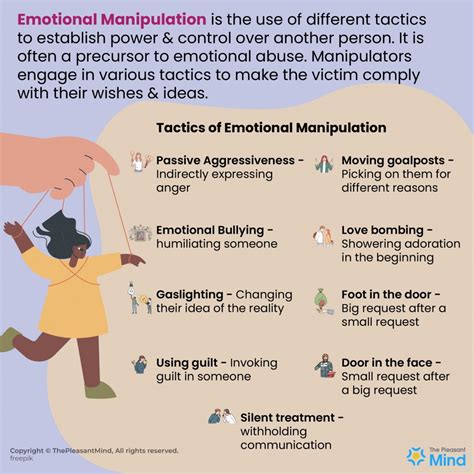
Emotional manipulation is a subtle yet powerful form of influence that can be incredibly damaging to individuals and relationships. It involves exploiting someone’s emotions to achieve a desired outcome, often through covert or deceptive means. Recognizing the signs of emotional manipulation is crucial for maintaining healthy boundaries, protecting one’s emotional well-being, and fostering genuine connections with others.
One of the primary indicators of emotional manipulation is the use of guilt trips. This tactic involves making someone feel responsible for another person’s emotions or well-being, often by expressing hurt, anger, or disappointment in a way that is disproportionate to the situation. For instance, a partner might say, “If you really loved me, you’d do this for me,” or “You’re so selfish for not considering my feelings.” Such statements can evoke feelings of guilt, anxiety, or obligation, leading the individual to comply with the manipulator’s demands.
Another common sign of emotional manipulation is emotional blackmail. This involves threatening to withdraw emotional support, affection, or even the relationship itself unless the other person complies with certain demands. Emotional blackmail can take many forms, such as saying, “If you don’t do this, I’ll never speak to you again,” or “You’ll regret not doing this for me.” This tactic can create a sense of fear, uncertainty, or desperation, causing the individual to surrender to the manipulator’s wishes.
Gaslighting is another insidious form of emotional manipulation, where an individual is made to question their own perceptions, memories, or sanity. This can involve denying previous agreements or conversations, blaming the victim for the manipulator’s behavior, or minimizing the impact of their actions. Gaslighting can be incredibly damaging, as it erodes the victim’s confidence, self-trust, and sense of reality.
Key Points
- Emotional manipulation can take many forms, including guilt trips, emotional blackmail, and gaslighting.
- Recognizing the signs of emotional manipulation is crucial for maintaining healthy boundaries and protecting one's emotional well-being.
- Emotional manipulators often use covert or deceptive means to achieve their desired outcomes.
- Victims of emotional manipulation may experience feelings of guilt, anxiety, fear, or desperation.
- Establishing clear boundaries, practicing self-care, and seeking support from trusted individuals or professionals can help individuals recover from emotional manipulation.
In addition to these tactics, emotional manipulators may employ projection, where they attribute their own negative feelings or behaviors to the victim. For example, an individual might say, “You’re so angry and aggressive,” when in fact they are the ones exhibiting these traits. This can be a powerful way to deflect accountability, shift the focus away from their own behavior, and gain the upper hand in the relationship.
Love bombing is another technique used by emotional manipulators, particularly in the early stages of a relationship. This involves showering the victim with excessive attention, affection, or flattery, often to create a sense of intense emotional connection or dependency. While this may seem like a positive trait, love bombing can be a deliberate tactic to gain control, build trust, or create a false sense of intimacy.
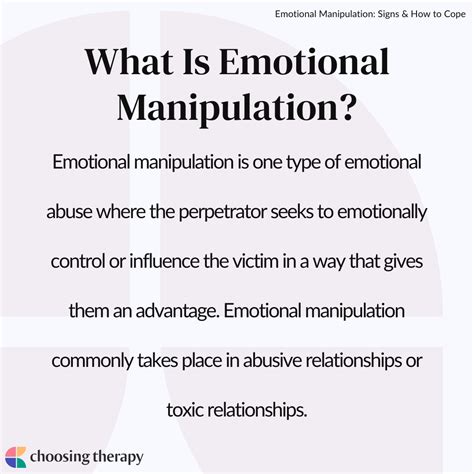
To protect oneself from emotional manipulation, it is essential to develop emotional awareness and recognize the signs of manipulation. This involves being mindful of one’s own emotions, needs, and boundaries, as well as being aware of the tactics used by emotional manipulators. By establishing clear boundaries, practicing self-care, and seeking support from trusted individuals or professionals, individuals can recover from emotional manipulation and foster healthier, more authentic relationships.
Understanding the Psychology of Emotional Manipulation
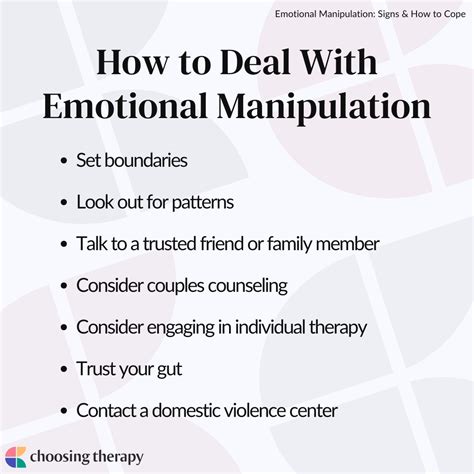
Emotional manipulation is often rooted in deeper psychological issues, such as narcissistic personality disorder, borderline personality disorder, or antisocial personality disorder. Individuals with these conditions may have difficulty empathizing with others, forming healthy attachments, or respecting boundaries. As a result, they may resort to emotional manipulation as a means of achieving their desired outcomes or satisfying their emotional needs.
| Psychological Disorder | Characteristics |
|---|---|
| Narcissistic Personality Disorder | Grandiosity, lack of empathy, need for admiration |
| Borderline Personality Disorder | Unstable relationships, emotional dysregulation, impulsivity |
| Antisocial Personality Disorder | Disregard for others' rights, lack of empathy, impulsivity |
Breaking Free from Emotional Manipulation
Recovering from emotional manipulation requires a combination of self-awareness, boundary setting, and support from trusted individuals or professionals. It is essential to acknowledge the manipulation, recognize the tactics used, and take responsibility for one’s own emotions and actions. By doing so, individuals can begin to rebuild their sense of self, establish healthier boundaries, and develop more authentic relationships.In conclusion, emotional manipulation is a complex and insidious phenomenon that can have severe consequences for individuals and relationships. By understanding the signs of emotional manipulation, recognizing the underlying psychological dynamics, and developing effective strategies to prevent or overcome it, individuals can protect themselves and foster healthier, more authentic connections with others.
What are the most common signs of emotional manipulation?
+The most common signs of emotional manipulation include guilt trips, emotional blackmail, gaslighting, projection, and love bombing. These tactics can be incredibly damaging and may be used by individuals with underlying psychological issues, such as narcissistic personality disorder or borderline personality disorder.
How can I protect myself from emotional manipulation?
+To protect yourself from emotional manipulation, it is essential to develop emotional awareness, recognize the signs of manipulation, and establish clear boundaries. Practicing self-care, seeking support from trusted individuals or professionals, and being mindful of your own emotions and needs can also help you prevent or overcome emotional manipulation.
What are the long-term effects of emotional manipulation?
+The long-term effects of emotional manipulation can be severe and may include anxiety, depression, post-traumatic stress disorder (PTSD), and difficulties in forming healthy relationships. Recovering from emotional manipulation requires a combination of self-awareness, boundary setting, and support from trusted individuals or professionals.