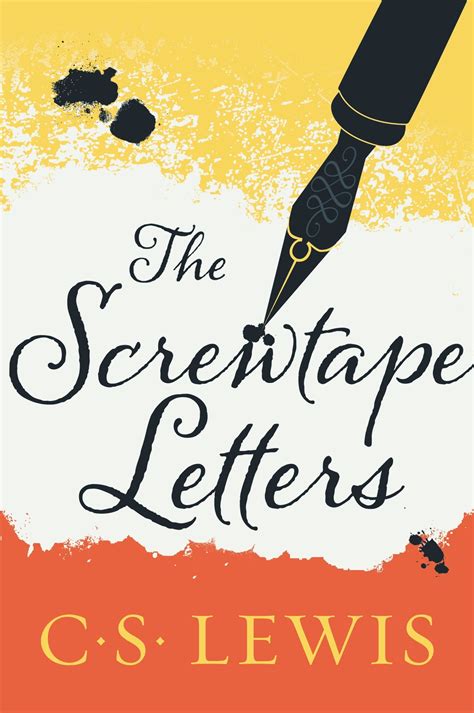
The Screwtape Letters, written by C.S. Lewis, is a thought-provoking and insightful novel that explores the human condition through a unique lens. Published in 1942, the book consists of a series of letters from a senior demon, Screwtape, to his nephew, Wormwood, a junior demon in training. These letters provide guidance on how to tempt humans into sin and prevent them from following God. The novel offers a fascinating perspective on the nature of morality, free will, and the human experience.
Key Points
- The Screwtape Letters is a novel composed of letters from a senior demon, Screwtape, to his nephew, Wormwood, offering guidance on tempting humans into sin.
- The book explores the human condition, morality, and free will through a unique and thought-provoking lens.
- Screwtape's letters provide insight into the demonic perspective on human nature, highlighting the importance of subtly and patience in temptation.
- The novel is a satire that critiques modern society, particularly the values and attitudes of the time in which it was written.
- The Screwtape Letters has become a classic of Christian literature, offering a distinctive and engaging perspective on the struggle between good and evil.
Nature of Temptation and Human Weakness

Screwtape’s letters offer a nuanced understanding of human psychology, highlighting the importance of exploiting human weaknesses and emotions in the temptation process. He advises Wormwood to focus on the patient’s (human’s) feelings, such as pride, greed, and lust, rather than directly attacking their rational faculties. This approach allows the demons to subtly manipulate humans, often without them even realizing it. The novel illustrates the complexity of human nature, where individuals are capable of both good and evil, and how the choices they make can have significant consequences.
The Role of Pride and Self-Deception
Pride is a recurring theme in The Screwtape Letters, as Screwtape often warns Wormwood about the dangers of underestimating human pride. He advises his nephew to encourage the patient’s self-importance, as this can lead to a sense of self-sufficiency and a decreased reliance on God. The novel also explores the concept of self-deception, where humans often deceive themselves into believing they are acting virtuously when, in reality, they are motivated by selfish desires. This self-deception can be a powerful tool for the demons, as it allows them to manipulate humans into sin without them even realizing it.
| Human Weakness | Demonic Strategy |
|---|---|
| Pride | Encourage self-importance and a sense of self-sufficiency |
| Greensickness (envy) | Foster feelings of inadequacy and discontent |
| Lust | Exploit desires and encourage promiscuity |
| Fear | Manipulate anxiety and uncertainty to control behavior |
Critique of Modern Society
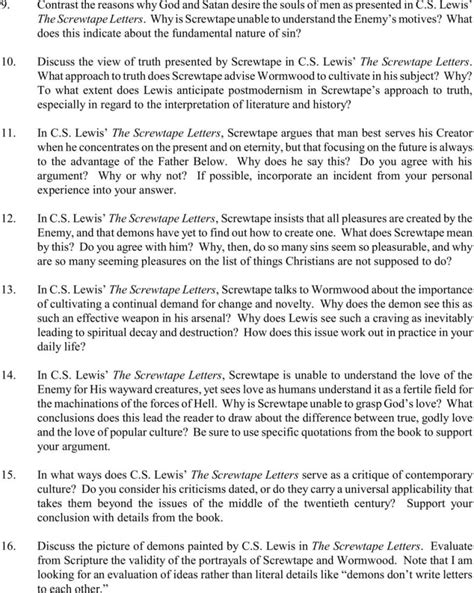
The Screwtape Letters is also a satire that critiques modern society, particularly the values and attitudes of the time in which it was written. Lewis uses the demonic perspective to comment on various aspects of human culture, such as the rise of nationalism, the devaluation of traditional morality, and the growing emphasis on materialism. The novel is a thought-provoking commentary on the human condition, encouraging readers to reflect on their own values and beliefs.
The Importance of Morality and Virtue
The Screwtape Letters emphasizes the importance of morality and virtue in human life. The novel illustrates the consequences of a life devoid of moral principles, where individuals are guided solely by their desires and interests. In contrast, the patient’s conversion to Christianity is portrayed as a positive development, as it represents a commitment to a higher moral standard and a recognition of the importance of living a virtuous life. The novel encourages readers to reflect on their own moral values and to strive for a life of integrity and principle.
What is the main theme of The Screwtape Letters?
+The main theme of The Screwtape Letters is the nature of temptation and the human condition, exploring the complexities of human psychology and the subtle ways in which demons can manipulate individuals into sin.
What is the significance of the demonic perspective in the novel?
+The demonic perspective in The Screwtape Letters offers a unique and thought-provoking lens through which to explore the human condition. It allows readers to see themselves and their own weaknesses from a new and insightful perspective, highlighting the importance of self-awareness and humility.
What is the importance of morality and virtue in the novel?
+The Screwtape Letters emphasizes the importance of morality and virtue in human life, illustrating the consequences of a life devoid of moral principles and encouraging readers to reflect on their own values and strive for a life of integrity and principle.
The Screwtape Letters is a timeless classic that continues to resonate with readers today. Its unique perspective on the human condition, combined with its thought-provoking commentary on modern society, makes it a must-read for anyone interested in exploring the complexities of human nature and the struggle between good and evil. As a work of Christian literature, the novel offers a distinctive and engaging perspective on the importance of morality and virtue, encouraging readers to reflect on their own values and strive for a life of integrity and principle.