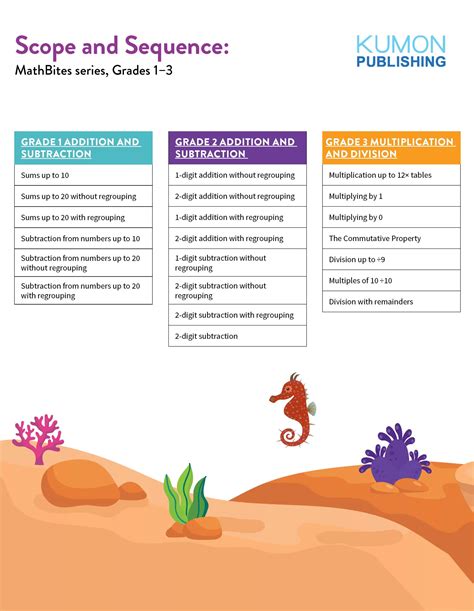
The concept of scope and sequence in educational settings refers to the structured and logical progression of learning objectives, outcomes, and assessments across a curriculum or a course. This progression is designed to ensure that students build upon previously acquired knowledge and skills, gradually moving towards more complex and sophisticated understanding of the subject matter. Understanding the scope and sequence is crucial for educators, policymakers, and learners alike, as it underpins the effectiveness of educational programs. Here, we explore five key ways the scope sequence impacts educational design and delivery, highlighting its importance in achieving learning objectives.
Foundational Knowledge and Progression
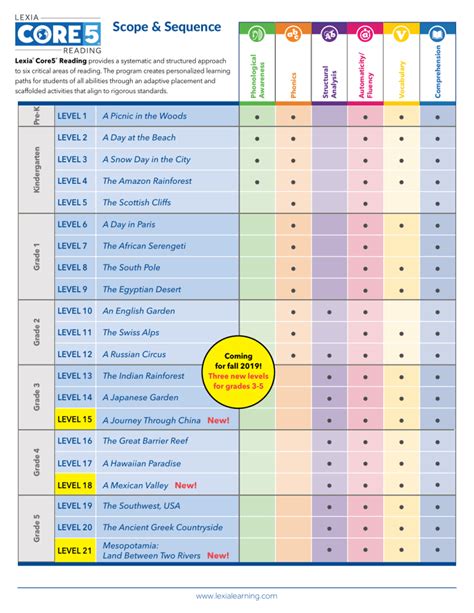
A well-defined scope and sequence ensure that foundational knowledge is established before more advanced concepts are introduced. This progression is crucial because it prevents cognitive overload and allows students to solidify their understanding of basic principles before applying them to more complex problems. For instance, in mathematics, understanding basic arithmetic operations is a prerequisite for learning algebra. The sequence in which these concepts are taught directly affects students’ ability to grasp subsequent material, making the scope and sequence a foundational element of curriculum design.
Customization and Differentiation
One of the key benefits of a carefully planned scope and sequence is the ability to customize and differentiate instruction. By understanding the logical progression of learning objectives, educators can identify areas where individual students may need additional support or challenges. This allows for tailored educational experiences that cater to diverse learning needs, enhancing the overall effectiveness of the learning process. For example, a student who quickly masters basic addition facts may be ready for more advanced mathematical concepts earlier than their peers, while another student may require more time and practice to achieve mastery.
| Learning Objective | Foundational Knowledge | Advanced Concepts |
|---|---|---|
| Basic Arithmetic | Number recognition, counting | Algebra, calculus |
| Reading Comprehension | Phonetics, vocabulary | Literary analysis, critical thinking |
Enhancing Retention and Application
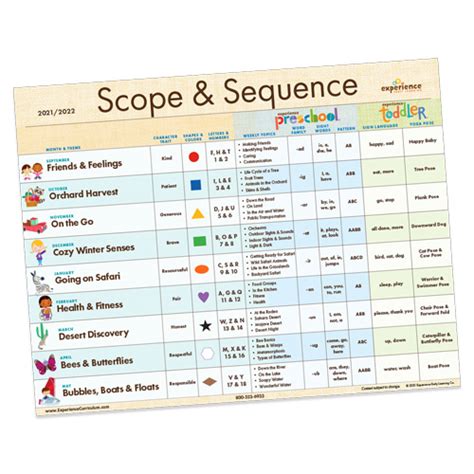
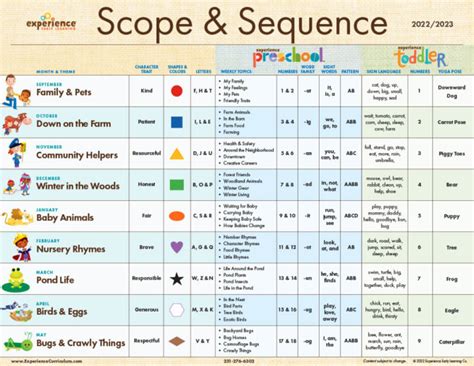
The scope and sequence play a significant role in enhancing retention and application of learned material. When concepts are introduced in a logical and progressive manner, students are more likely to retain information and apply it in practical contexts. This is because the learning process mimics real-world problem-solving, where complex issues are often broken down into manageable, sequential steps. For instance, learning a new language follows a scope and sequence that starts with basic phrases and gradually moves to more complex grammar and vocabulary, allowing learners to apply their knowledge in conversations and writings.
Promoting Depth Over Breadth
A focused scope and sequence can also promote depth over breadth in learning. By concentrating on a specific set of learning objectives and ensuring that students achieve a deep understanding of these concepts, educators can foster a more profound and lasting grasp of the subject matter. This approach contrasts with attempting to cover a wide range of topics superficially, which can lead to a shallow understanding that does not support long-term retention or application. In sciences, for example, deeply exploring the principles of biology, such as cellular biology and genetics, provides a strong foundation for understanding more complex biological processes and concepts.
Key Points
- The scope and sequence are fundamental to the logical progression of learning objectives and outcomes.
- A well-planned scope and sequence enable customization and differentiation of instruction.
- It enhances retention and application of learned material by mimicking real-world problem-solving processes.
- It promotes depth over breadth in learning, fostering a profound and lasting understanding of the subject matter.
- Aligning assessments with the scope and sequence facilitates the evaluation of student progress and informs instructional decisions.
Conclusion and Future Directions
In conclusion, the scope and sequence are critical components of educational design, underpinning the effectiveness of learning processes. By understanding and carefully planning the scope and sequence, educators can create learning environments that support the gradual and logical progression of knowledge and skills. As educational landscapes continue to evolve, with advancements in technology and shifts in societal needs, the importance of a well-structured scope and sequence will only continue to grow. It will be essential for educators and policymakers to remain vigilant in their approach to curriculum design, ensuring that educational programs are both responsive to change and grounded in principles that support deep and lasting learning.
What is the primary purpose of the scope and sequence in education?
+The primary purpose of the scope and sequence is to ensure a logical and progressive learning process, where students build upon previously acquired knowledge and skills to achieve deeper understanding and mastery of the subject matter.
How does the scope and sequence support customization and differentiation in instruction?
+By understanding the progression of learning objectives, educators can identify areas where individual students may need additional support or challenges, allowing for tailored educational experiences that cater to diverse learning needs.
What role does the scope and sequence play in enhancing retention and application of learned material?
+The scope and sequence enhance retention and application by introducing concepts in a logical and progressive manner, mimicking real-world problem-solving processes and allowing students to apply learned material in practical contexts.