The "Run, Hide, Fight" protocol has become a widely recognized strategy for responding to active shooter situations. This approach emphasizes the importance of making quick decisions to prioritize personal safety and the safety of those around you. In this article, we will explore the three components of the "Run, Hide, Fight" protocol, providing guidance on when and how to implement each step.
Key Points
- The "Run, Hide, Fight" protocol is a recommended response to active shooter situations, emphasizing quick decision-making to prioritize personal safety.
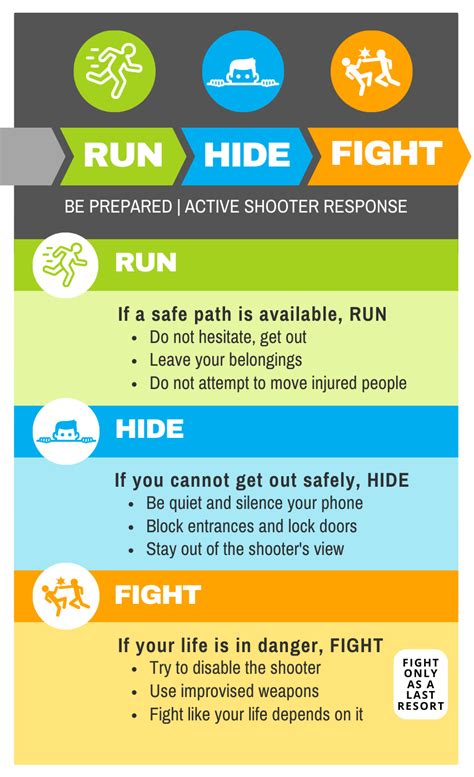
- Running away from the shooter is the first option, if possible, as it allows for the greatest distance and potential escape routes.
- Hiding in a secure location is the second option, where individuals should barricade themselves and remain silent to avoid detection.
- Fighting the shooter is the last resort, only considered when there are no other options, and should be done with the intention of disrupting the shooter's ability to harm others.
- Understanding the environment, such as knowing exit routes and potential hiding spots, is crucial in making effective decisions during an active shooter situation.
Understanding the “Run, Hide, Fight” Protocol
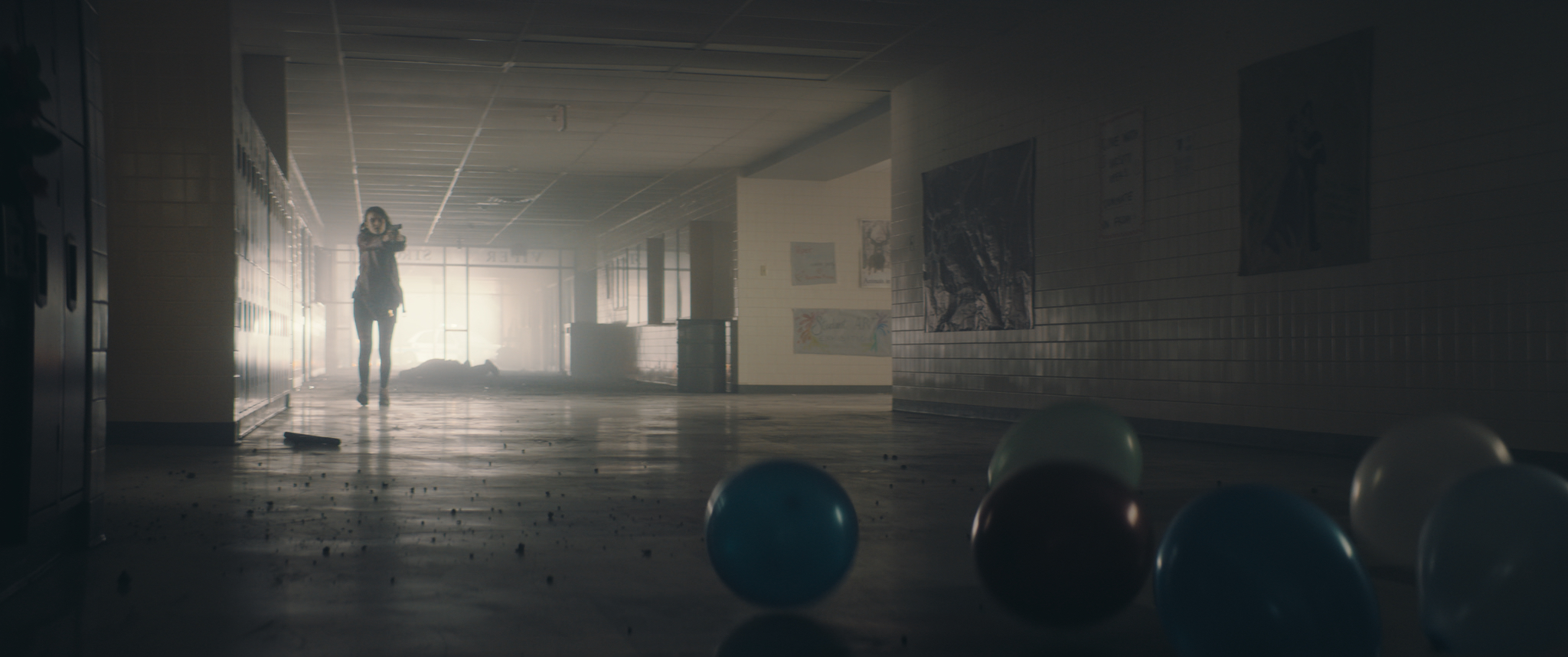
The “Run, Hide, Fight” protocol is based on the principle of creating distance between yourself and the shooter, and then taking actions to protect yourself and others. This approach requires individuals to be aware of their surroundings, make quick decisions, and take action to prioritize safety. It is essential to note that the protocol is not a linear process, and individuals may need to transition between the three options as the situation unfolds.
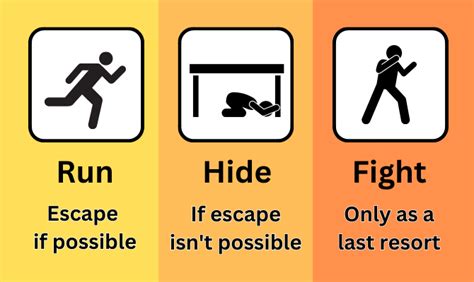
Option 1: Run
Running away from the shooter is the first option, if possible. This allows individuals to create distance between themselves and the shooter, potentially escaping the area and finding a safe location. When running, it is crucial to: Stay calm and think clearly to make rational decisions. Avoid running in a straight line, as this can make you an easier target. Keep a low profile and use available cover, such as pillars or walls, to reduce your visibility.
Option 2: Hide
If running is not possible, the next option is to hide in a secure location. This can be a room, a closet, or any other area that provides protection from the shooter. When hiding, it is essential to: Barricade the door or entrance to prevent the shooter from entering. Remain silent and avoid making any noise that could attract the shooter’s attention. Stay away from doors and windows, as these can be vulnerable to gunfire.
Option 3: Fight
Fighting the shooter is the last resort and should only be considered when there are no other options. This approach requires individuals to be prepared to defend themselves and others. When fighting, it is crucial to: Be aggressive and use any available objects as weapons. Target the shooter’s ability to harm others, such as their gun or arms. Work together with others, if possible, to overwhelm the shooter and disrupt their actions.
| Response Option | Description |
|---|---|
| Run | Creating distance between yourself and the shooter |
| Hide | Securing a safe location and remaining silent |
| Fight | Defending yourself and others as a last resort |
Preparing for Active Shooter Situations
While the “Run, Hide, Fight” protocol provides a framework for responding to active shooter situations, preparation and awareness are key to effective decision-making. Individuals should: Familiarize themselves with their surroundings, including exit routes and potential hiding spots. Stay informed about emergency procedures and protocols in place. Participate in training and drills to practice their response to active shooter situations.
What is the first step in the "Run, Hide, Fight" protocol?
+The first step is to run away from the shooter, if possible, to create distance and potentially escape the area.
What should I do if I am in a room with a shooter?
+If you are in a room with a shooter, try to hide in a secure location, such as under a desk or in a closet, and remain silent to avoid detection.
When should I fight the shooter?
+Fighting the shooter should only be considered as a last resort, when there are no other options, and with the intention of disrupting the shooter's ability to harm others.
In conclusion, the “Run, Hide, Fight” protocol is a vital framework for responding to active shooter situations. By understanding the three components of this protocol and being prepared to adapt to unique circumstances, individuals can prioritize their safety and the safety of those around them. Remember, staying calm, being aware of your surroundings, and making quick decisions are crucial in responding to these situations.