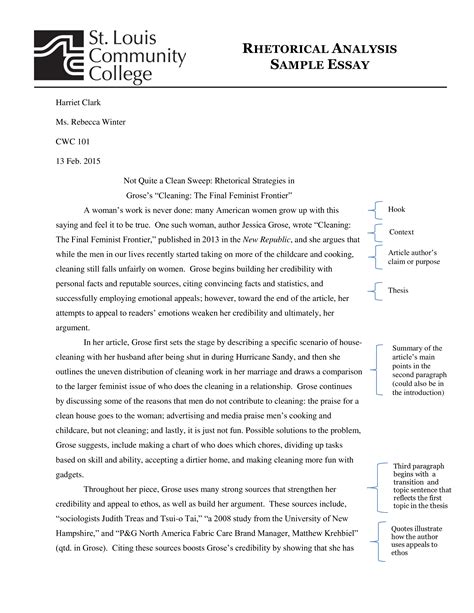
Rhetorical analysis is a crucial tool for understanding the ways in which language is used to persuade, inform, and manipulate audiences. As a form of critical thinking, rhetorical analysis involves examining the language, structure, and tone of a text to uncover the underlying messages, biases, and intentions of the author. In this guide, we will explore the key elements of a rhetorical analysis essay and provide a comprehensive framework for writing a persuasive and informative essay.
Understanding Rhetorical Analysis
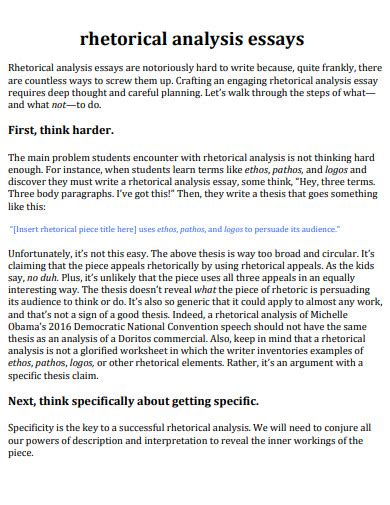
Rhetorical analysis is a methodology that involves analyzing the rhetorical devices, tropes, and strategies used by authors to convey their messages. It requires a deep understanding of the context in which the text was written, including the historical, cultural, and social background of the author and the audience. By examining the ways in which language is used to shape meaning, rhetorical analysis can help readers uncover the underlying power dynamics, biases, and assumptions that shape the text.
Key Elements of Rhetorical Analysis
There are several key elements to consider when conducting a rhetorical analysis, including:
- Audience: Who is the intended audience of the text? What are their values, beliefs, and assumptions?
- Purpose: What is the author trying to achieve with the text? Is it to persuade, inform, or entertain?
- Tone: What tone does the author use to convey their message? Is it formal, informal, sarcastic, or serious?
- Language: What language does the author use to convey their message? Are there any notable rhetorical devices, such as metaphors, allusions, or repetition?
- Structure: How is the text structured? Are there any notable organizational patterns, such as chronological or causal relationships?
Writing a Rhetorical Analysis Essay
Writing a rhetorical analysis essay requires a clear and concise thesis statement, a well-organized structure, and effective use of evidence to support your claims. Here are some tips to consider:
Develop a clear thesis statement: Your thesis statement should clearly articulate the main argument of your essay and provide a roadmap for the reader. It should be specific, arguable, and relevant to the text being analyzed.
Use effective evidence: Use quotes, paraphrases, and summaries to support your claims and illustrate the rhetorical devices and strategies used by the author. Make sure to contextualize your evidence and explain its significance to the reader.
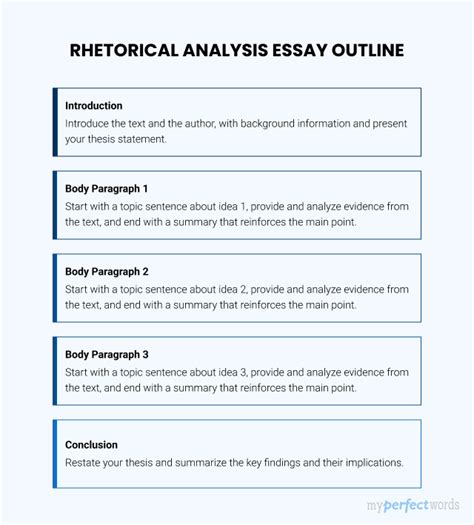
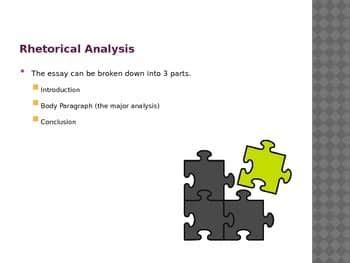
Organize your essay effectively: Use a clear and logical structure to organize your essay, including an introduction, body paragraphs, and a conclusion. Make sure to use transitional phrases and sentences to connect your ideas and paragraphs.
| Essay Component | Description |
|---|---|
| Introduction | Introduce the text, provide background information, and articulate the thesis statement |
| Body Paragraphs | Analyze the rhetorical devices, tone, and language used by the author to convey their message |
| Conclusion | Summarize the main points, reiterate the thesis statement, and provide a final thought or call to action |
Common Rhetorical Devices
There are several common rhetorical devices used by authors to convey their messages, including:
- Metaphor: A comparison between two unlike things without using “like” or “as”
- Allusion: A reference to a person, place, event, or work of art that is outside the text itself
- Repetition: The repeated use of a word or phrase for emphasis or effect
- Hyperbole: An exaggeration used for emphasis or effect
- Irony: A contrast between what is expected and what actually occurs
Key Points
- Rhetorical analysis involves examining the language, structure, and tone of a text to uncover the underlying messages, biases, and intentions of the author
- A clear and concise thesis statement is essential for a well-organized and effective rhetorical analysis essay
- Effective use of evidence, including quotes, paraphrases, and summaries, is crucial for supporting claims and illustrating rhetorical devices and strategies
- A well-organized structure, including an introduction, body paragraphs, and a conclusion, is necessary for a clear and logical essay
- Common rhetorical devices, such as metaphor, allusion, repetition, hyperbole, and irony, can be used to convey meaning and create a persuasive text
By following these guidelines and considering the key elements of rhetorical analysis, you can write a persuasive and informative essay that effectively analyzes the language, structure, and tone of a text. Remember to use effective evidence, organize your essay clearly, and consider the author's purpose, audience, and tone to develop a nuanced argument.
What is the purpose of rhetorical analysis?
+Rhetorical analysis is used to examine the ways in which language is used to persuade, inform, and manipulate audiences. It involves analyzing the language, structure, and tone of a text to uncover the underlying messages, biases, and intentions of the author.
What are some common rhetorical devices used by authors?
+Common rhetorical devices include metaphor, allusion, repetition, hyperbole, and irony. These devices are used to convey meaning, create a persuasive text, and engage the audience.
How do I write a clear and concise thesis statement?
+A clear and concise thesis statement should clearly articulate the main argument of your essay and provide a roadmap for the reader. It should be specific, arguable, and relevant to the text being analyzed.
Meta Description: Learn how to write a rhetorical analysis essay with our comprehensive guide. Discover the key elements of rhetorical analysis, including audience, purpose, tone, language, and structure, and develop a clear and concise thesis statement.