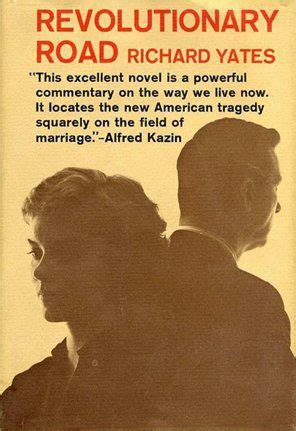
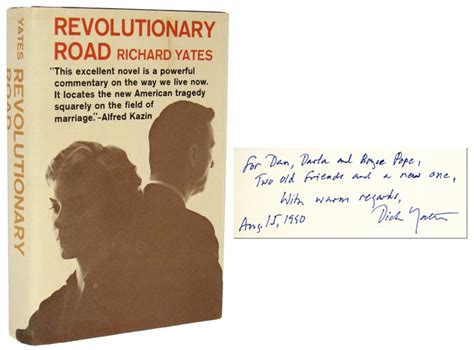
The novel "Revolutionary Road" by Richard Yates is a masterpiece of 20th-century American literature, offering a poignant and unflinching portrayal of the American Dream and its illusions. Published in 1961, the book is set in the 1950s, an era often romanticized for its supposed tranquility and conformity, but Yates' work strips away these façades, revealing the complexities and disillusionments of suburban life. Through the lens of the Wheelers, a young couple living in the idyllic Connecticut suburb of Revolutionary Road, Yates explores themes of identity, marriage, desire, and the stifling societal expectations that can suffocate individual aspiration.
The Illusion of Perfection: Unpacking the Facade of Suburban Life

At the heart of “Revolutionary Road” is the paradox of the American Dream, which promises happiness and fulfillment through material success and social conformity. The Wheelers, Frank and April, embody this paradox. On the surface, they appear to have it all: a beautiful home, two children, and a life that outwardly seems to epitomize the suburban ideal. However, as the novel progresses, Yates masterfully peels away the layers of their existence, exposing the emptiness, desperation, and quiet despair that underpin their seemingly perfect life. Frank, once an aspiring intellectual, now works in a soulless corporate job, while April, who had dreams of becoming an actress, finds herself trapped in the mundane routine of domesticity.
Disillusionment and the Quest for Authenticity
One of the novel’s most compelling aspects is its nuanced exploration of disillusionment and the quest for authenticity. As Frank and April struggle to find meaning and purpose in their lives, they are forced to confront the reality of their choices and the compromises they have made. This journey of self-discovery is fraught with difficulty, as they navigate the constraints of societal expectations, their own desires, and the fear of change. Through their story, Yates critiques the societal norms of the time, particularly the rigid roles assigned to men and women, and the stifling effects of conformity on individual creativity and expression.
| Character | Conflict | Resolution |
|---|---|---|
| Frank Wheeler | Disillusionment with corporate life, desire for intellectual pursuits | Ultimate surrender to societal expectations |
| April Wheeler | Trapped in domesticity, loss of personal ambition | Tragic confrontation with the reality of her choices |
Key Points
- The novel "Revolutionary Road" is a critical exploration of the American Dream and its illusions, set against the backdrop of 1950s suburban life.
- Through the characters of Frank and April Wheeler, the book examines themes of identity, marriage, desire, and the stifling effects of societal expectations.
- The struggle for authenticity and the quest for meaning in a seemingly meaningless world are central to the narrative.
- Yates' critique of societal norms, particularly the rigid gender roles of the time, adds depth and complexity to the story.
- The tragic outcomes for the characters serve as a powerful commentary on the consequences of unfulfilled potential and the devastating effects of conformity on individual creativity and expression.
Historical Context and Literary Significance

“Revolutionary Road” is not only a powerful novel in its own right but also a significant work within the context of American literary history. Written during a period of immense social change, the book reflects and critiques the values and aspirations of post-war America. Its exploration of the human condition, with all its complexities and frailties, resonates deeply with readers, making it a timeless classic of American literature. The novel’s influence can be seen in many subsequent works of fiction that explore similar themes of suburban ennui, marital disillusionment, and the search for identity.
Impact and Legacy
The impact of “Revolutionary Road” extends beyond the literary world, offering insights into the social and cultural landscape of 1950s America. The novel’s portrayal of suburban life as a façade hiding deeper discontent and desperation foreshadowed the social upheavals of the 1960s, including the feminist movement and the counterculture’s rejection of mainstream values. Today, “Revolutionary Road” remains a vital and hauntingly relevant work, its themes of identity, marriage, and the search for authenticity continuing to resonate with readers in an era where the notion of the American Dream is still deeply contested.
What are the primary themes explored in "Revolutionary Road"?
+The primary themes include the illusion of the American Dream, the stifling effects of societal conformity, the search for identity and authenticity, and the complexities of marriage and relationships.
How does the novel critique societal norms of the 1950s?
+Yates critiques the rigid gender roles, the expectation of suburban life as the epitome of success, and the suppression of individual creativity and expression in favor of conformity.
What is the significance of the title "Revolutionary Road"?
+The title refers to the street where the Wheelers live, symbolizing the illusion of revolution or change in their lives, which contrasts with the actual stagnation and desperation they experience.
Meta Description: Explore the complexities of the American Dream through Richard Yates’ “Revolutionary Road”, a poignant novel of suburban life, identity, and the quest for authenticity in 1950s America.