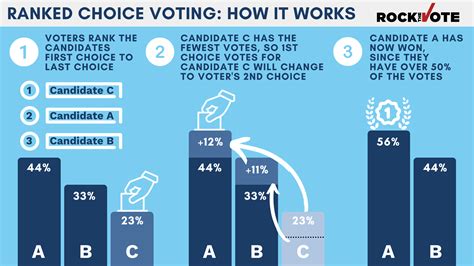
Rational choice voting, a concept rooted in political science and economics, delves into the idea that voters make decisions based on a rational assessment of their interests and the potential outcomes of their choices. This theory posits that individuals vote not solely based on emotional or societal pressures, but rather on a calculated evaluation of which candidate or policy best aligns with their personal beliefs, values, and economic interests. Understanding how rational choice voting works involves examining the strategic decision-making process of voters, the role of information in voting decisions, and the impact of electoral systems on voter behavior.
At its core, rational choice theory in the context of voting suggests that voters are rational actors who seek to maximize their utility or satisfaction from the political process. This maximization of utility is achieved by selecting the candidate or party that is most likely to implement policies that benefit the voter directly. The process is complex, influenced by a variety of factors including the voter's perception of the candidates, the electoral system in place, and the availability of information about the candidates and their policies.
Key Points
- Rational choice voting is based on the principle that voters make decisions to maximize their personal utility or satisfaction.
- Voters evaluate candidates based on their policies and the potential impact on their personal interests.
- The availability and quality of information play a crucial role in rational choice voting, influencing how voters perceive candidates and their policies.
- Electoral systems can significantly affect voter behavior, with different systems potentially leading to varying levels of strategic voting.
- Rational choice theory also considers the concept of voting as a form of expressive behavior, where voters may choose based on personal identity or ethical considerations rather than purely rational calculations.
Information and Rational Choice Voting
A critical aspect of rational choice voting is the role of information. Voters require accurate and comprehensive information about candidates, their policies, and the potential outcomes of these policies to make informed, rational decisions. The quality and accessibility of this information can significantly influence voter behavior, with well-informed voters more likely to make decisions that align with their interests. However, information asymmetry, where voters have incomplete or biased information, can lead to suboptimal decision-making. The digital age has somewhat mitigated this issue, providing voters with unprecedented access to information about political candidates and issues.
The Impact of Electoral Systems
Electoral systems also play a pivotal role in shaping voter behavior under rational choice theory. Different electoral systems can encourage or discourage strategic voting, where voters may choose a candidate not because they are their first choice, but because they believe this candidate has a better chance of winning. For instance, in a first-past-the-post system, voters might engage in tactical voting, supporting a candidate who is not their preferred choice but has a higher likelihood of winning, to block another candidate they dislike even more. In contrast, proportional representation systems may reduce the need for strategic voting, as voters can vote for their true preference without worrying about splitting the vote.
| Electoral System | Impact on Voter Behavior |
|---|---|
| First-Past-The-Post | Encourages strategic or tactical voting to avoid splitting the vote. |
| Proportional Representation | Reduces the need for strategic voting, allowing voters to support their true preference. |
| Mixed Member Proportional | Combines elements of both, potentially offering a balance between local representation and proportional outcomes. |
Criticisms and Limitations of Rational Choice Theory
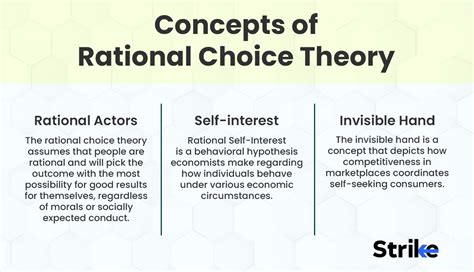
While rational choice theory provides valuable insights into voter behavior, it is not without its criticisms and limitations. One of the primary critiques is that it oversimplifies the voting decision, assuming that voters have complete information and the cognitive ability to make perfectly rational choices. In reality, voters often face information overload, cognitive biases, and emotional influences that can lead to irrational or non-optimizing decisions. Furthermore, the theory may not fully account for expressive voting, where voters choose based on personal identity, ethical considerations, or a desire to express dissatisfaction with the political system, rather than purely rational self-interest.
Expressive Voting and Identity
Expressive voting, a concept that challenges the pure rationality of voter decisions, suggests that voters may choose candidates or parties based on how these choices reflect their personal values, beliefs, or identities, rather than a cold calculation of self-interest. This aspect of voting behavior is particularly relevant in understanding why voters might support candidates with little chance of winning or why they might prioritize issues that do not directly impact their personal economic situation. The expressive aspect of voting highlights the multifaceted nature of political decision-making, where rational calculations are intertwined with emotional, ethical, and social considerations.
What is the primary assumption of rational choice theory in voting?
+The primary assumption is that voters are rational actors who make decisions based on a calculation of which choice will maximize their personal utility or satisfaction.
How does the availability of information impact rational choice voting?
+The availability and quality of information are crucial, as they directly influence voters' ability to make informed decisions that align with their interests.
What is expressive voting, and how does it challenge rational choice theory?
+Expressive voting refers to the practice of voters making choices based on personal identity, ethical considerations, or a desire to express dissatisfaction, rather than purely rational self-interest. This challenges the theory by introducing non-rational factors into the decision-making process.
In conclusion, rational choice voting represents a complex and multifaceted phenomenon, influenced by a variety of factors including the voter’s perception of candidates, the electoral system, and the availability of information. While it provides a powerful framework for understanding voter behavior, it must be considered alongside other influences, such as expressive voting and the emotional aspects of political decision-making. By recognizing the interplay between these factors, we can gain a deeper understanding of the political process and the ways in which voters navigate the intricate landscape of electoral politics.