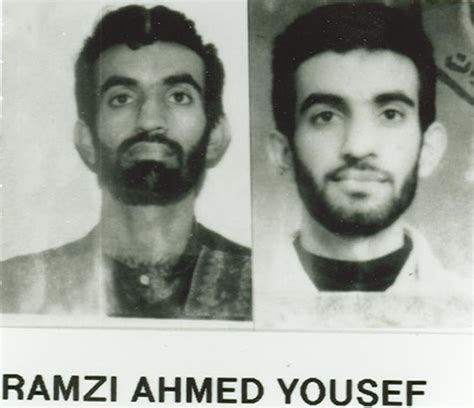
Ramzi Ahmed Yousef is one of the most notorious terrorists of the 20th century, known for his involvement in several high-profile attacks, including the 1993 World Trade Center bombing and the Bojinka plot. Born on May 20, 1967, in Balochistan, Pakistan, Yousef's early life and education played a significant role in shaping his radical views. His father, Mohammed Abdul Karim, was a Pakistani engineer, and his mother, Saeeda Ahmed, was from a wealthy family in the United Arab Emirates.
Yousef's radicalization began during his time at the Swansea Institute in Wales, where he studied electrical engineering. It was during this period that he became increasingly influenced by Islamist ideologies, particularly the teachings of Abdullah Azzam, a Palestinian cleric who advocated for jihad against Western powers. Yousef's involvement with Islamist groups deepened after he moved to Afghanistan to fight against the Soviet occupation. He received training in explosives and guerrilla warfare, skills that he would later use to carry out devastating attacks.
Key Points
- Ramzi Yousef was born in Pakistan and educated in the UK, where he became radicalized by Islamist ideologies.
- He was involved in the 1993 World Trade Center bombing, which killed six people and injured over 1,000.
- Yousef planned the Bojinka plot, a failed attempt to blow up 12 airplanes over the Pacific Ocean.
- He was captured in 1995 and extradited to the United States, where he was tried and convicted of terrorism-related charges.
- Yousef is currently serving a 240-year prison sentence at the ADX Florence supermax prison in Colorado.
The 1993 World Trade Center Bombing
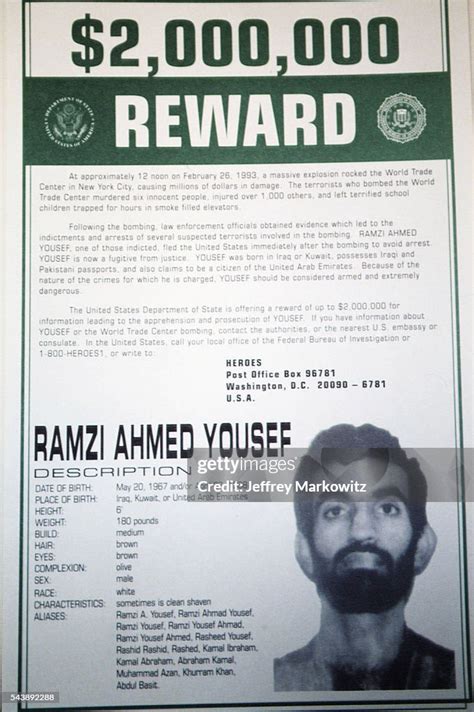
The 1993 World Trade Center bombing was a pivotal moment in Yousef’s career as a terrorist. On February 26, 1993, a truck bomb exploded in the underground garage of the North Tower, killing six people and injuring over 1,000. The bombing was intended to inflict maximum damage and casualties, and it marked one of the first major terrorist attacks on American soil. Yousef, who had entered the United States on a forged Iraqi passport, was the mastermind behind the attack. He had assembled a team of co-conspirators, including Mohammed Salameh, Nidal Ayyad, and Mahmud Abouhalima, to carry out the bombing.
The Bojinka Plot
The Bojinka plot was an even more ambitious plan, conceived by Yousef and his co-conspirators in 1994. The plot involved blowing up 12 airplanes over the Pacific Ocean, using bombs made from a combination of nitroglycerin and sodium nitrate. The plan was discovered in January 1995, after a fire broke out in Yousef’s apartment in Manila, Philippines, where he was hiding at the time. The investigation that followed led to Yousef’s capture and the disruption of the plot. The Bojinka plot was a wake-up call for intelligence agencies around the world, highlighting the threat posed by transnational terrorism and the need for increased cooperation to prevent such attacks.
| Attack | Date | Location | Casualties |
|---|---|---|---|
| 1993 World Trade Center bombing | February 26, 1993 | New York City, USA | 6 killed, 1,042 injured |
| Bojinka plot | January 1995 | Manila, Philippines | 0 (plot disrupted) |

Capture and Trial
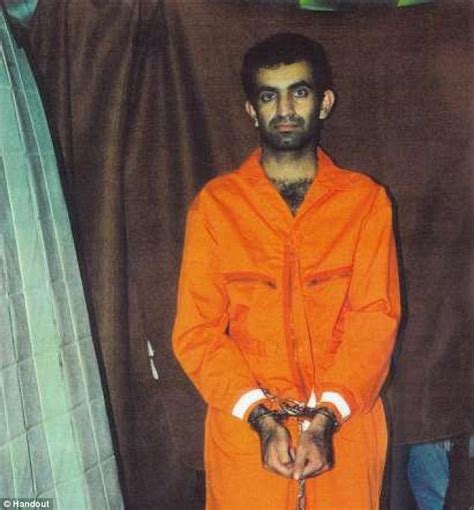
Ramzi Yousef was captured on February 7, 1995, in Islamabad, Pakistan, after a tip from a local informant. He was extradited to the United States, where he was tried and convicted of terrorism-related charges. The trial, which took place in 1997, was a significant moment in the history of terrorism prosecutions, as it marked one of the first times that a major terrorist had been brought to justice in a civilian court. Yousef was found guilty on 11 counts, including murder, conspiracy, and terrorism, and was sentenced to 240 years in prison.
Legacy and Impact
Ramzi Yousef’s legacy is complex and multifaceted. He is widely regarded as one of the most notorious terrorists of the 20th century, and his actions have had a profound impact on global security and counterterrorism efforts. The 1993 World Trade Center bombing and the Bojinka plot raised awareness about the threat posed by transnational terrorism and led to increased cooperation between intelligence agencies around the world. Yousef’s capture and trial also demonstrated the effectiveness of law enforcement and judicial systems in bringing terrorists to justice.
What was the significance of the 1993 World Trade Center bombing?
+The 1993 World Trade Center bombing was a pivotal moment in the history of terrorism, as it marked one of the first major terrorist attacks on American soil. The bombing killed six people and injured over 1,000, and it led to a significant increase in counterterrorism efforts and intelligence cooperation between agencies.
What was the Bojinka plot, and how was it disrupted?
+The Bojinka plot was a plan to blow up 12 airplanes over the Pacific Ocean, using bombs made from a combination of nitroglycerin and sodium nitrate. The plot was disrupted in January 1995, after a fire broke out in Ramzi Yousef's apartment in Manila, Philippines, where he was hiding at the time. The investigation that followed led to Yousef's capture and the disruption of the plot.
What is Ramzi Yousef's current status?
+Ramzi Yousef is currently serving a 240-year prison sentence at the ADX Florence supermax prison in Colorado. He was convicted of terrorism-related charges in 1997 and has been incarcerated since then.
Ramzi Ahmed Yousef’s story serves as a reminder of the ongoing threat posed by terrorism and the need for continued vigilance and cooperation between intelligence agencies and law enforcement organizations around the world. His legacy is a complex and multifaceted one, marked by devastating attacks and a profound impact on global security and counterterrorism efforts.