
When preparing for medical school interviews, it's essential to not only anticipate the questions you'll be asked but also to prepare thoughtful inquiries to pose to your interviewers. This demonstrates your interest in the program, your level of preparation, and your engagement with the medical school's mission and values. Crafting the right questions can make a significant difference in how you're perceived by the interview panel and can provide you with valuable insights into whether the school is the right fit for you.
Understanding the Importance of Questions in Medical School Interviews
The questions you ask during a medical school interview are crucial because they reflect your level of interest, your understanding of the profession, and your ability to think critically. It’s not just about what you ask, but also how you ask it, showing that you’ve done your homework on the school and its programs. Interviewers often view the questions you ask as an opportunity to assess your maturity, your motivation for pursuing a career in medicine, and your ability to engage in professional discussions.
Key Considerations for Formulating Questions
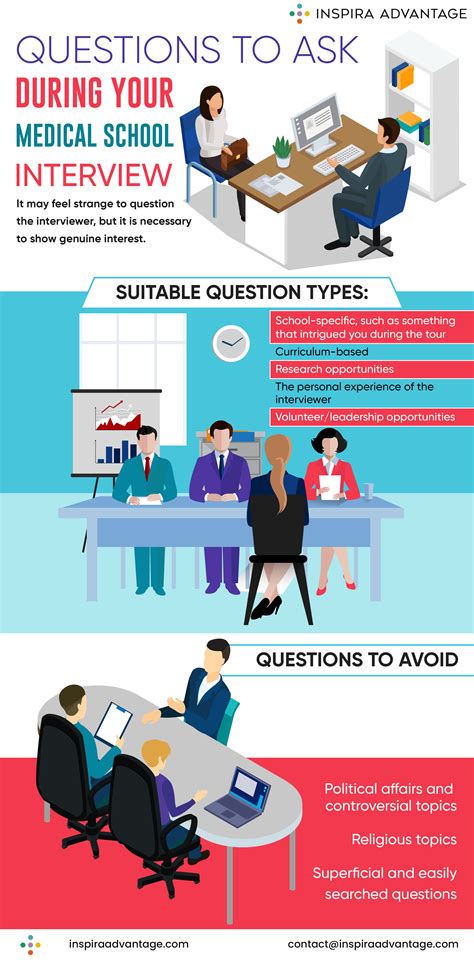
When formulating questions to ask medical school interviewers, consider the following key points: - Relevance: Ensure that your questions are relevant to the program, the school, or the profession, demonstrating your genuine interest and engagement. - Originality: Avoid asking questions that can easily be answered by visiting the school’s website. Instead, opt for questions that show you’ve gone beyond the surface level in your research. - Open-endedness: Favor open-ended questions that encourage discussion and provide insight into the interviewer’s perspective or the school’s culture. - Professionalism: Maintain a professional tone in your questions, avoiding anything that could be perceived as negative or inappropriate.
| Question Type | Example |
|---|---|
| Curriculum and Teaching Methods | How does the school approach curriculum development, and what innovations are being implemented to enhance student learning? |
| Clinical Experience | Can you describe the types of clinical rotations available to students, and how early do students start interacting with patients? |
| Research Opportunities | What research opportunities are available to medical students, and how does the school support students interested in pursuing research careers? |
| Campus Culture and Support | How would you describe the campus culture, and what support systems are in place for students who may be struggling academically or personally? |
| Alumni Network and Career Placement | What kind of support does the school offer for career placement, and can you share any success stories from recent alumni? |
Additional Tips for a Successful Interview

Beyond preparing thoughtful questions, it’s crucial to approach the interview with a clear understanding of what you hope to achieve from the conversation. This includes: - Being Prepared: Have a list of questions ready but also be prepared to think on your feet and adapt based on the conversation. - Showing Enthusiasm: Demonstrate your passion for the field and your eagerness to learn and contribute. - Engaging in Active Listening: Pay close attention to the responses and show that you’re actively listening by asking follow-up questions or making thoughtful comments.
Key Points to Remember
- Prepare questions that are relevant, original, and open-ended to encourage meaningful discussions.
- Focus on aspects of the program, curriculum, and school culture that are not easily found online.
- Approach the interview as a conversation, not an interrogation, to build a connection with your interviewers.
- Be prepared to talk about your interests, motivations, and goals, and how they align with the school's mission.
- Follow up after the interview to express your gratitude and reiterate your interest in the program.
Addressing Concerns and Limitations
It’s also important to consider any concerns or limitations you might have about the program or the profession. This could include questions about how the school supports students from diverse backgrounds, the resources available for students struggling with the curriculum, or the school’s approach to addressing burnout and wellness. Addressing these concerns openly demonstrates your maturity and your commitment to making an informed decision about your education and career.
Meta Description: Prepare for your medical school interview by crafting thoughtful questions that demonstrate your interest in the program and your understanding of the medical profession. Learn how to approach the interview with confidence and gather valuable insights into whether the school is the right fit for you.
What are some common mistakes to avoid when asking questions during a medical school interview?
+Avoid asking questions that can easily be answered by visiting the school’s website, and refrain from asking overly negative or critical questions. It’s also important to avoid coming across as unprepared or disinterested.
How can I ensure that my questions are relevant and meaningful?
+Research the school and its programs thoroughly, and consider what aspects of the program are most important to you. This will help you formulate questions that are both relevant and meaningful, demonstrating your genuine interest in the program.
What role do questions play in the overall assessment of a candidate during a medical school interview?
+Questions play a significant role in the assessment of a candidate, as they provide insight into the candidate’s level of preparation, their understanding of the profession, and their ability to think critically and engage in professional discussions.