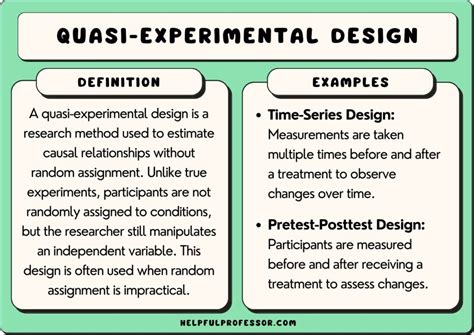
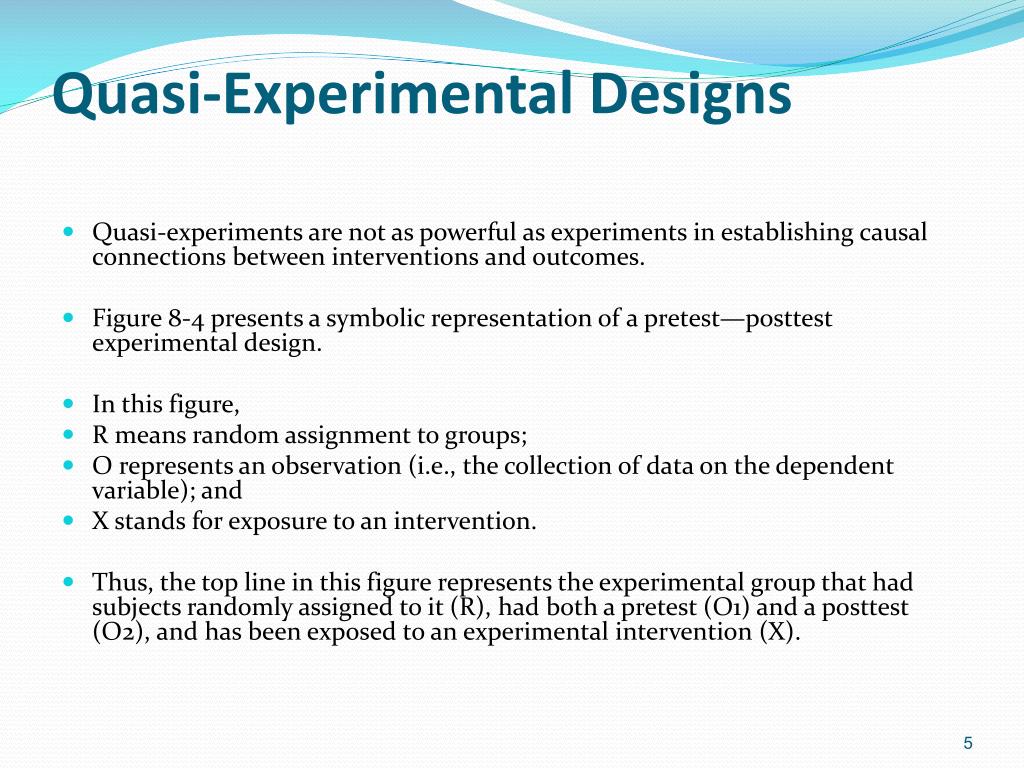
Quasi-experimental design is a research methodology used to establish cause-and-effect relationships between variables when random assignment to treatment or control groups is not possible. This approach is often utilized in field settings, such as educational institutions, hospitals, or businesses, where randomization is impractical or unethical. Quasi-experimental designs aim to mimic the characteristics of true experiments, but without the random assignment, which is a critical component of experimental research.
One of the primary reasons quasi-experimental designs are employed is to address the limitations of experimental designs in certain contexts. For instance, in educational research, it may be impossible to randomly assign students to different teaching methods due to logistical or ethical constraints. Similarly, in healthcare, patients cannot be randomly assigned to receive or not receive a new treatment due to potential harm or benefits. In such cases, quasi-experimental designs provide a viable alternative to experimental designs, allowing researchers to draw causal inferences about the effects of an intervention or treatment.
Key Points
- Quasi-experimental designs are used to establish cause-and-effect relationships between variables when random assignment is not possible.
- These designs aim to mimic the characteristics of true experiments but without random assignment.
- Quasi-experimental designs are often used in field settings, such as educational institutions or businesses.
- They provide a viable alternative to experimental designs when randomization is impractical or unethical.
- Quasi-experimental designs can be used to evaluate the effectiveness of interventions or treatments in real-world settings.
Types of Quasi-Experimental Designs

There are several types of quasi-experimental designs, each with its strengths and limitations. Some common types include:
Non-Equivalent Control Group Design
This design involves comparing the outcomes of two or more groups that have not been randomly assigned. For example, a researcher might compare the academic performance of students who received a new teaching method with those who did not. However, the groups may differ in terms of demographic characteristics, prior knowledge, or other factors that could affect the outcome.
Pre-Post Design
In this design, a single group is measured before and after an intervention or treatment. For instance, a researcher might assess the anxiety levels of patients before and after a new therapy. However, this design is susceptible to biases, such as regression to the mean or the Hawthorne effect.
Time-Series Design
This design involves collecting data at multiple points in time, both before and after an intervention or treatment. For example, a researcher might collect data on the number of accidents in a factory before and after the implementation of a new safety protocol. This design can help to establish a causal relationship between the intervention and the outcome.
| Design Type | Description | Example |
|---|---|---|
| Non-Equivalent Control Group Design | Comparing outcomes of two or more non-randomly assigned groups | Evaluating the effectiveness of a new teaching method |
| Pre-Post Design | Measuring a single group before and after an intervention | Assessing anxiety levels before and after therapy |
| Time-Series Design | Collecting data at multiple points in time before and after an intervention | Evaluating the impact of a new safety protocol on accident rates |
Advantages and Limitations of Quasi-Experimental Designs
Quasi-experimental designs have several advantages, including the ability to establish cause-and-effect relationships in real-world settings, flexibility in design, and the potential to evaluate the effectiveness of interventions or treatments. However, they also have limitations, such as the potential for biases, the lack of random assignment, and the difficulty in establishing a clear causal relationship.
Advantages
Quasi-experimental designs can provide valuable insights into the effects of interventions or treatments in real-world settings. They can also be more cost-effective and feasible than experimental designs, particularly in field settings. Additionally, quasi-experimental designs can be used to evaluate the effectiveness of programs or policies that have already been implemented.
Limitations
One of the primary limitations of quasi-experimental designs is the potential for biases, such as selection bias or information bias. These biases can lead to incorrect conclusions about the effects of an intervention or treatment. Additionally, quasi-experimental designs may not be able to establish a clear causal relationship between the intervention and the outcome, particularly if there are confounding variables present.
What is the primary advantage of quasi-experimental designs?
+The primary advantage of quasi-experimental designs is the ability to establish cause-and-effect relationships in real-world settings, particularly when random assignment is not possible.
What is the main limitation of quasi-experimental designs?
+The main limitation of quasi-experimental designs is the potential for biases, such as selection bias or information bias, which can lead to incorrect conclusions about the effects of an intervention or treatment.
When should quasi-experimental designs be used?
+Quasi-experimental designs should be used when random assignment is not possible, such as in field settings or when evaluating the effectiveness of interventions or treatments in real-world contexts.
In conclusion, quasi-experimental designs are a valuable research methodology for establishing cause-and-effect relationships between variables when random assignment is not possible. While they have limitations, such as the potential for biases, they can provide valuable insights into the effects of interventions or treatments in real-world settings. By carefully selecting the most appropriate design and considering the potential biases and limitations, researchers can use quasi-experimental designs to establish a strong causal inference and inform evidence-based decision-making.