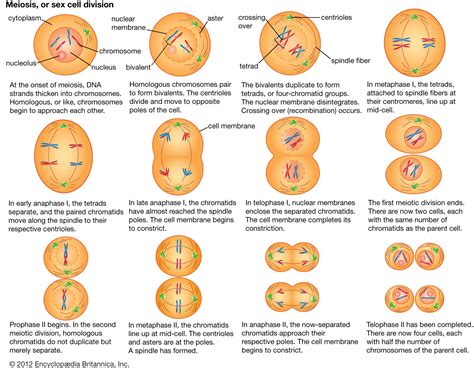
Meiosis is a fundamental concept in biology, referring to the type of cell division that results in the production of gametes, or sex cells, with half the number of chromosomes as the parent cell. The purpose of meiosis is multifaceted, playing a critical role in sexual reproduction, genetic diversity, and the maintenance of species integrity. At its core, meiosis ensures that offspring inherit a unique combination of genes from their parents, contributing to the incredible diversity of life on Earth. This process is essential for the survival and adaptation of species, as it allows for the shuffling of genetic material and the introduction of new traits, which can provide a competitive edge in evolving environments.
One of the primary purposes of meiosis is to reduce the chromosome number by half, from diploid (having two sets of chromosomes) to haploid (having one set of chromosomes). This reduction is crucial because, when gametes unite during fertilization, the resulting zygote has the full diploid number of chromosomes, maintaining the species' genetic integrity. Without meiosis, the number of chromosomes in offspring would double with each generation, leading to genetic abnormalities and potentially catastrophic consequences for the species. Furthermore, meiosis facilitates genetic recombination and independent assortment, mechanisms that significantly increase genetic diversity by mixing and matching different alleles (forms of a gene) and chromosomes.
Key Points
- Meiosis reduces the chromosome number from diploid to haploid, ensuring genetic integrity in offspring.
- It increases genetic diversity through genetic recombination and independent assortment.
- Meiosis is crucial for sexual reproduction, allowing for the shuffling of genetic material and adaptation to changing environments.
- The process maintains species integrity by preventing excessive genetic variation.
- Meiosis has implications for our understanding of evolutionary processes and the development of reproductive strategies in different species.
The Mechanism of Meiosis
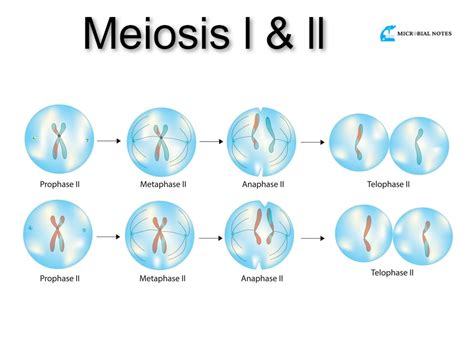
Meiosis consists of two successive divisions, meiosis I and meiosis II, each with its unique characteristics and purposes. Meiosis I is the reduction division, where homologous chromosomes (chromosomes that carry the same genes but are derived from different parents) are separated, reducing the chromosome number. This stage includes prophase I, metaphase I, anaphase I, and telophase I, with genetic recombination occurring during prophase I. Meiosis II, on the other hand, is more similar to mitosis, with the separation of sister chromatids (identical copies of DNA) to form the haploid gametes. The stages of meiosis II are prophase II, metaphase II, anaphase II, and telophase II, followed by cytokinesis, where the cytoplasm divides, and the cell splits into two.
Genetic Diversity and Evolution
Meiosis plays a pivotal role in genetic diversity and evolution. Through the mechanisms of crossing over (the exchange of genetic material between homologous chromosomes) and independent assortment (the random distribution of chromosomes to daughter cells), meiosis ensures that each gamete has a unique genetic makeup. This genetic diversity is the raw material for evolution, as it provides the variation upon which natural selection can act. Species that reproduce sexually, through meiosis and fertilization, have a significant advantage over those that reproduce asexually, as they can adapt more rapidly to changing environments and respond to selective pressures more effectively.
| Process | Description | Importance |
|---|---|---|
| Genetic Recombination | Exchange of genetic material between homologous chromosomes | Increases genetic diversity |
| Independent Assortment | Random distribution of chromosomes to daughter cells | Contributes to genetic diversity and unique gamete formation |
| Crossing Over | Physical exchange of chromosome segments between homologous chromosomes | Enhances genetic diversity by creating new allele combinations |
Implications and Applications
The understanding of meiosis has numerous implications and applications in fields such as agriculture, medicine, and conservation biology. In agriculture, the manipulation of meiotic processes can lead to the development of crops with desirable traits, such as increased yield, disease resistance, or improved nutritional content. In medicine, understanding the meiotic process can provide insights into the causes of genetic disorders and the development of diagnostic tools and therapeutic interventions. In conservation biology, meiosis plays a role in the development of strategies to preserve genetic diversity in endangered species, which is crucial for their long-term survival.
Challenges and Future Directions
Despite its importance, meiosis poses several challenges, particularly in the context of reproductive health and genetic disorders. Errors during meiosis can lead to aneuploidy (having an abnormal number of chromosomes), which is associated with conditions such as Down syndrome, Turner syndrome, and Klinefelter syndrome. Understanding the molecular mechanisms underlying meiosis and identifying factors that influence its accuracy are critical areas of research. Future directions include the development of technologies to study meiosis in real-time, the exploration of meiotic mechanisms in different species, and the application of meiotic research to improve human health and agricultural productivity.
What is the primary purpose of meiosis in sexual reproduction?
+The primary purpose of meiosis is to produce gametes with half the number of chromosomes as the parent cell, ensuring genetic diversity and maintaining species integrity.
How does meiosis contribute to genetic diversity?
+Meiosis contributes to genetic diversity through genetic recombination and independent assortment, allowing for the shuffling of genetic material and the creation of unique combinations of alleles in offspring.
What are the implications of meiotic errors for human health?
+Meiotic errors can lead to genetic disorders such as aneuploidy, which is associated with conditions like Down syndrome, Turner syndrome, and Klinefelter syndrome, highlighting the importance of understanding and potentially correcting meiotic processes for improved reproductive health.
In conclusion, meiosis is a complex and highly regulated process that plays a critical role in sexual reproduction, genetic diversity, and species survival. Its mechanisms, implications, and applications underscore the significance of continued research into meiotic processes, not only for advancing our understanding of biology but also for addressing pressing challenges in human health, agriculture, and conservation. As our knowledge of meiosis and its intricacies grows, so does our appreciation for the intricate balance between genetic diversity and genetic integrity, a balance that is fundamental to the survival and adaptation of species in an ever-changing world.