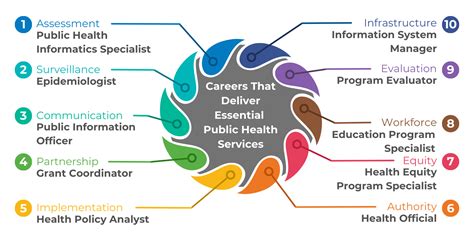
Public health is a vital field that focuses on preventing disease and promoting health at the population level. With the increasing awareness of the importance of health and wellness, public health career options are becoming more diverse and in-demand. From epidemiology to health education, public health professionals play a crucial role in developing and implementing programs that improve the health and well-being of communities. In this article, we will explore the various public health career options available, including job descriptions, required skills, and educational requirements.
Key Points
- Public health career options range from epidemiology to health education and policy development
- Professionals in this field require strong analytical, communication, and problem-solving skills
- Advanced degrees, such as master's or doctoral degrees, are often required for senior roles or specialized positions
- Public health professionals can work in various settings, including government agencies, non-profit organizations, and private industry
- Staying up-to-date with the latest research and trends is essential for success in public health careers
Public Health Career Options
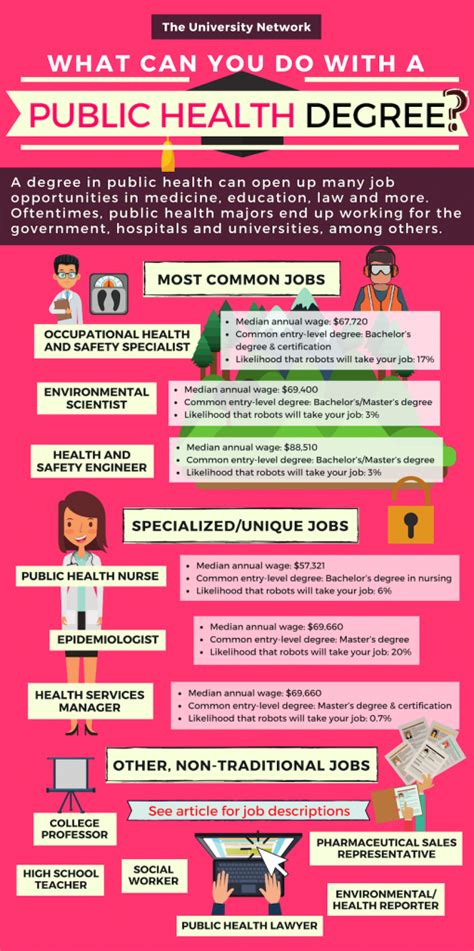
Public health career options are diverse and can be categorized into several areas, including research, policy development, health education, and program management. Some of the most common public health career options include:
Epidemiology
Epidemiologists study the distribution and determinants of health-related events, diseases, or health-related characteristics among populations. They collect and analyze data to identify risk factors, develop and evaluate interventions, and communicate findings to stakeholders. Epidemiologists typically require a master’s degree in epidemiology or a related field and strong analytical and statistical skills.
Health Education
Health educators develop and implement programs to promote healthy behaviors and disease prevention. They work with communities, organizations, and individuals to design and deliver health education programs, evaluate program effectiveness, and provide training and technical assistance. Health educators typically require a bachelor’s degree in health education or a related field and strong communication and interpersonal skills.
Health Policy Development
Health policy developers analyze data and research to inform policy decisions that promote public health. They work with government agencies, non-profit organizations, and private industry to develop and implement policies, evaluate policy effectiveness, and communicate findings to stakeholders. Health policy developers typically require a master’s degree in public health policy or a related field and strong analytical and communication skills.
Program Management
Program managers oversee the planning, implementation, and evaluation of public health programs. They work with teams to develop program goals and objectives, manage budgets and resources, and evaluate program effectiveness. Program managers typically require a bachelor’s degree in public health or a related field and strong leadership and management skills.
| Public Health Career | Required Education | Required Skills |
|---|---|---|
| Epidemiology | Master's degree in epidemiology or related field | Strong analytical and statistical skills |
| Health Education | Bachelor's degree in health education or related field | Strong communication and interpersonal skills |
| Health Policy Development | Master's degree in public health policy or related field | Strong analytical and communication skills |
| Program Management | Bachelor's degree in public health or related field | Strong leadership and management skills |

Advanced Degrees and Specialized Positions
Advanced degrees, such as master’s or doctoral degrees, are often required for senior roles or specialized positions in public health. Some examples of advanced degrees and specialized positions include:
Master’s in Public Health (MPH)
A Master’s in Public Health (MPH) degree is a professional degree that prepares students for careers in public health practice, research, and policy development. MPH programs typically require two years of full-time study and include coursework in epidemiology, biostatistics, health education, and health policy.
Doctoral Degree in Public Health (DrPH)
A Doctoral Degree in Public Health (DrPH) is a professional degree that prepares students for senior roles in public health practice, research, and policy development. DrPH programs typically require three to four years of full-time study and include coursework in advanced epidemiology, biostatistics, and health policy.
Specialized Positions
Specialized positions in public health, such as epidemiology or health policy development, may require advanced degrees or certifications. For example, epidemiologists may require a master’s degree in epidemiology or a related field, while health policy developers may require a master’s degree in public health policy or a related field.
What is the average salary for public health professionals?
+The average salary for public health professionals varies depending on the position, location, and level of experience. According to the Bureau of Labor Statistics, the median annual salary for health educators is $56,500, while the median annual salary for epidemiologists is $76,200.
What are the most in-demand public health career options?
+The most in-demand public health career options include epidemiology, health education, and health policy development. These careers are in high demand due to the increasing awareness of the importance of health and wellness and the need for professionals who can develop and implement programs that promote public health.
What skills are required for a career in public health?
+Public health professionals require a range of skills, including analytical, communication, and problem-solving skills. They must be able to collect and analyze data, develop and implement programs, and communicate findings to stakeholders. Strong leadership and management skills are also essential for success in public health careers.
In conclusion, public health career options are diverse and in-demand, ranging from epidemiology to health education and policy development. Professionals in this field require strong analytical, communication, and problem-solving skills, as well as advanced degrees or certifications for senior roles or specialized positions. By staying up-to-date with the latest research and trends and developing the necessary skills and knowledge, public health professionals can make a meaningful difference in promoting health and wellness at the population level.