When it comes to legal measures designed to protect individuals from harm, harassment, or stalking, two terms are often used interchangeably, though they have distinct meanings and applications: Protective Order and Restraining Order. Understanding the difference between these two is crucial for those seeking legal protection and for legal professionals alike. In this article, we will delve into the definitions, legal bases, procedures, and implications of both Protective Orders and Restraining Orders, providing a comprehensive overview of these legal tools.
Key Points
- Difference in legal terminology and application between Protective Orders and Restraining Orders
- Specific conditions and circumstances under which each order is typically issued
- Legal procedures and requirements for obtaining a Protective Order or a Restraining Order
- Consequences of violating a Protective Order or a Restraining Order
- Importance of understanding the legal framework and seeking professional legal advice
Defining Protective Orders and Restraining Orders
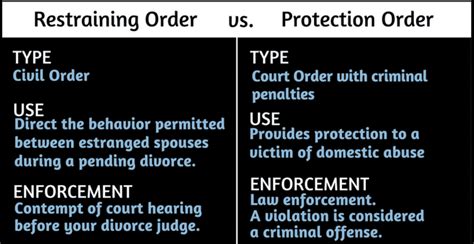
A Protective Order, often referred to as a Protection from Abuse (PFA) order, is a court order designed to protect individuals from physical, emotional, or sexual abuse by a family or household member, or someone with whom they have a significant relationship. This can include spouses, former spouses, parents, children, and in some jurisdictions, roommates or those with whom they have a child in common. The primary purpose of a Protective Order is to ensure the safety and well-being of the victim by legally enforcing distance and non-contact between the victim and the abuser.
A Restraining Order, on the other hand, is a broader legal tool that can be used in various situations where an individual feels threatened or harassed, not limited to domestic or familial relationships. Restraining Orders can be sought in cases of stalking, workplace harassment, or any situation where an individual's safety is at risk due to the actions of another. The goal of a Restraining Order is to prevent further contact or proximity between the individual seeking protection and the person alleged to be causing the threat or harassment.
Legal Procedures and Requirements
To obtain a Protective Order or a Restraining Order, the petitioner (the individual seeking protection) must typically file a petition with the court, detailing the incidents of abuse or harassment and why they fear for their safety. The court may then issue a temporary order, pending a full hearing, which is usually scheduled within a short period (e.g., two weeks). At the hearing, both parties have the opportunity to present evidence and testify. If the court finds sufficient grounds, it may issue a final Protective Order or Restraining Order, which can remain in effect for a specified period, often up to several years, depending on the jurisdiction and the nature of the case.
| Type of Order | Specific Circumstances | Legal Duration |
|---|---|---|
| Protective Order | Domestic or family violence, abuse | Varies by jurisdiction, up to 3 years |
| Restraining Order | Threats, harassment, stalking, non-domestic abuse | Varies by jurisdiction, often 1-3 years |
Consequences of Violation
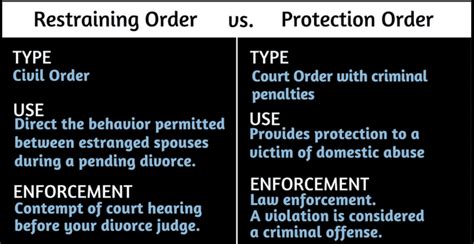
Violating a Protective Order or a Restraining Order can lead to serious legal consequences, including arrest and criminal charges. The specific penalties can vary by jurisdiction but may include fines, imprisonment, or both. The severity of the penalty often depends on the nature of the violation (e.g., physical contact vs. proximity), the number of previous violations, and the overall context of the case.
Importance of Legal Advice
Given the complexity and variability of laws concerning Protective Orders and Restraining Orders across different jurisdictions, it is vital for individuals to seek advice from a qualified legal professional. An attorney can provide guidance tailored to the specific circumstances and laws of the relevant jurisdiction, helping to navigate the legal process efficiently and effectively.
What is the primary difference between a Protective Order and a Restraining Order?
+The primary difference lies in the relationships they cover and the circumstances under which they are issued. Protective Orders are typically for domestic or family-related abuse, while Restraining Orders can be issued for a broader range of threats or harassments, not limited to domestic relationships.
How long does it take to get a Protective Order or a Restraining Order?
+The process can vary, but temporary orders can often be obtained within a day or two of filing the petition. A full hearing for a final order usually occurs within two weeks but can depend on the court's schedule and the jurisdiction's procedures.
Can a Protective Order or a Restraining Order be appealed?
+Yes, both the petitioner and the respondent have the right to appeal the court's decision regarding a Protective Order or a Restraining Order. The appeal process involves presenting the case to a higher court, which reviews the decision based on legal standards and the evidence presented.
In conclusion, while both Protective Orders and Restraining Orders are legal tools designed to protect individuals from harm, they serve different purposes and are applied in different contexts. Understanding the distinction between these orders, as well as the legal procedures and implications involved, is essential for effective use and enforcement. As laws and procedures can vary significantly, consulting with a legal professional is a critical step in navigating these complex legal issues.