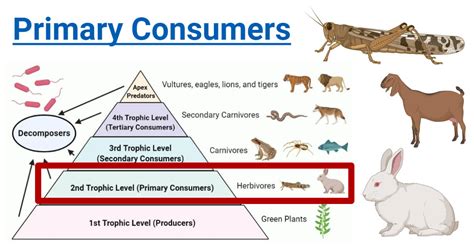
Primary Consumer Examples: Understanding the Base of the Food Chain
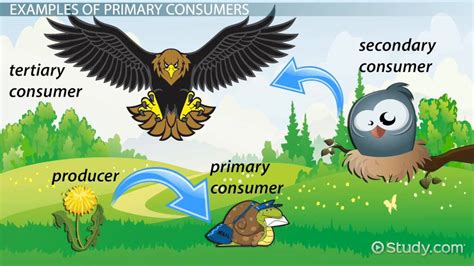
Primary consumers play a crucial role in the ecosystem, serving as the link between producers (plants and algae) and secondary consumers (carnivores). These organisms are primarily herbivores, feeding on the abundant plant life in their respective environments. Here, we’ll delve into five primary consumer examples, exploring their characteristics, habits, and importance in maintaining the balance of nature.
1. White-Tailed Deer (Odocoileus virginianus)
The white-tailed deer is a common primary consumer found in North America. These deer feed on a variety of plants, including leaves, twigs, and grasses. With a population estimated to be over 30 million in the United States alone, they are a significant part of the forest ecosystem, helping to disperse seeds and maintain vegetation diversity. Their feeding habits can also influence the structure of plant communities, favoring certain species over others.
2. Koalas (Phascolarctos cinereus)
Koalas, native to Australia, are another example of primary consumers. These marsupials are specialized feeders, with a diet consisting mainly of eucalyptus leaves. The unique digestive system of koalas allows them to break down the toxic compounds found in these leaves, which are unpalatable to most other animals. By feeding on eucalyptus, koalas help regulate the growth of these trees, preventing any one species from dominating the landscape.
3. Caterpillars (Lepidoptera larvae)
Caterpillars, the larval stage of butterflies and moths, are among the most prolific primary consumers. These tiny creatures feed on a wide range of plants, from leaves and stems to flowers and fruits. Some species of caterpillars are specialized to feed on specific plants, developing strategies to overcome the plant’s defensive mechanisms. The feeding activities of caterpillars can significantly impact plant populations and are a crucial part of the food chain, serving as a food source for birds, spiders, and other small animals.
4. Grasshoppers (Orthoptera: Acrididae)
Grasshoppers are a diverse group of insects that are primarily herbivorous, feeding on grasses, leaves, and other plant materials. These insects are found in almost every habitat on Earth, from deserts to forests, and play a vital role in the ecosystem by helping to recycle nutrients. Some species of grasshoppers can become significant pests in agricultural fields, highlighting the importance of managing ecosystems to prevent any one species from becoming too dominant.
5. Zooplankton (Microcrustacea)
Zooplankton, tiny crustaceans that drift in the water column of oceans, lakes, and rivers, are primary consumers in aquatic ecosystems. They feed on phytoplankton, the microscopic plant life that forms the base of the aquatic food web. Zooplankton are a crucial link in the aquatic food chain, serving as a food source for larger animals like fish and whales. Their feeding activities help regulate the populations of phytoplankton, maintaining the balance of aquatic ecosystems and influencing the global carbon cycle.
| Primary Consumer | Diet | Ecosystem Role |
|---|---|---|
| White-Tailed Deer | Leaves, twigs, grasses | Seed dispersal, vegetation diversity |
| Koalas | Eucalyptus leaves | Regulation of eucalyptus tree populations |
| Caterpillars | Leaves, stems, flowers, fruits | Impact on plant populations, food source for other animals |
| Grasshoppers | Grasses, leaves | Nutrient cycling, ecosystem balance |
| Zooplankton | Phytoplankton | Regulation of phytoplankton populations, food source for larger animals |
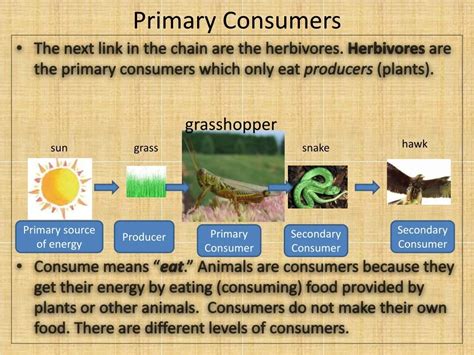
Key Points
- Primary consumers are herbivores that feed on producers (plants and algae), playing a crucial role in the ecosystem.
- Examples of primary consumers include white-tailed deer, koalas, caterpillars, grasshoppers, and zooplankton, each with unique feeding habits and roles in their ecosystems.
- These organisms help regulate plant populations, maintain vegetation diversity, and serve as a food source for secondary consumers.
- Understanding primary consumers is vital for ecosystem management and biodiversity preservation.
- The balance between primary consumers and their food sources is critical for maintaining the health and resilience of ecosystems.
What is the primary role of primary consumers in an ecosystem?
+Primary consumers play a crucial role in ecosystems by serving as the link between producers (plants and algae) and secondary consumers (carnivores), helping to regulate plant populations and maintain biodiversity.
How do primary consumers impact their ecosystems?
+Primary consumers can impact their ecosystems by influencing plant community structure, dispersing seeds, and serving as a food source for other animals, thereby maintaining the balance of nature and ensuring ecosystem resilience.
Why is understanding primary consumers important for conservation efforts?
+Understanding primary consumers is crucial for conservation efforts because it allows for the development of effective strategies to manage ecosystems, preserve biodiversity, and maintain the health and resilience of natural environments.