When it comes to measuring liquids, understanding the differences between various units is crucial for accurate calculations and conversions. Two such units that are often confused with one another are pints and quarts. While both are part of the US customary system, they represent different volumes. In this article, we will delve into the specifics of pints vs quarts, exploring their definitions, conversion rates, and practical applications to help clarify their distinctions.
Key Points
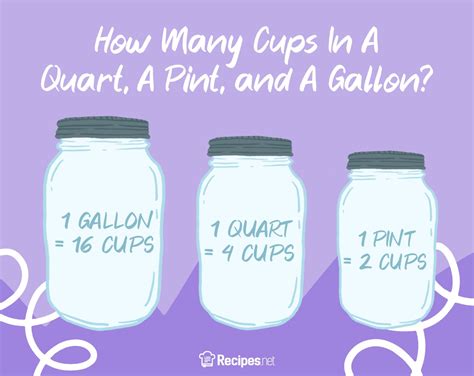
- A pint is a unit of volume equal to 1/8 of a gallon or 2 cups.
- A quart is a unit of volume equal to 1/4 of a gallon or 4 cups.
- The primary difference between a pint and a quart is volume, with a quart being twice as large as a pint.
- Conversions between pints and quarts are straightforward: 1 quart = 2 pints, and 1 pint = 0.5 quarts.
- Understanding the difference between pints and quarts is essential for cooking, especially when following recipes that require precise measurements.
Definitions and Conversion Rates
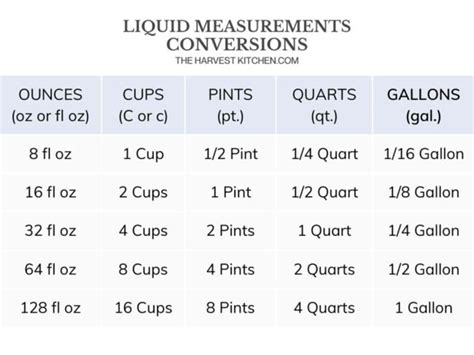
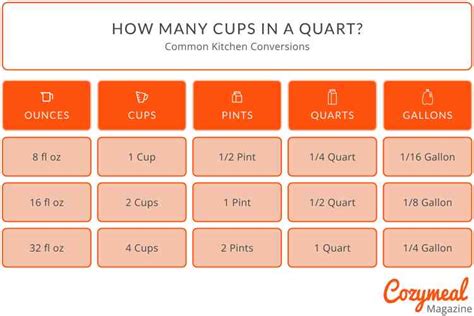
To grasp the differences between pints and quarts, it’s essential to understand their definitions. A pint is defined as 1⁄8 of a gallon, which is equivalent to 2 cups in the US customary system. On the other hand, a quart is 1⁄4 of a gallon, equating to 4 cups. This means that a quart is twice the volume of a pint. The conversion rates are straightforward: 1 quart equals 2 pints, and conversely, 1 pint equals 0.5 quarts. These conversion factors are crucial for recipes and volume measurements in various contexts.
Practical Applications and Importance
The distinction between pints and quarts is particularly important in cooking and baking, where precise measurements can significantly affect the outcome of a dish. Recipes often specify ingredients in terms of pints or quarts, especially for liquids such as milk, water, or oil. Incorrectly substituting one for the other can lead to undesirable results, such as an overly salty or diluted flavor. Moreover, understanding these units is vital in commercial and industrial settings, such as in the production of food and beverages, where accurate measurements are critical for maintaining quality and consistency.
| Unit of Measurement | Volume in Cups | Volume in Gallons |
|---|---|---|
| Pint | 2 cups | 1/8 gallon |
| Quart | 4 cups | 1/4 gallon |
Historical Context and Evolution
The use of pints and quarts as units of measurement has a long history, dating back to the early days of the US customary system. These units were originally derived from the British imperial system, with pints and quarts being part of a larger system that included gallons, barrels, and other measures. Over time, while the US adopted and adapted these units, other countries, especially those influenced by the French Revolution, moved towards the metric system for its simplicity and universality. This historical divergence has led to the current situation where different regions prefer different systems of measurement.
Methodological Approaches and Industry Standards
In industries such as food processing and pharmaceuticals, where precision is paramount, methodological approaches to measurement must be rigorous and standardized. Companies often adopt specific protocols for measuring ingredients or products in pints or quarts, ensuring that all employees understand and can accurately apply these units. Industry standards, such as those set by the National Institute of Standards and Technology (NIST), play a crucial role in defining and maintaining the integrity of these measurements, thereby ensuring consistency and reliability across different sectors and applications.
In conclusion, the differences between pints and quarts are fundamental to understanding volume measurements within the US customary system. By recognizing the definitions, conversion rates, and practical applications of these units, individuals can better navigate recipes, industrial processes, and everyday situations that require accurate volume measurements. As the world becomes increasingly interconnected, being proficient in both the US customary system and the metric system can facilitate smoother transactions and communications across borders.
What is the primary difference between a pint and a quart?
+The primary difference is volume; a quart is twice as large as a pint, with 1 quart equaling 2 pints.
How do you convert pints to quarts?
+To convert pints to quarts, divide the number of pints by 2, since 1 quart equals 2 pints.
Why is understanding the difference between pints and quarts important?
+Understanding the difference is crucial for accurate measurements in cooking, industrial processes, and other applications where volume precision is key.